

India Clinches IIAS Presidency for the First Time in 75 Years — A Global Recognition of Its Governance Reforms
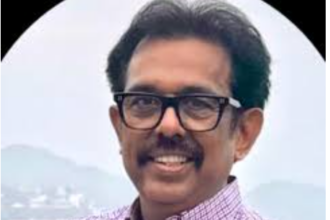
In a historic achievement, V. Srinivas, a 1989-batch IAS officer from the Rajasthan cadre and the current Secretary of the Department of Administrative Reforms and Public Grievances (DARPG), has been elected President of the International Institute of Administrative Sciences (IIAS) for the 2025–2028 term.
This is the first time in 75 years that an Indian civil servant has been chosen to lead this globally renowned organization — a momentous acknowledgment of India’s rising stature in global governance and administrative reform.
A Nomination Backed by PM Modi — A Decisive Win for India
Mr. Srinivas’s nomination was formally backed by Prime Minister Narendra Modi, signaling the Indian government’s strategic commitment to influencing international standards in public administration and civil services.
In the elections held simultaneously in India and Austria on June 3, India won 61.7% of the vote, decisively defeating Austria’s candidate, Dr. Alexander Balthazar, who garnered 38.3%. The landslide victory demonstrates robust international confidence in India’s leadership at the IIAS.
About the IIAS: A Global Hub for Administrative Excellence
The International Institute of Administrative Sciences (IIAS), headquartered in Brussels, is a prominent global non-profit organization focused on advancing best practices in governance.
Its network includes:
31 member countries
20 national sections
15 academic and research institutions
Prominent member nations include Japan, China, Germany, Italy, South Korea, Saudi Arabia, South Africa, and Switzerland.
Founded in 1930, IIAS serves as a vital platform for the exchange of ideas, research, and innovations in public administration and comparative governance.
Why This Matters: A Testament to India’s Reform-Driven Governance
Mr. Srinivas’s election underscores global recognition of India’s recent strides in administrative reform, digital governance, and policy innovation.
As Secretary of DARPG, he has spearheaded several impactful initiatives, including:
Centralized public grievance redressal mechanisms
Digital governance infrastructure
Capacity-building programs for civil servants
Good governance indices and performance benchmarking
His election to this top global position marks a significant diplomatic and institutional victory for India, positioning the nation as a key thought leader in administrative sciences and public sector innovation.