


In a significant administrative overhaul, the Haryana government has restructured the Chief Minister’s Office (CMO) to enhance efficiency and ensure more focused governance. The move involves a strategic reallocation of departmental responsibilities among key officials to optimize performance and improve policy execution.
Rajesh Khullar’s Revised Role: Now Heads 16 Key Departments
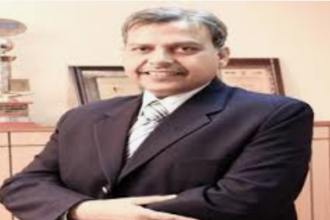
Rajesh Khullar, a retired 1988-batch IAS officer and Chief Principal Secretary to the Chief Minister, will now handle 16 departments—down from the previous 21. The streamlined portfolio is intended to allow greater focus on crucial sectors such as Health, Home, Finance, Industries & Commerce, and Revenue & Disaster Management.
Khullar will also remain the overall in-charge of the CMO and will continue to oversee sensitive portfolios like Parliamentary Affairs, Legislative Business, and Raj Bhawan Coordination.
Expanded Roles for Arun Kumar Gupta, Saket Kumar, and Yash Pal
Arun Kumar Gupta, Principal Secretary to the CM, has been assigned 11 departments, including Civil Aviation, Environment & Forests, Social Justice & Empowerment, and Urban Local Bodies. He will also supervise the implementation of the Chief Minister’s announcements.
Saket Kumar, Additional Principal Secretary to the CM, will now manage 9 departments. His portfolio includes Agriculture & Farmers Welfare, Elections, Women & Child Development, and the monitoring of budget announcements and pending projects.
Yash Pal, Deputy Principal Secretary to the CM, has been given charge of 8 departments, covering Education, Heritage & Tourism, Labour, Public Health Engineering, and Sports.
OSDs to CM Assigned Focused Portfolios
Three Officers on Special Duty (OSDs) have also been entrusted with specific roles:
Raj Nehru will manage the Department of Future, Higher Education, Youth Empowerment, and Entrepreneurship.
Vivek Kalia (HCS) will be responsible for the CM Window and Jan Samvaad platforms.
Sudhanshu Gautam (HCS) will handle government house allotments (excluding Type-V Panchkula), CM Announcements, CM Relief Fund, HRDF, HRMS, Online Transfer Policy, and Waqf Board matters.
Purpose Behind the Restructuring
According to officials, the reshuffle aims to evenly distribute workload, improve departmental oversight, and strengthen accountability mechanisms. The revised structure is expected to lead to more effective governance, better monitoring of development projects, and timely implementation of policy initiatives.