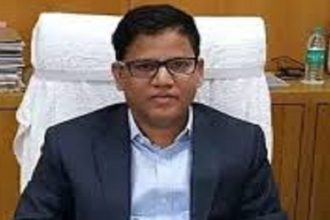


The state’s decision to retain Krishna Kant Pathak while denying central deputation to other IAS officers underscores its intent to strengthen in-state governance and assert tighter control over bureaucratic resources.
Pathak’s NOC Withdrawal Formally Communicated
In a significant assertion of authority over its bureaucracy, the Rajasthan government has withdrawn the No Objection Certificate (NOC) for central deputation of senior IAS officer Krishna Kant Pathak (2001 batch).
Although the decision was reportedly made in July, it has only now been officially conveyed to the Union government.
Trusted Administrator Retained Amid Reluctance to Release Key Officers
Pathak, who currently holds additional charge of the Devasthan Department, is regarded as a trusted officer of the Chief Minister owing to his proven administrative capabilities.
According to sources, both his track record and the state’s unwillingness to lose a reliable hand were central to the decision to revoke the NOC.
Other Deputation Requests Rejected
The government has also denied requests for central deputation from two other IAS officers — P. Ramesh (2005 batch) and Nakate Shiv Prasad Madan (2011 batch). The move reflects a broader strategy to retain experienced administrators within Rajasthan to meet pressing governance requirements.
Selective Approach Evident in Neha Giri’s Case
In contrast, IAS officer Neha Giri (2010 batch), whose husband Inderjeet Singh (2010 batch) recently secured a central posting, continues to hold a valid NOC. While her posting orders remain pending, she is expected to receive them soon. This suggests the state is adopting a selective approach rather than enforcing an across-the-board halt on deputations.
Twenty Rajasthan Cadre Officers Already Serving at the Centre
Currently, about 20 IAS officers from the Rajasthan cadre are on central deputation. Against this backdrop, the recent withdrawals and denials mark a shift in policy, with the state government aiming to retain key officers to reinforce its administrative capacity.
Implications for Rajasthan’s Bureaucratic Management
The move underscores Rajasthan’s determination to keep a firm hold over its senior civil servants amid rising governance challenges. By prioritizing state needs over central deputations, the government is signaling its intent to create a more stable, accountable, and state-focused administrative framework.