

Punjab–CBI Jurisdiction Clash Escalates: High Court Questions CBI’s Authority in Chandigarh as Suspended DIG Bhullar Challenges Probe
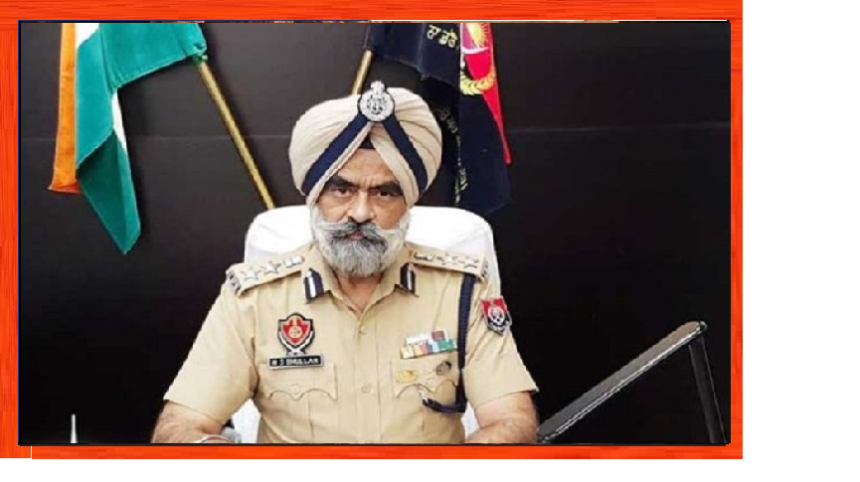
The long-running dispute over the Central Bureau of Investigation’s jurisdiction in Punjab grew more intense on Wednesday, as the Punjab and Haryana High Court scrutinised whether the CBI’s Chandigarh unit is legally empowered to investigate corruption charges involving Punjab government officials. The matter resurfaced after suspended Deputy Inspector General (DIG) Harcharan Singh Bhullar, a 2009-batch IPS officer of the Punjab cadre, approached the High Court challenging the CBI’s authority to initiate and pursue cases against him.
High Court Demands Centre’s Authorization Granting CBI Powers in Chandigarh
A Division Bench comprising Chief Justice Sheel Nagu and Justice Yashvir Singh Rathore directed the Union government to produce the official sanction granted under Section 5(1) of the Delhi Special Police Establishment (DSPE) Act, 1946. This authorization is essential for the CBI to operate within the territorial limits of Chandigarh.
The Bench instructed the Centre to submit the relevant documents when the case is taken up again in the first week of December. The order indicates the court’s intent to thoroughly examine whether the agency’s actions align with statutory requirements.
Punjab Government Sides with DIG Bhullar, Contests CBI’s Authority
In a significant development, the Punjab government supported the petitioner, arguing that the CBI should not have initiated the inquiry. The State’s counsel maintained that the corruption complaint ought to have been transferred to the Punjab Vigilance Bureau (VB), which is the legally mandated body to investigate such allegations involving State officials.
The State argued that while any misconduct must be penalised in accordance with the law, the fundamental question is whether the CBI possesses legal jurisdiction at all. The Punjab government emphasised that the State withdrew general consent for CBI investigations in 2020, making the agency’s involvement improper without explicit, case-specific authorization.
According to the State, Chandigarh jurisdiction was “deliberately engineered” to sidestep Punjab’s authority.
CBI Arrested Bhullar in Bribery and Disproportionate Assets Cases; Massive Cash Seized
DIG Bhullar, who was under suspension while serving in the Ropar Range, was taken into custody by the CBI in October in connection with two cases:
A bribery case involving the alleged demand and acceptance of ₹8 lakh from a businessman through an intermediary
A disproportionate assets (DA) case
During extensive searches, the CBI recovered:
₹7.5 crore in cash
Documents related to more than 50 immovable properties
Several incriminating documents and materials
The CBI justified its actions by asserting that the alleged bribe was received within Chandigarh, thereby automatically conferring jurisdiction on the agency, as the Union Territory falls under its investigative domain.
Bhullar Argues CBI Cannot Probe Punjab Officers After Withdrawal of Consent
Represented by Senior Advocate Randeep Singh Rai, Bhullar strongly opposed the CBI’s authority. He argued that:
Punjab withdrew general consent under Section 6 of the DSPE Act in 2020..The complaint pertained to events that originated in Punjab, not Chandigarh..The mere acceptance of money in Chandigarh cannot alter the natural jurisdiction of the case.
Rai stressed that the CBI Chandigarh unit has authorization only to investigate Central government employees and not State-cadre officers. Extending such powers to all public servants, he argued, would effectively convert the CBI into a “super-vigilance bureau” for both Punjab and Haryana.
Punjab Government Echoes Concern: ‘Jurisdiction Was Manufactured’
The Punjab counsel reiterated the claim that the CBI had intentionally manipulated circumstances to create jurisdiction in Chandigarh. According to the State, if the CBI believed any specific consent was required, it should have formally sought it or transferred the case to the Vigilance Bureau.
Chief Justice Nagu questioned the State’s position, asking why the government was “so particular” about jurisdiction-related objections. The State replied that the matter involves a critical legal issue with wide administrative implications.
CBI Defends Probe: Chandigarh-Based Acceptance and Recoveries Give Full Jurisdiction
The CBI, represented by Special Public Prosecutors Akashdeep Singh and Ravi Kamal Gupta, countered the arguments by stating that:
The alleged bribe was accepted in Chandigarh..Substantial recoveries, including crores in cash, were made in Chandigarh..These facts establish clear and unambiguous jurisdiction for the agency..The charge-sheet is expected to be filed in December.
Dual FIR Dispute: Bhullar Challenges Parallel DA Case
Bhullar also contested the disproportionate assets case, claiming that:
The Punjab Vigilance Bureau had already registered an FIR earlier on the same issue..Two FIRs for the same cause of action are impermissible in law..His arrest was illegal and unsupported by valid grounds..Matter Rescheduled for December 4; Placed Before Division Bench under Special Order
The High Court has listed the matter for further hearing on December 4. Interestingly, the petitions were originally meant to be heard by a single-judge bench. Chief Justice Nagu clarified that they were moved to the Division Bench due to a special administrative order.
The upcoming hearing is expected to determine whether the CBI’s Chandigarh unit holds legitimate jurisdiction over corruption cases involving State officers—a question that could have significant implications for Centre-State relations and future investigations.