

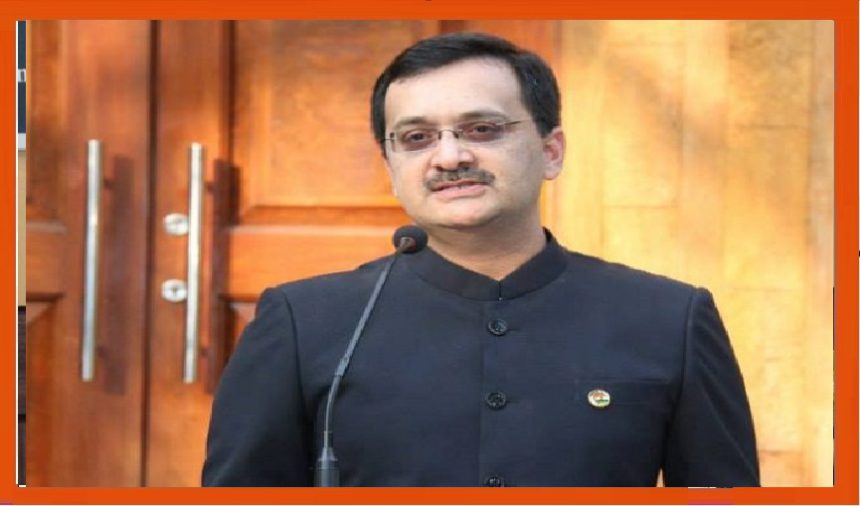
Who Is IFS Dinesh K Patnaik? India’s High Commissioner to Canada Challenges “Evidence-Free” Allegations, Signals Diplomatic Reset
Ottawa/New Delhi: As India and Canada cautiously rebuild diplomatic ties after months of tension, Dinesh K Patnaik, India’s High Commissioner to Canada, has sharply criticized Ottawa’s handling of terrorism-related allegations. A seasoned 1990-batch Indian Foreign Service (IFS) officer, Patnaik directly confronted Canada’s earlier claims that Indian agents were involved in the killing of Khalistani separatist Hardeep Singh Nijjar in Surrey, British Columbia.
Patnaik’s Blunt Response: “Where is the Evidence?”
In a televised interview with Canadian channel CBS, Patnaik questioned Canada’s double standards. He argued that while Canada routinely dismisses evidence provided by India regarding individuals wanted for terrorist activities, it expects India to accept allegations against Indian agents without proof.
His statement:
“When India provides Canada with evidence that people residing there are wanted for terrorist activities, the Canadian government does not accept it. But when you make allegations against India, you expect us to accept them as truth without any proof. Is this fair?”
Patnaik emphasized the principle of law that presumes innocence until guilt is proven, criticizing Canada’s earlier approach of demanding evidence from India while expecting unconditional acceptance of its own claims.
Criticism of Canadian Inaction on Extremism
Patnaik further accused Canadian authorities of failing to act against extremist elements operating on their soil for decades. He noted that such negligence has created an environment conducive to anti-India activities.
“Some elements in Canada glorify murderers and engage in hate crimes. Whatever negative thing you can think of, they are doing it. When we inform the Canadian government about these individuals, they often say there isn’t enough evidence,” he remarked.
He reiterated that India does not engage in illegal activities abroad and is prepared to act if credible evidence is presented against Indian citizens.
Diplomatic Reset: New Appointments
After nearly a year of suspended high-level representation, both nations have begun restoring diplomatic ties:
Dinesh K Patnaik was appointed India’s High Commissioner to Canada in August 2025, succeeding Sanjay Verma, who left in October 2024. Prior to this, Patnaik served as India’s Ambassador to Spain.
Christopher Cooter has been appointed Canada’s High Commissioner to India, replacing Cameron MacKay. Cooter brings over 35 years of diplomatic experience, including postings in South Africa, Israel, and India.
These appointments followed high-level talks in New Delhi and a meeting between Prime Minister Narendra Modi and Canadian Prime Minister Mark Carney at the G7 Summit in June 2025.
Who Is Dinesh K Patnaik?
Born on 3 January 1967, Patnaik is a highly experienced diplomat with more than three decades of service in the IFS. His career highlights include:
Ambassador to Cambodia (2012–2015), Morocco (2015–2016), and Spain (2021–2025)
Deputy High Commissioner to the United Kingdom (2016–2018)
Senior roles in the Ministry of External Affairs, covering the Indian Ocean Region, Overseas Indian Affairs, and Consular divisions
Director General of the Indian Council for Cultural Relations (ICCR)
Education:
Master of Science in Physics – Delhi University
MBA – IIM Calcutta
Master’s in Advanced Studies – University of Vienna
Family:
Patnaik is married to Poonam Patnaik and has two daughters.
Signs of Reconciliation Amid Lingering Concerns
While both nations have taken steps toward normalization, security concerns remain:
India remains wary of Khalistani extremist groups operating from Canada.
Canada has expressed concern about Indian criminal networks and plans to expand diplomatic staffing in India.
Despite these challenges, officials from both sides have voiced cautious optimism, stressing the importance of restoring trade, citizen services, and diplomatic engagement.
Canadian Foreign Minister Anita Anand noted: “These appointments mark a significant step toward rebuilding trust and ensuring stable relations.”