

Premature Repatriation of Shri Apparao Veerelli, IRSS (1993), CEO of DWBDNCs, to Parent Cadre on Personal Grounds with Extended Cooling-Off Condition
The Government of India has approved the premature repatriation of Shri Apparao Veerelli, an officer of the Indian Railway Stores Service (IRSS), 1993 batch, who has been serving as Chief Executive Officer (CEO) of the Development and Welfare Board for Denotified, Nomadic and Semi-Nomadic Communities (DWBDNCs) under the Department of Social Justice & Empowerment.
The decision has been taken on personal grounds, and the officer will return to his parent cadre with the imposition of an extended cooling-off condition. The official order directs that Shri Veerelli be relieved of his duties immediately so that he may report back to his cadre.
Background of the Officer
Shri Apparao Veerelli, IRSS (1993), has had a distinguished career in the Indian Railway Stores Service, contributing to procurement, logistics, and supply chain management within the Indian Railways. His deputation as CEO of the DWBDNCs placed him at the helm of a crucial institution tasked with the welfare of historically marginalized communities.
As CEO, he oversaw initiatives aimed at improving the socio-economic conditions of Denotified, Nomadic, and Semi-Nomadic Communities, groups that have long faced exclusion and deprivation. His role involved policy formulation, welfare program implementation, and coordination with state governments to ensure that benefits reached the intended populations.
Understanding Premature Repatriation
Premature repatriation refers to the early return of an officer from central deputation to their parent cadre before the completion of their approved tenure. Such decisions are generally taken in circumstances such as:
Personal grounds, including family or health-related reasons.
Cadre requirements, where the officer’s services are urgently needed in their parent cadre.
Administrative considerations, where the government deems it appropriate for efficiency.
In Shri Veerelli’s case, the repatriation has been approved on personal grounds, reflecting the government’s flexibility in accommodating individual circumstances while maintaining cadre discipline.
Extended Cooling-Off Condition
The order specifies that Shri Veerelli’s repatriation will be accompanied by the imposition of an extended cooling-off condition.
The cooling-off period is a mandatory gap that officers must observe between two central deputations.
The extended cooling-off provision ensures that officers returning prematurely are subject to a longer interval before being considered for another central posting.
This mechanism helps maintain fairness in cadre management and prevents frequent shifts between central and state assignments.
By applying this condition, the government ensures that cadre stability is preserved even as officers return early from deputation.
Role of DWBDNCs
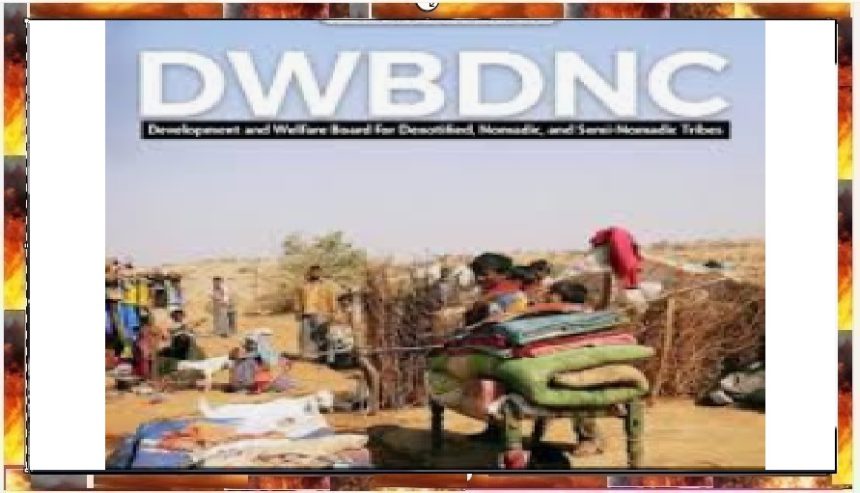
The Development and Welfare Board for Denotified, Nomadic and Semi-Nomadic Communities (DWBDNCs) was established under the Department of Social Justice & Empowerment to address the unique challenges faced by these communities. Its responsibilities include:
Designing welfare schemes tailored to the needs of denotified and nomadic groups.
Promoting education, healthcare, and livelihood opportunities.
Ensuring social inclusion and reducing discrimination faced by these communities.
Coordinating with state governments and NGOs to implement welfare programs effectively.
As CEO, Shri Veerelli played a pivotal role in steering these initiatives, ensuring that marginalized groups received attention at the national policy level.
Significance of the Decision
The premature repatriation of Shri Veerelli highlights several important aspects of administrative functioning:
Recognition of personal grounds: The government acknowledges the need to balance professional responsibilities with personal circumstances.
Cadre management discipline: By imposing extended cooling-off, the government ensures that officers returning early do not immediately re-enter central deputation, maintaining fairness across services.
Continuity of governance: The Department of Social Justice & Empowerment will now reassign responsibilities to ensure that ongoing projects and welfare initiatives continue without disruption.
The premature repatriation of Shri Apparao Veerelli, IRSS (1993), CEO of DWBDNCs, to his parent cadre on personal grounds, with the imposition of an extended cooling-off condition, underscores the government’s emphasis on balancing officer welfare with cadre management policies. While his immediate relief from central duties ensures a smooth transition, the extended cooling-off provision maintains consistency in the deployment of senior officers.
This decision reflects the government’s commitment to both administrative efficiency and the personal well-being of its officers, while ensuring that welfare programs for marginalized communities continue under stable leadership.