

Jabalpur salary row: Cabinet Minister Rakesh Singh and IAS officer Arvind Shah in direct confrontation; complaint by woman employee reaches Chief Minister Mohan Yadav
A fresh and rapidly escalating confrontation between a Cabinet Minister and a senior IAS officer in Madhya Pradesh has reached the highest levels of the state administration, reigniting an increasingly urgent debate about governance norms, administrative conduct, and the balance of authority between elected representatives and civil servants.
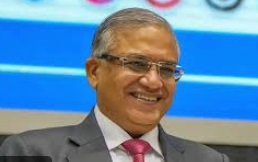
The controversy has emerged from Jabalpur and centres on Cabinet Minister Rakesh Singh, IAS officer Arvind Shah — currently serving as Chief Executive Officer of Smart City Jabalpur — and a woman employee whose formal complaint has now been placed before Chief Minister Mohan Yadav and Chief Secretary Anurag Jain.
What began as a salary grievance
The episode traces its origins to what appeared to be a routine administrative matter. Dilpreet Bhalla, a woman employee associated with Smart City Jabalpur, alleged that her salary had been withheld without resolution for a prolonged period.
When she approached CEO Arvind Shah directly to seek redress, she claims the interaction took a deeply troubling turn. According to a formal complaint and sworn affidavit subsequently submitted to the Chief Minister and Chief Secretary, Shah allegedly responded with rude and derogatory behaviour, used insulting language, and subjected her to humiliation that caused her significant mental distress. The gravity with which the complaint was formally recorded and escalated to the apex of state administration has given the matter a weight that extends well beyond an ordinary workplace grievance.
Minister’s intervention and its explosive aftermath
The situation took a far more serious turn when Bhalla sought the intervention of Cabinet Minister Rakesh Singh. Rather than facilitating resolution, this development is alleged to have further inflamed tensions.
The complaint claims that Shah became markedly more aggressive following the minister’s involvement — and contains one particularly incendiary allegation that has since drawn widespread attention across political and administrative circles. The IAS officer is accused of having stated, explicitly, that he had secured his position strictly on merit and was under no obligation to take instructions from ministers. He is further alleged to have challenged the complainant to escalate the matter to any authority she chose.
Whether or not these words were used in precisely this form, the allegation cuts directly to one of the most contested fault lines in India’s governance architecture — the boundary between legitimate bureaucratic independence and insubordination toward democratically elected representatives. It is a tension that has surfaced repeatedly across states in recent years, and one that the Jabalpur episode has brought into sharp national relief once again.
Sikh Gurudwara Management Committee raises its voice
The controversy acquired an additional social dimension when the Sikh Gurudwara Management Committee entered the picture after Bhalla sought its support. The committee expressed serious concern over the alleged mistreatment of a woman employee by a senior government officer and publicly called for appropriate action, lending a community voice to what had begun as an individual complaint and considerably amplifying the pressure on the administration to respond.
Officer stays silent; matter under active review
IAS officer Arvind Shah has thus far declined to make any detailed public statement on the allegations against him. Sources indicate he has conveyed his account of events to the relevant administrative association. With the complaint now formally before the Chief Minister and Chief Secretary, the matter is under active review and further administrative or disciplinary action is expected to follow in the coming days.
A troubling pattern across Madhya Pradesh
The Jabalpur episode does not stand alone but forms part of a discernible and concerning pattern of friction between politicians and civil servants in Madhya Pradesh. BJP MLA Pritam Lodhi had previously attracted controversy over his conduct involving IPS officer Ayush Jakhad. In Alirajpur, Inder Singh Chauhan — brother of Minister Nagar Singh Chouhan — faced serious allegations of threatening a woman Janpad Panchayat CEO. These recurring confrontations have fuelled a steadily intensifying public debate about the terms of engagement between elected representatives and civil servants across the state.
What the outcome must address
The Jabalpur case has placed the Madhya Pradesh government in the unenviable position of having to adjudicate between a senior civil servant and a Cabinet minister — while also addressing the grievance of a woman employee who appears to have been caught in the crossfire of a larger power struggle. Elected representatives derive their authority from public mandate and carry a legitimate oversight role over government functioning; civil servants, on the other hand, are bound by service conduct rules and owe professionalism and dignity to all who interact with them, regardless of their political connections.
When these obligations collide in ways that harm individuals and erode public trust, the onus falls on the Chief Minister’s office to act with clarity, fairness, and resolve. The outcome of this case will be closely watched — not just in Madhya Pradesh, but across every state where the delicate compact between political authority and bureaucratic independence is under strain.