


Bihar Sends Senior IPS Officers to Centre: Rakesh Rathi Appointed Joint Secretary in MHA, Naveen Jha to ITBP, Deepak Barnwal to SSB
Bihar relieves three senior IPS officers for central deputation in quick succession; Rakesh Rathi to MHA as Joint Secretary, Naveen Jha to ITBP, Deepak Barnwal to SSB
The Bihar Government has relieved three senior Indian Police Service officers in rapid succession for central deputation, marking a significant movement of experienced law enforcement talent from the state cadre to key assignments within the central government in New Delhi.
The developments, formalised through consecutive notifications issued by the Bihar Home Department within the span of just a few days, see IG- and DIG-level officers moving to prominent roles in the Ministry of Home Affairs, the Indo-Tibetan Border Police, and the Sashastra Seema Bal — reflecting the broader rotation mechanism through which the Union Government periodically draws on state cadre expertise to strengthen its central security and administrative apparatus.
Rakesh Rathi appointed Joint Secretary in Ministry of Home Affairs
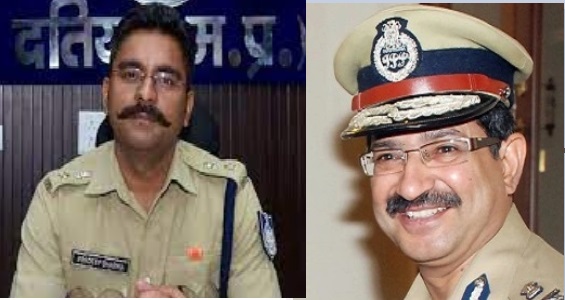
The most senior of the three appointments belongs to Rakesh Rathi, a 2002-batch IPS officer of the Bihar cadre, who was formally relieved on April 29, 2026. Rathi was serving as Inspector General in the Special Branch of Bihar Police — one of the most sensitive intelligence-gathering wings of the state police apparatus — at the time of his deputation.
His new assignment places him in the role of Joint Secretary in the Ministry of Home Affairs (MHA), one of the most consequential departments in the Government of India, responsible for overseeing internal security, border management, relations with state governments, disaster management, and the administration of Union Territories.
Rathi’s appointment has been approved for a tenure of five years from the date of joining, or until further orders — a relatively long tenure that signals the expectation of stable, sustained policy contribution at the ministry level. His background in the Special Branch, which deals with intelligence collection, monitoring of sensitive movements, and internal security coordination, is expected to be directly relevant to the MHA’s mandate.
The Joint Secretary rank at the MHA is among the most operationally significant postings available to a central deputation officer of his seniority, and Rathi’s elevation to this role represents a considerable affirmation of his professional standing.
Naveen Chandra Jha moves to ITBP as DIG
A day after Rathi’s relief, the Bihar Government issued orders on April 30, 2026, relieving Naveen Chandra Jha, a 2009-batch IPS officer, with immediate effect. Jha had been serving as Deputy Inspector General in the Bihar Vigilance Bureau — the state’s dedicated anti-corruption and vigilance enforcement agency — before his central deputation was cleared.
He will now take up the role of Deputy Inspector General in the Indo-Tibetan Border Police (ITBP), one of India’s premier Central Armed Police Forces, responsible for guarding the country’s borders with China along the Himalayan frontier and performing a wide range of internal security and disaster relief functions.
Jha’s move from Bihar’s vigilance apparatus to a border-guarding paramilitary force represents a transition from state-level anti-corruption policing to the broader national security domain. His experience in investigations and vigilance enforcement at the DIG level makes him a well-rounded appointment for a force that demands both administrative competence and operational discipline in one of the country’s most strategically sensitive deployment zones.
Deepak Barnwal posted to Sashastra Seema Bal
Prior to these two movements, Deepak Barnwal, a 2010-batch IPS officer of the Bihar cadre, had also been cleared for central deputation and posted as Deputy Inspector General in the Sashastra Seema Bal (SSB) — the Central Armed Police Force responsible for guarding India’s borders with Nepal and Bhutan.
Barnwal’s posting to the SSB adds a third successive deputation from Bihar’s IPS cadre to central paramilitary and security organisations, underlining the state’s consistent contribution of trained and experienced officers to the Union Government’s security architecture.
Vacancies in intelligence and vigilance wings draw attention
The departure of three experienced officers from sensitive postings — the Special Branch, the Vigilance Bureau, and another key assignment — has inevitably turned attention toward the vacancies that their exit leaves behind within Bihar Police.
The Special Branch and Vigilance Bureau in particular are operationally critical wings whose leadership continuity is essential to the state’s internal security and anti-corruption efforts. State government officials are expected to address these vacancies through fresh posting orders in the coming days to ensure that the functioning of these departments is not disrupted during the transition period.
Central deputation: a two-way investment
Central deputation of IPS officers is a structured and strategically important feature of India’s All India Services framework. It allows state cadre officers to gain exposure to central government institutions, national security organisations, and policy-making bodies — broadening their professional horizons and strengthening institutional linkages between state and central policing systems.
Simultaneously, it provides the central government with experienced field officers who bring ground-level state perspectives to national-level roles. Bihar’s successive reliefs in this current cycle reflect both the state’s willingness to contribute to the central pool and the Centre’s confidence in the calibre of officers that the Bihar cadre has produced. As Rathi, Jha, and Barnwal prepare to assume their new responsibilities, their departures serve as a reminder of the important rotational logic that keeps India’s civil and police services dynamic, interconnected, and nationally integrated.