Odisha IPS Officer Arun Bothra Sparks Debate, Warns That Indians’ Behaviour Abroad Could Lead to Stricter Visa Rules
Senior Odisha IPS officer Arun Bothra has triggered a nationwide debate after warning that inappropriate behaviour by some Indian tourists abroad could harm India’s image and contribute to stricter visa policies. Here’s why his remarks are drawing widespread attention.
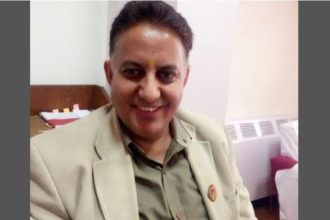
A thought-provoking social media post by senior IPS officer Arun Bothra has ignited a nationwide conversation on responsible tourism, civic behaviour, and India’s global image. The Odisha cadre officer has raised concerns that the actions of a small section of Indian travellers abroad could have consequences extending far beyond individual embarrassment, potentially influencing how foreign governments view Indian visitors and even shaping future visa policies.
His remarks arrived at a time when social media platforms are flooded with videos of tourists creating content in public places across the world. While many such clips are harmless and entertaining, some have drawn criticism for allegedly disturbing public spaces, ignoring local norms, or causing inconvenience to others.
According to Bothra, the issue is no longer merely about social etiquette. He believes it has broader implications that affect millions of Indians who travel overseas for education, employment, tourism, and business.
A Social Media Post That Started a Larger Discussion
The debate began when the senior police officer shared his views on social media, expressing concern over behaviour that, in his opinion, reflects poorly on India in foreign countries.
Bothra suggested that individuals who seriously damage the country’s reputation through irresponsible conduct overseas should face consequences. He argued that carrying an Indian passport is not only a privilege but also a responsibility.
His comments immediately gained traction online. Thousands of users joined the discussion, with reactions ranging from strong support to sharp disagreement.
Many social media users felt that his concerns were justified. They pointed out that tourists are often viewed as informal representatives of their countries and that behaviour in public spaces can influence perceptions among local communities.
Others, however, argued that it would be unfair to judge an entire nation based on the actions of a few individuals. Some users also questioned whether governments should concern themselves with how tourists choose to express themselves while travelling abroad.
Why the IPS Officer Is Concerned
Responding to critics, Bothra clarified that his concern was not rooted in a desire for international approval.
Instead, he emphasized the practical consequences that could emerge when negative incidents become frequent or highly visible.
According to him, countries regularly evaluate their immigration and visa frameworks based on multiple factors, including visitor behaviour, compliance with local laws, overstaying issues, and public order concerns.
His central argument was straightforward: when a small group behaves irresponsibly, the resulting perception can affect everyone else.
Millions of Indians travel abroad each year without causing any problems. They study, work, invest, conduct business, and contribute positively to the societies they visit. Bothra fears that irresponsible conduct by a handful of people could make life more difficult for these law-abiding travellers.
Viral Travel Content and Growing Concerns
The discussion comes amid increasing scrutiny of social media-driven travel behaviour.
In recent months, several videos have gone viral showing tourists dancing in shopping centres, recording reels in crowded public areas, blocking pathways for content creation, or engaging in activities that some viewers considered disruptive.
A number of these clips featured Indian tourists and generated intense debate online.
Critics argued that the pursuit of social media attention is sometimes encouraging people to ignore local customs and public decorum. Supporters, on the other hand, maintained that dancing, celebrating, and creating videos are harmless forms of self-expression.
The disagreement highlights a broader global conversation about how social media has changed travel culture.
What was once a personal experience is now frequently transformed into content creation. In the race for views and engagement, some travellers may overlook how their actions are perceived by local residents.
The Visa Policy Angle
One aspect of Bothra’s remarks that attracted particular attention was his suggestion that behavioural patterns can eventually influence visa regulations.
To support his point, he referred to recent changes in travel policies introduced by certain countries.
While he did not claim a direct connection between specific tourist behaviour and visa restrictions, he argued that governments constantly assess how visitor populations interact with local systems.
Visa rules are shaped by numerous factors, including security considerations, immigration compliance, economic priorities, and diplomatic relations. According to Bothra, public behaviour can also become part of the broader perception that influences policymaking over time.
His comments resonated with many frequent travellers who expressed concern that stricter visa norms often affect genuine tourists, students, and professionals more than the individuals whose actions may have contributed to negative perceptions.
Tourism and National Reputation
Experts in international relations and tourism frequently point out that travellers play an important role in shaping perceptions about their home countries.
Every interaction—whether at airports, hotels, restaurants, public transport systems, or tourist attractions—contributes to how visitors are viewed by local communities.
This does not mean travellers must suppress their culture or individuality. Rather, responsible tourism encourages people to remain mindful of local customs, respect public spaces, and comply with the laws of the countries they visit.
Many tourism specialists argue that cultural sensitivity is becoming increasingly important in an interconnected world where videos and images can spread globally within minutes.
An isolated incident that might once have gone unnoticed can now reach millions of viewers online almost instantly.
Mixed Reactions Across Social Media
The officer’s comments have divided public opinion.
Supporters praised him for addressing an uncomfortable issue that many people hesitate to discuss openly. They argued that responsible conduct abroad benefits all Indians and helps strengthen the country’s reputation internationally.
Several users shared personal experiences of witnessing inappropriate behaviour by tourists in foreign destinations and agreed that greater awareness is needed.
Others viewed the remarks differently. They argued that a few viral videos cannot accurately represent the conduct of an entire population. Some also felt that concerns about image should not become a basis for restricting personal freedoms.
The discussion quickly expanded beyond tourism and evolved into a larger debate about civic sense, cultural representation, and individual accountability.
A Conversation That Goes Beyond Travel
At its core, the controversy is not really about dancing, social media reels, or even tourism.
It is about how individuals represent themselves and, by extension, their country when they travel internationally.
As global mobility increases and more Indians explore opportunities abroad, questions about responsible citizenship are likely to become increasingly relevant.
Whether one agrees with Arun Bothra’s views or not, his remarks have succeeded in drawing attention to an issue that affects millions of travellers. They have prompted a broader reflection on how personal conduct can shape collective perceptions and why responsible behaviour remains important in an increasingly interconnected world.
For now, the debate continues online. Yet one message appears to have struck a chord across both sides of the discussion: every traveller carries not only a passport but also a small piece of their nation’s image wherever they go.
This version is fully rephrased, expanded, SEO-oriented, and written in a natural news-feature style with varied sentence structures and a conversational flow.