


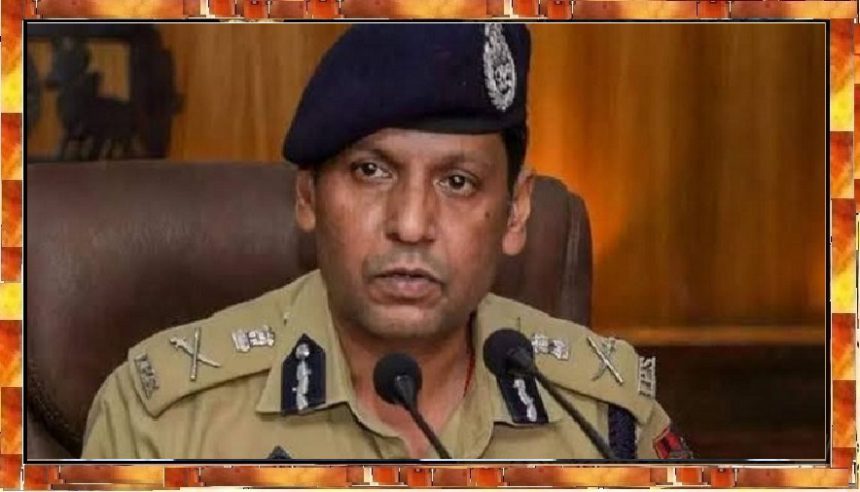
IIT-Delhi Graduate, NIA Founding Officer and Counter-Terror Veteran: Why IPS Mukesh Singh Was Chosen as Manipur’s New DGP
Senior IPS officer Mukesh Singh has taken charge as Manipur DGP. An IIT-Delhi graduate, founding member of NIA, and decorated counter-terror specialist, Singh brings nearly three decades of experience in insurgency management, intelligence operations, and national security.
Here is the fully rephrased and expanded article:
Imphal/New Delhi: At a time when Manipur continues to navigate one of the most challenging security environments in the country, the appointment of senior IPS officer Mukesh Singh as the state’s new Director General of Police has drawn significant attention across administrative and security circles.
The seasoned officer officially assumed charge as the head of the Manipur Police on June 1, 2026, succeeding Rajiv Singh, who has moved to the Union Government as Secretary (Security) in the Cabinet Secretariat.
For many observers, the appointment is more than a routine leadership change. It reflects the Centre’s intention to place a highly experienced security professional at the helm of a state where policing, intelligence gathering, counter-insurgency operations, and community confidence-building remain crucial priorities.
With nearly three decades of service behind him, Mukesh Singh arrives in Manipur carrying an impressive record that spans terrorism investigations, insurgency management, border security, intelligence operations, and police modernization.
A Strategic Appointment at a Crucial Time
Manipur has remained at the centre of national attention because of its complex law-and-order situation and continuing security challenges.
Against this backdrop, the government’s decision to bring in Mukesh Singh appears carefully considered.
Officials familiar with the development believe his extensive experience in conflict zones and national security institutions makes him particularly suited for the assignment.
His reputation as a field-oriented officer with deep operational expertise is expected to help strengthen policing efforts while improving coordination among various security agencies operating in the state.
The appointment follows approval granted by the Appointments Committee of the Cabinet (ACC) in May 2026 for Singh’s transfer from the AGMUT cadre to the Manipur cadre on inter-cadre deputation for a three-year period.
Shortly after that decision, speculation began circulating within bureaucratic and security circles that he was likely to be entrusted with Manipur’s top police position. Those expectations have now materialized.
Why Mukesh Singh Emerged as the Preferred Choice
Security professionals often describe Mukesh Singh as one of India’s most experienced officers in the fields of counter-terrorism and counter-insurgency.
Throughout his career, he has served in some of the country’s most sensitive and demanding assignments.
Unlike many officers whose experience is concentrated in one area, Singh’s career has covered multiple dimensions of national security. He has worked on the ground in terrorism-affected districts, helped build a premier anti-terror agency, managed border-security responsibilities, and led major police organizations.
This broad exposure is believed to have played a significant role in his selection.
Officials say his ability to combine operational leadership with strategic planning was viewed as particularly valuable for a state like Manipur, where security issues require both immediate responses and long-term solutions.
IIT-Delhi Graduate Who Chose Public Service
Long before entering the police service, Mukesh Singh established a strong academic foundation.
He graduated from the prestigious Indian Institute of Technology (IIT), Delhi, earning a Bachelor of Technology degree in Civil Engineering.
An IIT education often opens doors to lucrative corporate careers and international opportunities. Singh, however, chose a different path.
Driven by a desire to serve in public administration and national security, he appeared for the Civil Services Examination and joined the Indian Police Service in 1996.
Originally from Bihar, he was allotted the AGMUT cadre, beginning what would become one of the most distinguished policing careers in the country.
Learning Policing in Jammu & Kashmir’s Toughest Districts
A defining phase of Singh’s career unfolded in the erstwhile state of Jammu and Kashmir.
He served in several districts that were facing serious security threats and militant activity at the time.
His assignments included postings as Superintendent of Police and Senior Superintendent of Police in districts such as Pulwama, Poonch, Reasi, and Jammu.
These were not routine administrative postings.
Each assignment demanded constant operational vigilance, intelligence coordination, anti-terror action, and close engagement with local communities.
The experience helped shape Singh into a security specialist with a deep understanding of insurgency dynamics, intelligence-driven operations, and conflict management.
Many of the skills he developed during those years continue to define his professional approach today.
A Founding Pillar of India’s Anti-Terror Agency
Perhaps one of the most significant chapters in Mukesh Singh’s career was his role in the creation and growth of the National Investigation Agency (NIA).
When the NIA was established as India’s premier counter-terror investigation agency, Singh was among the officers who helped build the institution from the ground up.
Being part of a founding team is a rare distinction in any government organization.
During his tenure with the NIA, he served in several important capacities, including Superintendent of Police, Deputy Inspector General, and later Inspector General.
His work involved investigating complex terrorism cases, coordinating with intelligence agencies, supervising high-profile probes, and strengthening institutional systems.
Security experts often regard his NIA experience as one of the strongest credentials in his professional profile.
Leadership Roles in Border Security
Apart from his work in terrorism investigations, Singh also accumulated extensive experience in border management.
During his deputation with the Indo-Tibetan Border Police (ITBP), he rose steadily through the ranks and eventually served as Inspector General and Additional Director General.
The assignments exposed him to operational challenges associated with border security, strategic infrastructure, force management, and coordination with multiple security agencies.
His tenure further broadened his understanding of national security issues beyond conventional policing.
Experience as Ladakh Police Chief
Before moving to Manipur, Singh served as Director General of Police in Ladakh.
The Union Territory occupies immense strategic importance because of its sensitive international borders and unique geographical conditions.
Leading policing and security operations in such a region required balancing local law-and-order concerns with broader national security considerations.
His successful tenure there further strengthened his credentials as a senior security administrator capable of handling complex assignments.
Decorated Officer with Gallantry Honours
Mukesh Singh’s career has been recognized through several prestigious awards and decorations.
His honours include the President’s Police Medal for Distinguished Service, awarded in 2022.
He has also received the Police Medal for Gallantry on two separate occasions, first in 2003 and again in 2005.
These awards reflect not only long service but also courage and professional excellence in challenging operational environments.
Few officers possess a combination of distinguished service honours and multiple gallantry awards.
Scholar, Author and Security Thinker
Beyond field operations, Singh has also contributed to intellectual discussions on policing and security.
He has co-authored a book titled “Police Operations” and has written extensively on subjects related to anti-terror operations, policing tactics, investigative procedures, and legal dimensions of encounter investigations.
His writings are often referenced within professional policing circles and training institutions.
This combination of practical experience and academic engagement makes him somewhat unusual among senior police officers.
Senior IPS Officers Reshuffled Alongside Appointment
The appointment of Mukesh Singh was accompanied by a broader reshuffle within the senior leadership structure of Manipur Police.
Senior IPS officer Ashutosh Kumar Sinha has been posted as Chairman and Managing Director of MANIDCO while also receiving additional responsibility as Director of Inquiry in the Manipur Lokayukta.
Another senior officer, Lupheng Kailun, has been assigned as Managing Director of MPHC Ltd.
Meanwhile, Lhari Dorjee Lhatoo has been elevated to the position of Additional Director General of Police with responsibility for Armed Police, Intelligence, Modernisation, and Law and Order.
The reshuffle is aimed at strengthening administrative efficiency and improving coordination among various departments.
One of the Most Challenging Assignments Ahead
As Mukesh Singh begins his tenure as Manipur’s police chief, expectations are understandably high.
The state continues to face challenges that require strong leadership, strategic thinking, operational expertise, and sustained engagement with stakeholders.
Few officers arrive with credentials as diverse as his.
From the conflict zones of Jammu and Kashmir to the corridors of the National Investigation Agency, from border-security responsibilities in ITBP to leadership roles in Ladakh, Singh’s journey has covered nearly every major aspect of India’s security architecture.
Those experiences will now be tested in one of the country’s most demanding policing assignments.
For Manipur, his appointment signals the arrival of a battle-tested security professional. For Mukesh Singh, it marks yet another critical chapter in a career built around safeguarding national security and strengthening law enforcement institutions.