

Bribery-Arrested IAS Officer Dhiman Chakma Returns to Service as Deputy Secretary in Odisha — Here’s the Full Story
Not many stories in Indian bureaucracy manage to hold attention the way Dhiman Chakma’s has. A young IAS officer, first-generation civil servant from a small town in Tripura, cracks UPSC not once but twice, lands in the Odisha cadre, rises quickly — and then, barely a few years into his career, gets arrested in a bribery trap. It was the kind of fall that makes people uncomfortable, because it didn’t fit the story everyone had built around him.
Now, nearly a year after that arrest, he’s back. Dhiman Chakma has rejoined the Odisha government and taken charge as Deputy Secretary in the Revenue Department. The legal case is still running. The vigilance machinery is still at work. But the man is back at his desk.
What Actually Happened? Let’s Go Back to June 2025
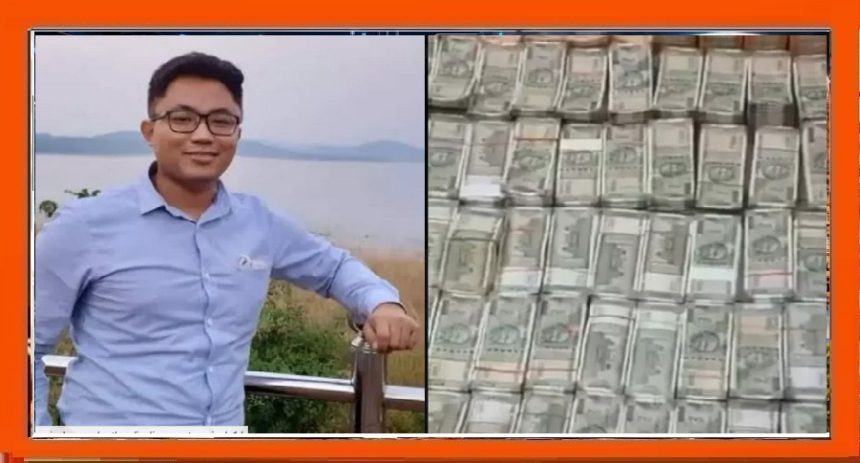
It was June 2025 when the Odisha Vigilance Directorate swooped in and arrested Chakma while he was posted as Sub-Collector of Dharmagarh in Kalahandi district. The charge? Accepting a cash bribe of ₹10 lakh from a businessman who ran a stone crusher unit.
This wasn’t a random accusation someone filed. It was a trap operation – a carefully planned vigilance sting. Officers from the Directorate caught Chakma allegedly in the act of receiving the money.
Chemical tests were carried out, and investigators claimed those tests confirmed that he had physical contact with the currency notes. That’s the standard procedure in trap cases — it’s hard to argue “I never touched the money” when the phenolphthalein test says otherwise.
But the ₹10 lakh was just the beginning. When vigilance teams searched his official residence afterward, they found approximately ₹47 lakh in cash sitting there. That number made headlines. For a Sub-Collector, that’s a significant amount of unexplained cash to have at home.
The case was registered under Section 7 of the Prevention of Corruption Act, 1988, as amended in 2018. That’s the provision dealing directly with public servants accepting gratification other than legal remuneration.
Arrest, Suspension, Bail — The Months That Followed
Chakma was produced before the Vigilance Court right after his arrest on June 8, 2025. Two days later, on June 10, the Odisha government formally placed him under suspension. That’s fairly standard procedure when a government officer faces a criminal case of this nature — you can’t have someone continuing in a position of administrative power while simultaneously being investigated for abusing that very power.
He spent several weeks in judicial custody. Then, in July 2025, the Orissa High Court granted him conditional bail. The legal proceedings, however, didn’t stop. They’re still ongoing. The case against him continues to move through the judicial process, and the vigilance investigation remains very much alive.
A Government Order, and He’s Back
On May 21, 2026, the Odisha government issued a fresh order posting Chakma as Deputy Secretary in the Revenue Department. He has since formally assumed charge of that position.
This is where things get complicated — or at least, where public opinion tends to split. On one hand, getting bail doesn’t mean acquittal. The case isn’t closed. He hasn’t been found innocent. On the other hand, under Indian law, suspension doesn’t automatically continue indefinitely, especially when bail has been granted and a certain amount of time has passed. Administrative reviews happen. Departments weigh in. And sometimes, officers are reinstated while their cases continue in court.
That appears to be exactly what has happened here.
Who Is Dhiman Chakma, Really?
This is the part that made his case so striking in the first place. Chakma isn’t the stereotype of a well-connected officer from a privileged background. He’s the opposite.
Born on November 15, 1989, in Kanchanpur — a small town in North Tripura — he grew up in a modest household. His father was a school teacher. His mother is a homemaker. There was no legacy, no family connection in the bureaucracy, no shortcut. He did it the hard way.
His undergraduate degree was a B.Tech. in Computer Science from NIT Agartala. Engineering, not the humanities background many civil servants come from. After finishing his degree, he set his sights on UPSC — arguably the toughest competitive examination in the country.
His first attempt succeeded. In 2019, he cleared the Civil Services Examination and was selected for the Indian Forest Service. That itself is a remarkable achievement — IFS is not an easy selection. Most people would have stopped right there, taken the posting, built a career.
Chakma didn’t stop. He appeared again the following year, in 2020, determined to get into the IAS specifically. And he improved. His All India Rank came in at 482 — good enough for the IAS, and good enough to be allotted the Odisha cadre.
Back home in Kanchanpur, he became something of a local legend. One of the first people from that area to make it into the IAS. The kind of story that inspires younger students and gives parents something to point to when they tell their kids that hard work pays off.
The Career That Was Building — Before It Wasn’t
In Odisha, Chakma went through the usual training and administrative postings that new IAS officers go through. His most significant field role was the Sub-Collector position in Dharmagarh, Kalahandi district — a posting that carries real administrative weight. Revenue administration, development programmes, regulatory oversight. It’s not a ceremonial desk job.
He had also briefly served as Officer on Special Duty in the General Administration and Public Grievance Department. His career trajectory, by all outward measures, looked solid.
And then came the arrest.
Why This Case Still Matters
Corruption cases involving senior government officers aren’t rare in India. They happen. But this one hit differently for a few reasons.
Chakma was young. He was early in his career, not some officer in the final stretch before retirement trying to pad a pension. He came from a background that made his success feel genuinely earned. And the optics of a first-generation civil servant being arrested for taking a bribe in a trap operation — that stings in a way that a more conventional case might not.
The public conversation that followed his arrest in 2025 was loud. Social media had a field day. Governance watchers and civil society voices used it as a moment to talk about systemic issues — what pressures do junior officers face, what structures enable or encourage corruption, whether individual character is enough in environments where graft is normalized.
None of those conversations are over. And now that he’s back in service, they’re likely to resurface.
Where Things Stand Right Now
Dhiman Chakma is Deputy Secretary, Revenue Department, Odisha. He has taken charge. The government order that made it happen was dated May 21, 2026.
The vigilance case against him is still in the judicial pipeline. Bail has been granted, but the trial process continues. Whether he is ultimately convicted, acquitted, or something in between — that’s for the courts to determine.
What’s certain is that his story is far from finished. The arc from Kanchanpur to the UPSC to Dharmagarh to a vigilance arrest to a suspension to a reinstatement — it’s a complicated one. And in a country that watches its bureaucracy closely and argues fiercely about accountability, Dhiman Chakma’s name isn’t going to fade from conversation any time soon.