

Delhi Police Gets a Big Leadership Overhaul — 34 IPS and DANIPS Officers Reshuffled, V. Hareshwar Swami Takes Charge of West District
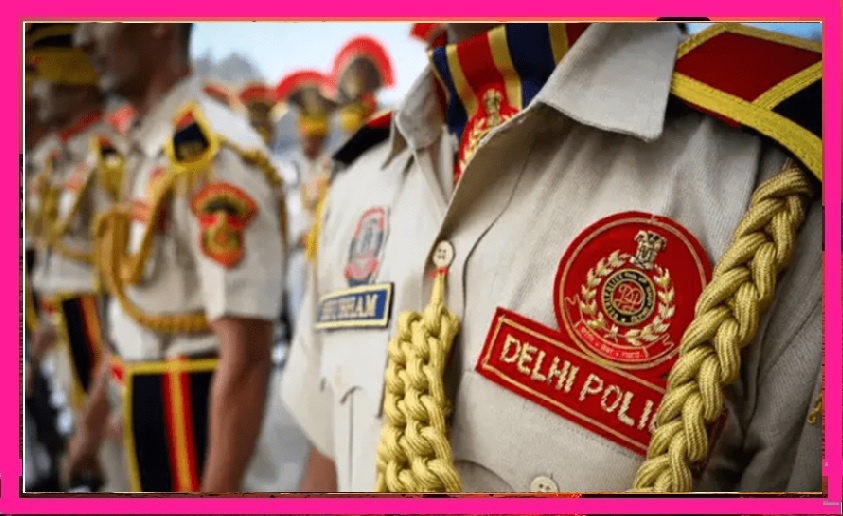
Delhi Police just went through one of its more sweeping personnel exercises in recent memory. The Delhi Government, acting on the recommendations of the Police Establishment Board, has ordered the transfer and fresh posting of 34 IPS and DANIPS officers across the force. Districts, traffic, security, crime investigation, licensing, welfare, communications — practically every wing of the organization has seen some movement.
This isn’t one of those reshuffles where a handful of officers swap chairs and everything else stays the same. The order touches a genuinely wide cross-section of Delhi Police’s operational and administrative machinery. And with several recently promoted officers now getting their first major field postings, the exercise carries some real weight in terms of what it signals about where the force is heading.
West District Gets a New Face
The most prominent individual change in the order involves West District. Sharad Bhaskar Darade, who had been serving as DCP West, has been moved to Police Headquarters. Taking his place is V. Hareshwar Swami, who now steps in as the new Deputy Commissioner of Police for West District.
West District is one of the busier and more complex jurisdictions in the capital — densely populated, significant commercial activity, and its fair share of law and order demands. The appointment of Swami signals the administration’s intent to put experienced hands in charge of high-pressure postings.
North East, Outer North and Shahdara Also See Changes
Beyond West District, there’s significant movement across several other parts of the city.
Rahool Alwal has been pulled from the Anti-Narcotics Task Force and posted to North East District — an interesting move that brings someone with specialized anti-narcotics experience into a district that has historically seen its share of ground-level challenges.
Shobhit D. Saksena has been appointed DCP of Outer North District, filling what was evidently a key vacancy in one of Delhi’s larger peripheral jurisdictions.
In North District, Niharika Bhatt has been brought in as Additional DCP-I. That’s a notable appointment — North District covers some of the capital’s most historically significant and high-footfall areas, from Civil Lines to Kashmiri Gate.
Other district-level changes include Sikandar Singh moving from North West to Shahdara, Kumar Abhishek being posted as Additional DCP-II in South West District, Arvind Kumar getting Additional DCP-II responsibilities in North East District, Ridhima Seth being appointed Additional DCP-II Shahdara, and Ajay Kumar heading to Seelampur as ACP.
Traffic Wing Gets a Structural Shake-Up
Traffic management in Delhi is its own beast — a constant, grinding challenge that requires both sharp operational instincts and strong administrative coordination. The reshuffle gives the Traffic Unit some fresh leadership at the top.
Jimmy Chiram has been appointed DCP Traffic and has additionally been handed the charge of SPUNER — the specialized unit dealing with traffic regulation and enforcement coordination. Alongside him, Ranbir Singh has been appointed DCP Traffic on current duty charge, essentially creating a dual leadership arrangement at the helm of the traffic wing.
Satish Kumar, who was previously in the Traffic Unit, has been shifted out and posted as Additional DCP-I in Rohini District.
Whether these changes translate into visible improvement on Delhi’s chronically congested roads remains to be seen. But at least the administrative intent is clear — the Traffic Unit needed fresh eyes and fresh accountability.
Security Establishment Sees Multiple Appointments
The security wing of Delhi Police — responsible for protection of critical installations, courts, institutions and VIP arrangements — has seen arguably the most appointments in a single reshuffle order in recent times.
Sulekha, previously posted in Rohini, has been appointed DCP Security. Manasvi Jain has also been assigned DCP Security responsibilities. Jitendra Mani has moved from Court Security to the Security Division.
On the support side, Vipul Anekant has been posted as Additional DCP Security, and Prakshay Kumar Singh has been transferred in as Additional DCP Security as well. Abhishek Gupta has shifted from West District to the Security Wing.
Two specific high-profile assignments have also been made. Pankaj Sood has been given charge of Supreme Court Security — arguably one of the most sensitive security responsibilities within Delhi Police’s portfolio. Ishan Bhardwaj, who was previously in the Security Wing, has been moved out and posted to South East District.
The concentration of appointments in the security establishment reflects how seriously Delhi Police takes the protection of critical infrastructure and judicial institutions — particularly given the evolving security environment in the capital.
Crime Branch Gets Reinforcement, ANTF Strengthened
The investigative and specialized enforcement arms of Delhi Police have also seen meaningful changes.
Chandra Kumar Singh has been transferred from NAV to the Crime Branch — a move that brings additional experience into the unit responsible for some of Delhi’s most complex criminal investigations.
Ashok Kumar, meanwhile, has been pulled from South District and posted as DCP, NAV — taking over a role that Chandra Kumar Singh has vacated.
The Anti-Narcotics Task Force gets a boost with the posting of Gaurav Gupta, who has been moved from North East District to ANTF. Given the ongoing pressure on anti-drug enforcement operations across the capital, reinforcing the ANTF with experienced officers sends a clear signal about priorities.
Licensing, Welfare and Communications Reorganized
Some of the quieter but equally important functions within Delhi Police have also seen changes.
Aishwarya Sharma has moved from South East District to the Licensing Unit, which handles a broad portfolio of licences — arms, hotels, event permissions and more. Anyesh Roy will continue as DCP at IFSO (Intelligence Fusion and Strategic Operations), but has relinquished the additional charge of Licensing that he had been holding alongside his primary role.
On the welfare front, Isha Singh has been appointed DCP Welfare, a role that involves looking after the interests of serving police personnel and their families. Mayank Bansal has been given additional charge of Welfare while continuing his responsibilities in the Communication Unit.
Newly Promoted Officers Get Field Postings
Two recently promoted officers have been handed important field responsibilities as their first major assignments following their promotions.
Ravinandan B.M. has been promoted and posted as Additional DCP-I, North West District — one of Delhi’s most populous and administratively demanding jurisdictions.
Vikas Meena has been promoted and appointed Additional DCP-I, Dwarka District — a rapidly growing part of south-west Delhi that comes with its own distinct policing challenges.
Both postings are part of a broader effort to ensure that officers who’ve earned their promotions are immediately put to work where they can make a difference at the district level.
Armed Police and Administrative Units Covered Too
The transfer order extends to battalion-level and administrative assignments as well. Deepak Yadav has been appointed DCP of the Fourth Battalion, Delhi Armed Police — the reserve force that provides backup during major law and order situations.
Alok Kumar Singh has been posted as DCP, RP Bhawan, and Dabhi Anand Dinesh Bhai has also been assigned DCP responsibilities at RP Bhawan under the same order.
What Does This Add Up To?
Taken as a whole, this is a significant administrative exercise — 34 officers, across virtually every major wing of the force, getting new assignments simultaneously. That kind of breadth isn’t accidental. It reflects a deliberate attempt to refresh leadership, clear out postings that had gone stagnant and position the right officers in the right roles heading into what is always a demanding period for policing in the national capital.
Whether the intended efficiency gains actually materialize will depend on execution — how quickly new incumbents get up to speed, how well they coordinate with their teams and whether the inter-unit communication that these reshuffles are meant to improve actually improves in practice.
But as a statement of administrative intent, this one’s hard to miss.