

From Kupwara and Kathua to Delhi’s Outer North — IPS Officer Shobhit D Saksena Brings Counter-Insurgency Experience to the Capital’s Toughest District
There’s a particular kind of policing experience that comes from working in Jammu and Kashmir — border districts, counter-insurgency environments, high-stakes security coordination with multiple agencies simultaneously. Not many officers get that exposure, and fewer still get it across multiple sensitive postings in quick succession. Shobhit D Saksena is one of those officers. And now, the Ministry of Home Affairs has decided that experience belongs in Delhi.
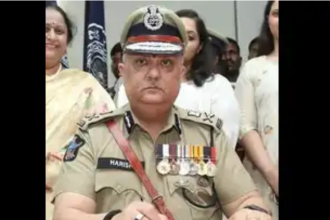
Saksena, a 2015-batch IPS officer belonging to the AGMUT cadre, has been appointed as the Deputy Commissioner of Police, Outer North Delhi. The transfer comes as part of a broader cadre reshuffle exercise conducted by the MHA, which routinely rotates AGMUT officers across Union Territories to ensure they get varied administrative exposure. But in Saksena’s case, the move feels like more than just a routine rotation — it’s a deliberate deployment of a tested field officer into one of Delhi’s most demanding districts.
What He’s Coming From — A Career Built in Difficult Terrain
To understand why this posting matters, it helps to look at where Saksena has spent the bulk of his career so far. His assignments in Jammu and Kashmir read like a tour of the region’s most operationally demanding locations.
He served as Senior Superintendent of Police in Kathua — a border district in Jammu’s Tawi region that sits right along the international boundary with Pakistan and has historically been a sensitive corridor for cross-border movement. Then there was Kupwara — arguably one of the most challenging postings in all of J&K. Kupwara is in the far north of the Kashmir Valley, shares a Line of Control border with Pakistan-administered Kashmir, and has long been associated with infiltration routes, militant activity and high-alert security operations. Holding the SSP’s chair there requires a very specific combination of tactical judgment, agency coordination skills and the ability to function under constant pressure.
Beyond those two field postings, Saksena also served as SSP of the Crime Investigation Department (CID) Headquarters in Jammu and as SSP Security, Jammu and Kashmir — roles that gave him exposure to intelligence-driven investigations and protective security frameworks on top of his front-line field experience.
That’s a career trajectory that covers border policing, counter-insurgency management, criminal investigation and security administration — across some of the most complex policing environments in the country. He’s not an officer who’s been sitting in comfortable postings building an administrative resume. He’s been out in the field.
What He’s Walking Into — Outer North Delhi Is No Simple Assignment
Outer North Delhi might not carry the same dramatic associations as Kupwara, but don’t mistake that for easy. This is one of Delhi’s largest and most complex districts in terms of sheer administrative load.
The district covers an unusual mix of densely packed urban settlements and semi-rural pockets — the kind of combination that creates policing challenges you don’t typically see in purely urban or purely rural areas. Population density is high, infrastructure development is uneven and the jurisdictional demands are considerable. Rapid urbanization has brought with it the classic problems of metropolitan peripheries — rising crime, resource strain, law and order pressure in areas that are growing faster than governance can keep up with.
It’s also a district that requires strong coordination with multiple agencies — not unlike what Saksena would have been doing in J&K, albeit in a very different context. Managing policing in Outer North Delhi demands someone who can hold together a large team, maintain ground-level intelligence networks and respond quickly to emerging situations. His J&K background makes him well-suited to precisely that kind of environment.
The AGMUT System and Why Officers Like Saksena End Up in Delhi
For those unfamiliar, the AGMUT cadre covers Arunachal Pradesh, Goa, Mizoram and Union Territories — including Delhi, Jammu and Kashmir, Ladakh and several other regions. IPS officers allotted to this cadre rotate across these diverse jurisdictions throughout their careers, which means a single officer might go from administering policing in a northeastern state to handling security in J&K to running a district in Delhi within the span of a decade.
The logic behind this rotation is sound — it builds officers with genuinely wide-ranging experience and prevents the kind of stagnation that can come from spending an entire career in a single geography. The MHA periodically conducts cadre restructuring exercises to manage these rotations, and Saksena’s latest transfer is part of that larger administrative machinery at work.
He was allotted the AGMUT cadre as a direct recruit after clearing the UPSC Civil Services Examination. A native of Uttar Pradesh, he holds a degree in law — which, for a police officer, is a useful background given how much of the job involves navigating legal frameworks, evidence standards and procedural requirements.
What This Appointment Signals
When the MHA moves an officer with Saksena’s specific background — border policing, counter-insurgency coordination, CID, security administration — into a major Delhi district, it’s reasonable to assume that the deployment is at least partly deliberate. Outer North Delhi is not a quiet corner of the capital. It has its own law-and-order demands, its own crime patterns and its own set of administrative complexities that require someone who isn’t going to be fazed by pressure.
Saksena’s track record in J&K suggests he isn’t. He’s operated in environments where the consequences of a misjudgment are immediate and severe. That kind of experience tends to produce officers who are operationally sharp, agency-coordination-savvy and calm under the kind of pressure that would unsettle someone with a more sheltered posting history.
Delhi’s Outer North District now has one of those officers at the helm. Whether the experience translates as smoothly as the MHA presumably hopes is something the next few months will reveal. But on paper, this looks like the right officer for a district that needed someone with genuine field credibility rather than just administrative seniority.
For Saksena himself, it’s a significant career moment — stepping into a high-visibility Delhi posting after years of building his credentials in one of the country’s most demanding policing environments. The transition from J&K’s border districts to the capital’s urban periphery is a sharp one. But if his record is anything to go by, he’s unlikely to find it unfamiliar territory for long.