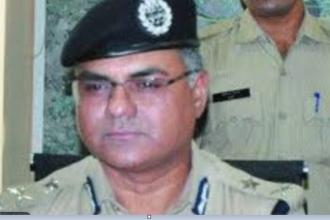



Centre Clears Key IPS Transfers: Mukhtar Mohsin Moves to SSB as DIG, Manish Singh Appointed SSP in NHRC
The Central Government has approved two significant appointments involving senior Indian Police Service officers, assigning them to key positions in two important national institutions. The latest orders, issued by the Department of Personnel and Training (DoPT), provide for the lateral transfer of IPS officers Mukhtar Mohsin and Manish Singh to the Sashastra Seema Bal (SSB) and the National Human Rights Commission (NHRC), respectively.
The appointments have been cleared by the competent authority as part of the Centre’s ongoing efforts to strengthen leadership across critical security and governance institutions. Both officers are currently serving on central deputation and bring substantial experience from their previous assignments.
The move is expected to reinforce operational capabilities within the SSB and enhance administrative and investigative oversight within the NHRC, two organizations that play crucial roles in India’s security and governance framework.
Mukhtar Mohsin Shifted to SSB as Deputy Inspector General
One of the key decisions announced by the government concerns Mukhtar Mohsin, a 2005-batch IPS officer of the Uttarakhand cadre.
Mohsin is presently serving as Deputy Director and Deputy Inspector General in the National Crime Records Bureau (NCRB), where he has been associated with important data-driven policing initiatives, crime analysis systems and national-level law enforcement coordination.
According to the official order, he has now been appointed as Deputy Inspector General in the Sashastra Seema Bal on a lateral shift basis.
His appointment will become effective from the date he formally assumes charge of the new assignment. The tenure is scheduled to continue until April 16, 2031, completing a combined central deputation period of five years, unless modified by subsequent government orders.
The notification also specifies that his deputation tenure will be counted from April 17, 2026.
The posting places Mohsin in one of India’s most important border-guarding forces at a time when security management along international borders continues to demand advanced intelligence coordination and operational preparedness.
Veteran Officer Brings Strong Investigative Experience
Throughout his policing career, Mukhtar Mohsin has handled a range of law enforcement and investigative assignments.
His experience at the National Crime Records Bureau has provided him with deep exposure to crime analytics, criminal databases, technology-driven policing and inter-agency coordination.
Officials familiar with the functioning of central police organizations believe that such experience will be valuable in the SSB, particularly as border management increasingly relies on intelligence gathering, technology integration and real-time information sharing.
The Sashastra Seema Bal is one of India’s Central Armed Police Forces and is primarily responsible for guarding the country’s borders with Nepal and Bhutan.
Apart from border protection duties, the force also contributes to internal security operations, anti-smuggling efforts, intelligence collection and maintaining peace in sensitive areas. As a DIG in the force, Mohsin will be expected to play an important role in strengthening these operational responsibilities.
Manish Singh Posted as SSP in National Human Rights Commission
The second appointment approved by the Centre involves Manish Singh, a 2013-batch IPS officer of the Gujarat cadre.
Singh is currently serving as Director in the Bureau of Police Research and Development (BPR&D), an institution that plays a key role in police modernization, research, policy development and training initiatives across the country.
Under the latest order, he has been appointed as Senior Superintendent of Police in the National Human Rights Commission on a lateral shift basis.
The appointment will take effect from the date he joins the NHRC and will continue until November 13, 2030, completing a combined central deputation tenure of five years, unless altered by future orders.
The notification further clarifies that his deputation tenure is being counted from November 14, 2025.
To facilitate the transition, the government has directed that Singh be relieved immediately from his current responsibilities at the BPR&D so that he can assume charge at the NHRC without delay.
Why the NHRC Posting Matters
The National Human Rights Commission occupies a unique position within India’s governance structure.
As the country’s apex statutory human rights body, the NHRC is tasked with protecting and promoting human rights, examining complaints of violations, conducting inquiries, recommending corrective measures and engaging with governments and institutions on rights-related issues.
The role of Senior Superintendent of Police within the Commission carries considerable importance. Officers posted in the NHRC often assist in the examination of complaints, conduct investigations into alleged rights violations, coordinate with state authorities and contribute to the Commission’s fact-finding mechanisms.
Given Singh’s background in police research, institutional development and law enforcement administration, officials believe his experience could prove valuable in strengthening the Commission’s investigative and administrative functions.
Strategic Importance of Both Appointments
The latest transfers come at a time when both institutions face increasingly demanding responsibilities.
For the SSB, challenges include border surveillance, cross-border crime prevention, intelligence coordination and maintaining security along India’s sensitive frontiers with Nepal and Bhutan.
At the same time, the NHRC continues to deal with a growing volume of complaints, complex human rights issues and increasing expectations regarding accountability, transparency and institutional responsiveness.
The placement of experienced IPS officers in these organizations reflects the government’s broader approach of deploying seasoned law enforcement professionals in specialized roles where administrative expertise and operational understanding are essential.
Part of a Larger Administrative Exercise
The appointments also form part of a broader series of personnel decisions being undertaken by the Central Government across ministries, departments, regulatory bodies and security organizations.
Recent weeks have witnessed multiple appointments, deputations and additional charge allocations involving senior IAS and IPS officers as the government seeks to optimize administrative capacity across institutions.
Such lateral transfers are often viewed as opportunities for officers to bring expertise acquired in one organization to another, thereby strengthening institutional effectiveness and promoting cross-functional experience within the civil services ecosystem.
Strengthening Leadership Across National Institutions
For Mukhtar Mohsin and Manish Singh, the new assignments represent important milestones in their professional careers.
While Mohsin transitions from a crime-data and investigative environment to a frontline border security role within the SSB, Singh moves from a policy and research-oriented institution to India’s premier human rights watchdog.
Both positions carry significant responsibilities and are expected to contribute to the functioning of organizations that occupy critical spaces in India’s security and governance architecture.
With the latest appointments now formally approved, the two IPS officers are set to take charge of their new responsibilities, bringing their respective experience and expertise to institutions that play a vital role in safeguarding national interests, public accountability and democratic governance.