

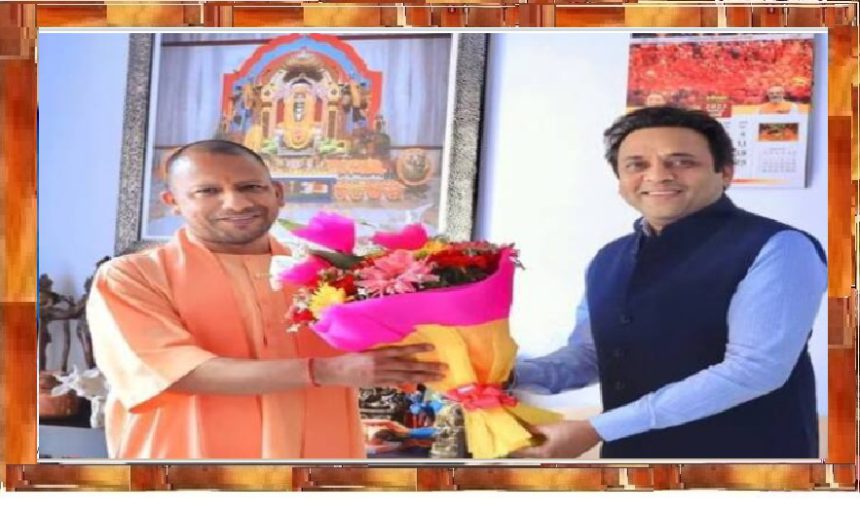
Who Is IAS Sanjay Prasad? Supreme Court Grants Relief to UP Home Secretary, Stays Allahabad High Court’s Adverse Directions
New Delhi: In a development that has drawn widespread attention across legal, bureaucratic, and political circles, the Supreme Court has granted interim relief to senior Uttar Pradesh cadre IAS officer Sanjay Prasad, staying adverse directions issued against him by the Allahabad High Court in a matter connected to police reforms and criminal investigations in the state.
The order came from a Bench comprising Justices Prashant Kumar Mishra and Atul Chandurkar, which heard an appeal filed by Prasad, currently serving as Additional Chief Secretary (Home), Uttar Pradesh.
The apex court’s intervention temporarily halts the impact of strong observations made by the Allahabad High Court earlier this month, where concerns had been raised regarding the implementation of judicial directions aimed at improving criminal investigations and strengthening police accountability mechanisms in Uttar Pradesh.
The case has quickly become one of the most closely watched legal and administrative developments in the country because it touches upon larger issues involving judicial oversight, executive functioning, administrative accountability, and the implementation of institutional reforms.
Supreme Court Provides Interim Relief
The Supreme Court’s order specifically stayed a key direction issued by the Allahabad High Court that required the Department of Personnel and Training (DoPT) to keep the court’s findings on record while assessing Sanjay Prasad’s suitability for future assignments.
This particular direction had generated considerable discussion within bureaucratic circles because of its potential implications for the career progression of a serving senior civil servant.
By granting the stay, the Supreme Court has effectively suspended the operation of those observations until the matter receives further judicial examination.
The relief comes less than two weeks after the Allahabad High Court delivered its judgment on June 3, making several strong observations regarding the conduct of the senior IAS officer.
For now, the Supreme Court’s intervention ensures that the High Court’s adverse directions will not have immediate administrative consequences.
What Triggered the Controversy?
The controversy originated from a habeas corpus petition filed before the Allahabad High Court by a woman seeking custody of her minor daughter.
According to the petition, the child had allegedly been enticed away by a man. During the course of hearing the matter, the High Court began examining broader issues related to the quality of police investigations and compliance with judicial directives aimed at improving investigative standards.
The court reportedly found deficiencies in the manner the police investigation had been conducted and subsequently questioned whether the Uttar Pradesh Police and the state administration had properly implemented directions issued in an earlier landmark case concerning police reforms.
The earlier judgment, known as Subhash Chandra & Others versus State of Uttar Pradesh, had laid down measures intended to strengthen criminal investigations and improve accountability within the policing system.
As part of the proceedings, the court sought explanations regarding the implementation of those directives.
High Court Raised Questions Over Delay
When the court sought clarification regarding compliance, an affidavit submitted through the Home Department informed the bench that the Uttar Pradesh Government had decided to challenge the earlier judgment before the Supreme Court.
This explanation, however, did not fully satisfy the High Court.
Justice Vinod Diwakar observed that although the earlier judgment had been delivered in May 2025, no challenge had been filed for nearly a year. According to the court, the decision to move the Supreme Court appeared to have been taken only after explanations were sought from the Additional Chief Secretary (Home).
The High Court also noted that despite several opportunities, no order from the Supreme Court staying the earlier judgment had been placed before it.
Based on these circumstances, the court made strong observations regarding the conduct of the senior bureaucrat and questioned the pace and seriousness of efforts to implement the recommended reforms.
Strong Observations by the Allahabad High Court
The High Court’s judgment contained unusually sharp remarks.
Justice Diwakar observed that the conduct of the officer appeared, at least prima facie, to indicate a deliberate attempt to delay or obstruct the implementation of judicial directions relating to police reforms.
The court also remarked that there appeared to be reluctance in facilitating measures intended to improve investigative standards and ensure compliance with judicial mandates.
According to the High Court, allowing such situations to continue unchecked could weaken the effectiveness of constitutional courts and create an undesirable precedent in which administrative authorities delay or resist implementation of judicial directives.
These observations attracted considerable attention because they involved one of the most senior bureaucrats in Uttar Pradesh.
Earlier Judicial Scrutiny in Another Matter
This is not the first time Sanjay Prasad has found himself under judicial scrutiny in recent months.
In another case involving allegations of cheating and criminal breach of trust in Lucknow, the Allahabad High Court had expressed concern regarding delays in investigation.
During those proceedings, the court reportedly questioned the pace of administrative action and sought explanations from the Home Department.
The court observed that certain investigative steps, including arrests of accused persons, appeared to have gained momentum only after judicial intervention.
As a result, the court sought additional information and a detailed affidavit from the senior officer.
That matter continues to remain under consideration.
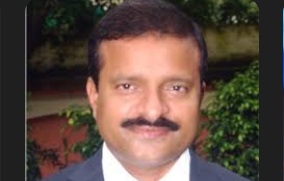
Who Is IAS Sanjay Prasad?
Sanjay Prasad is widely regarded as one of the most influential bureaucrats in Uttar Pradesh and occupies a central position within the state’s administrative structure.
A 1995-batch IAS officer of the Uttar Pradesh cadre, he has built a career spanning more than three decades across district administration, state governance, and central government assignments.
Over the years, he has earned a reputation as an efficient administrator with extensive experience in governance, law and order management, development administration, and policy implementation.
Today, he is considered one of the most trusted senior officials in the Uttar Pradesh government.
Early Life and Educational Background
Sanjay Prasad was born on May 23, 1971, in Sitamarhi, Bihar.
He pursued higher education in Geography and obtained a Master of Arts (M.A.) in Geography before joining the Indian Administrative Service through the prestigious Civil Services Examination conducted by the Union Public Service Commission.
His entry into the IAS marked the beginning of a long administrative career that would eventually place him among the most powerful bureaucrats in India’s largest state.
The Gorakhpur Connection
One of the most significant phases of Prasad’s career came between 1999 and 2001, when he served as Chief Development Officer (CDO), Gorakhpur.
It was during this period that he worked closely with Yogi Adityanath, who was then a Member of Parliament representing the Gorakhpur constituency.
Administrative observers often identify this phase as the beginning of a professional association that would later become highly significant within Uttar Pradesh’s governance structure.
Over the years, the relationship developed into one of trust and administrative confidence.
Extensive District-Level Experience
Like many senior IAS officers, Sanjay Prasad gained extensive field experience through multiple district postings.
He has served as District Magistrate in several important districts, including:
Agra
Prayagraj (then Allahabad)
Ayodhya (then Faizabad)
Firozabad
Bahraich
Lakhimpur Kheri
These assignments exposed him to a wide range of governance challenges, including law and order management, revenue administration, development planning, disaster response, and public welfare implementation.
Such field experience later contributed to his rise within the state’s administrative hierarchy.
Senior Administrative and Central Government Roles
Apart from district assignments, Prasad has held several senior administrative positions within Uttar Pradesh.
He also served on central deputation for nearly four years, where he worked as Joint Secretary in:
Ministry of Defence
Ministry of Science and Technology
These assignments provided him exposure to national-level policymaking, strategic administration, and inter-ministerial coordination.
His experience across both state and central government systems significantly enhanced his administrative profile.
Rise to the Top of Uttar Pradesh’s Bureaucracy
Following the retirement of veteran IAS officer Awanish Awasthi in 2022, Sanjay Prasad’s influence within the Uttar Pradesh administration expanded considerably.
He was entrusted with the powerful combination of the Home Department and the Information Department, a concentration of responsibilities rarely seen within state administrations.
The move signaled the confidence reposed in him by the political leadership.
In May 2026, his stature increased further when he was appointed Additional Chief Secretary to the Chief Minister, placing him at the center of policy coordination and strategic decision-making.
A Wide-Ranging Portfolio
At present, Sanjay Prasad handles an exceptionally broad set of responsibilities.
His portfolio includes:
Chief Minister’s Office Administration
Home Department
Information and Public Relations
Vigilance
Confidentiality (Gopan)
Protocol
Passport and Visa Matters
Estate Department
The combination of these departments places him among the most powerful serving bureaucrats in Uttar Pradesh.
His responsibilities span governance coordination, law and order management, administrative oversight, public communication, and policy implementation.
Why the Supreme Court Order Matters
The Supreme Court’s decision to stay the Allahabad High Court’s directions is being viewed as a significant development, both legally and administratively.
For Sanjay Prasad personally, the order provides immediate relief from observations that could potentially have affected future service-related evaluations.
More broadly, the case raises important questions regarding the relationship between the judiciary and the executive, particularly in matters involving implementation of court-directed reforms.
Legal experts suggest that the proceedings could have wider implications for how accountability, administrative discretion, and judicial oversight interact within India’s governance framework.
What Happens Next?
While the Supreme Court has provided interim protection, the broader issues highlighted by the Allahabad High Court remain unresolved.
Future hearings are expected to examine the legal and administrative questions in greater detail, including the implementation of police reforms and the responsibilities of government officials in complying with judicial directives.
Until then, the High Court’s adverse directions remain suspended.
For now, the Supreme Court’s intervention has offered temporary relief to one of Uttar Pradesh’s most influential bureaucrats. Yet the larger debate surrounding police reforms, administrative accountability, and institutional balance continues to remain very much alive.
As the case proceeds through the judicial system, it is likely to be followed closely by civil servants, legal experts, policymakers, and governance observers across the country.