

Chhattisgarh PCCF Arun Pandey Orders High-Level Probe After Elephant Injured in Train Collision; Three-Member Committee to Review Railway Safety Gaps
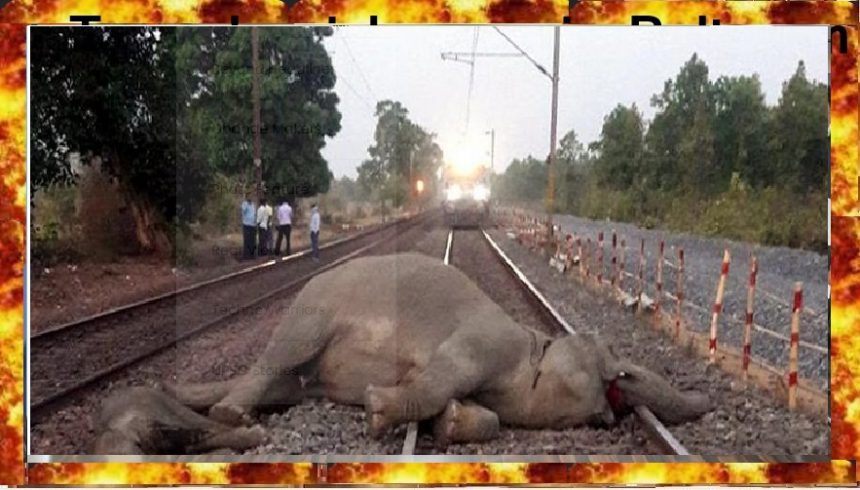
Chhattisgarh PCCF Arun Pandey has ordered a high-level probe after an elephant was critically injured in a train collision in Raigarh. A three-member committee will investigate railway safety measures, elephant corridors, wildlife crossings, and preventive mechanisms.
A serious train collision involving an elephant in Chhattisgarh’s Raigarh district has prompted the state’s top forest authorities to launch an extensive investigation and review wildlife safety mechanisms along railway routes passing through elephant habitats.
In response to the incident, Principal Chief Conservator of Forests (PCCF) Arun Pandey has constituted a three-member high-level inquiry committee to examine the circumstances that led to the accident, identify possible lapses, and recommend long-term measures aimed at preventing similar incidents in the future.
The accident occurred in the Charmar Beat area under the Gharghoda Forest Range in Raigarh Forest Division, a region known for elephant movement and wildlife activity. The injured elephant reportedly sustained serious injuries after being struck by a train, triggering an immediate response from the Forest Department.
Senior officials rushed to the location soon after receiving information about the collision, while veterinary teams were mobilized to provide urgent medical care to the animal.
The incident has once again brought attention to the growing challenges of protecting wildlife in areas where railway infrastructure cuts through natural habitats and traditional migration routes.
PCCF Arun Pandey Orders Detailed Investigation
Recognizing the seriousness of the incident, PCCF Arun Pandey directed the formation of a specialized committee consisting of senior forest officers with extensive experience in wildlife management and conservation.
The committee has been assigned the responsibility of conducting a comprehensive inquiry into every aspect of the accident.
Officials have been asked to submit a detailed report within two weeks.
Forest authorities believe that a thorough investigation is necessary not only to determine what happened in this particular case but also to identify broader shortcomings in existing wildlife protection mechanisms.
The findings are expected to play a crucial role in shaping future conservation strategies across railway corridors that pass through elephant landscapes.
Three Senior Forest Officers Included in Probe Panel
The inquiry committee comprises experienced officers from some of Chhattisgarh’s most important wildlife and forest divisions.
The members include:
Priyanka Pandey, In-Charge Chief Wildlife Warden and Field Director of Achanakmar Tiger Reserve, Bilaspur, who will head the committee.
Arvind P.M., Divisional Forest Officer (DFO), Raigarh Forest Division.
Jitendra Kumar Upadhyay, Divisional Forest Officer (DFO), Dharamjaigarh Forest Division.
The selection of officers from both wildlife conservation and territorial forest administration backgrounds is intended to ensure a comprehensive review of ecological, operational, and infrastructural issues associated with the accident.
Investigation to Cover Multiple Critical Areas
The committee has been given a broad mandate and instructed to examine several important factors that may have contributed to the collision.
Officials say the inquiry will go beyond identifying the immediate cause and will focus on systemic issues affecting wildlife safety along railway tracks.
Detailed Site Inspection
One of the committee’s primary tasks will be conducting an on-ground inspection of the exact location where the accident occurred.
The team will assess track conditions, surrounding vegetation, visibility factors, and the physical characteristics of the railway corridor.
Investigators will attempt to reconstruct the sequence of events that led to the collision and determine whether any warning indicators or risk factors were overlooked.
Review of Elephant Movement Routes
A major focus of the inquiry will be understanding elephant movement patterns in the area.
The committee has been instructed to examine whether the collision occurred along a recognized elephant corridor or a frequently used migration route.
Forest officials will analyze historical movement data, field observations, and existing wildlife corridor maps to determine how regularly elephants use the affected stretch.
This assessment could help authorities identify whether additional protection measures are needed in the region.
Assessment of Wildlife Crossings
The inquiry panel will also evaluate the availability and effectiveness of wildlife crossings and animal passage structures near the accident site.
Experts have repeatedly emphasized the importance of dedicated crossings that allow animals to move safely across railway tracks and highways without coming into direct conflict with transport infrastructure.
The committee will determine whether such facilities exist in the area and whether they are functioning as intended.
Examination of Terrain and Railway Alignment
Another important aspect of the investigation involves studying the geographical characteristics of the accident zone.
The panel will review factors such as:
Track elevation
Railway embankments
Curves and gradients
Visibility conditions
Forest density
Natural barriers
These factors often influence both animal movement and train operations and can significantly increase collision risks in wildlife-sensitive regions.
Safety Measures to Come Under Scrutiny
The inquiry will also conduct a detailed audit of existing safety infrastructure along the railway stretch.
Officials will verify whether adequate protective measures had been implemented in accordance with established guidelines for wildlife areas.
The review will cover:
Speed restrictions for trains
Warning signboards
Wildlife caution markers
Alert systems
Monitoring mechanisms
Coordination procedures between railway and forest authorities
The committee will assess whether these measures were properly installed, maintained, and enforced.
Any gaps or deficiencies identified during the investigation are expected to form part of the final recommendations.
Forest Department Launches Emergency Response
Immediately after the accident was reported, forest officials initiated emergency rescue and treatment efforts.
Senior officers visited the site to monitor the situation and coordinate response activities.
Veterinary teams were deployed to assess the elephant’s condition and begin medical treatment.
Officials said continuous monitoring of the injured animal is underway and every effort is being made to maximize its chances of recovery.
The health of the elephant remains a key concern for forest authorities, who are closely tracking its condition.
PCCF Issues Wider Instructions Across Railway Corridors
While ordering the inquiry, Arun Pandey also issued broader directions aimed at strengthening wildlife protection throughout railway corridors passing through forest areas.
All forest divisions under the Bilaspur Circle that have railway lines running through wildlife habitats have been instructed to intensify coordination with railway authorities.
The objective is to proactively identify risks before they result in accidents.
Officials have been directed to focus on:
Mapping wildlife-sensitive railway sections
Identifying elephant movement zones
Strengthening speed regulation measures
Improving warning and alert systems
Enhancing monitoring of animal crossings
Establishing rapid-response coordination mechanisms
The PCCF has emphasized that prevention must become the primary focus of future efforts.
Growing Concern Over Elephant Deaths and Injuries
The latest accident has renewed concerns regarding the increasing number of wildlife casualties linked to expanding transportation infrastructure.
Elephants in particular face substantial risks as railway lines, highways, mining projects, and other development activities increasingly intersect traditional migration routes.
Districts such as Raigarh, Dharamjaigarh, Korba, Surguja, and neighboring forest regions have witnessed growing elephant movement in recent years.
Wildlife experts have long argued that conservation planning must evolve alongside infrastructure expansion.
They have repeatedly called for stronger mitigation measures, including:
Strict train speed regulations in elephant habitats
Real-time monitoring systems
Thermal imaging technology
Camera-based surveillance
Artificial intelligence-enabled warning systems
Dedicated underpasses and overpasses
Better information sharing between departments
According to conservationists, many accidents can be prevented if technology and coordinated planning are deployed effectively.
Long-Term Solutions Now in Focus
Forest officials have stressed that the inquiry is not simply about determining responsibility for one incident.
The larger objective is to identify weaknesses in existing systems and develop durable solutions capable of reducing wildlife-train collisions across the state.
Authorities hope the committee’s recommendations will help establish stronger safety protocols and create a more effective framework for protecting elephants and other wildlife species.
As railway networks continue to expand across forested landscapes, balancing infrastructure growth with biodiversity conservation remains one of the most significant challenges facing policymakers.
The findings of the three-member committee are therefore expected to be closely watched by conservationists, railway officials, environmental planners, and wildlife experts alike.
For now, attention remains focused on the injured elephant’s recovery and the outcome of the investigation that could influence future wildlife protection strategies across Chhattisgarh’s railway corridors.