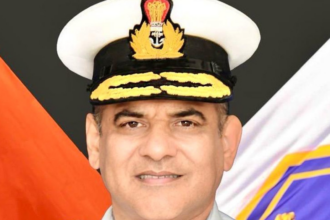



Who Will Be the Next SPG Director? S Suresh Leads Race as Centre Weighs Successor to Retiring Chief Alok Sharma
As SPG Director Alok Sharma prepares to retire in June 2026, senior IPS officers S Suresh, Sanjay A. Lathkar and Padmakar S. Ranpise have emerged as leading contenders for the top post. Here is a detailed look at the race to lead India’s elite Special Protection Group.
One of the most important leadership transitions in India’s security establishment is now underway. The Special Protection Group (SPG), the country’s elite security force tasked with protecting the Prime Minister of India, is preparing for a change at the top as its current Director, Alok Sharma, approaches retirement at the end of June 2026.
Sharma, a 1991-batch Indian Police Service (IPS) officer of the Uttar Pradesh cadre, is set to superannuate after a distinguished career in policing and national security. His departure will leave vacant one of the most sensitive and prestigious positions in India’s security framework, triggering an intense process of consultation and evaluation within the government.
Sources familiar with the developments indicate that three senior IPS officers have emerged as the leading contenders for the coveted position. These include S Suresh of the Kerala cadre, Sanjay Anandrao Lathkar of the Jharkhand cadre, and Padmakar S. Ranpise of the Odisha cadre.
The appointment is being closely monitored not only within the security establishment but also across the broader bureaucracy, given the enormous responsibilities attached to the office of the SPG Director.
Why the SPG Director’s Post Matters
The Special Protection Group occupies a unique position within India’s security architecture. It is entrusted with the proximate security of the Prime Minister and is responsible for planning, coordinating and executing some of the country’s most sensitive security operations.
The organisation operates under extraordinary levels of scrutiny and professionalism. Every movement involving the Prime Minister requires detailed planning, intelligence coordination, technological support and operational preparedness.
As security threats continue to evolve, the next SPG Director will be expected to oversee modernization initiatives, strengthen intelligence integration, adopt advanced protective technologies and ensure seamless security arrangements both within India and during overseas visits.
Given these responsibilities, the selection of a new SPG chief is considered one of the most consequential security appointments made by the Union Government.
S Suresh Emerges as the Leading Contender
Among all the officers currently under consideration, S Suresh is widely viewed as the frontrunner.
A 1995-batch IPS officer of the Kerala cadre, Suresh enjoys a significant advantage over other contenders because of his long association with the SPG. Having spent nearly a decade within the organisation, he possesses an intimate understanding of its operational systems, command structure and security protocols.
His extensive experience within the Prime Minister’s security ecosystem has made him the natural choice in the eyes of many observers.
However, the succession process may not be entirely straightforward.
Sources suggest that Suresh has reportedly expressed a desire to return to his parent cadre in Kerala. While no final decision has been taken, his personal preference could become an important factor when the government weighs its options in the coming days.
The Journey of S Suresh
Born on April 22, 1967, S Suresh joined the Indian Police Service after successfully clearing the UPSC Civil Services Examination.
He officially entered the IPS on September 3, 1995, and began his career in Kerala, where he held a series of policing assignments that helped establish his reputation as a capable and disciplined officer.
Over the years, he gained extensive experience in law enforcement, public order management and security administration before moving to central deputation.
A major turning point in his career came in March 2017 when he joined the Sashastra Seema Bal (SSB) as Inspector General. The assignment exposed him to border security management and national security operations at a high level.
Later that same year, in December 2017, he moved to the Special Protection Group.
Since joining the SPG, Suresh has steadily risen through the ranks and become one of the most influential officers within the organisation.
Government’s Confidence Reflected Through Repeated Extensions
One of the strongest indicators of Suresh’s standing within the security establishment is the series of deputation extensions granted to him over the years.
Successive approvals allowed him to continue serving beyond his original tenure, including extensions after March 2022, March 2023, March 2025 and March 2026.
Most recently, the government approved a fifth extension, allowing him to remain with the SPG until December 31, 2026.
Such repeated extensions are relatively rare and are often interpreted as a reflection of institutional confidence in an officer’s capabilities and leadership.
His elevation to the rank of Additional Director General in March 2024 further strengthened his credentials for the top position.
Sanjay A. Lathkar Remains a Strong Challenger
While Suresh may currently enjoy an advantage, Sanjay Anandrao Lathkar remains one of the strongest alternatives under consideration.
A 1995-batch IPS officer of the Jharkhand cadre, Lathkar currently serves as Inspector General (Security) in the Department of Atomic Energy.
His present role places him in charge of security arrangements for some of India’s most critical and strategic nuclear facilities.
Protecting nuclear infrastructure requires an exceptionally high level of operational precision, threat assessment and crisis management capability, making his current assignment one of the most sensitive security roles in the country.
A Career Built on Operational Policing and Counter-Terror Expertise
Lathkar’s career spans a wide range of operational and leadership assignments.
A native of Maharashtra and an M.Tech graduate from IIT Bombay, he joined the IPS on December 28, 1995.
Over the years, he has served as Superintendent of Police in several important districts including Bhojpur, Aurangabad, Dhanbad and Jamshedpur.
His career later expanded into specialized security and anti-terror operations.
Among his most notable assignments were his tenure with the Maharashtra Anti-Terrorism Squad (ATS), leadership responsibilities in the Central Reserve Police Force (CRPF), and senior positions within the Jharkhand Police.
His experience across counter-terrorism, internal security and strategic asset protection has made him a respected figure in national security circles.
His recent empanelment for Director General-level positions in June 2026 has further enhanced his prospects.
Padmakar S. Ranpise Also Emerges as Serious Candidate
Another officer whose name is attracting considerable attention is Padmakar S. Ranpise, a 1995-batch IPS officer of the Odisha cadre.
Like Lathkar, Ranpise has recently been empanelled for Director General-level appointments, making him eligible for some of the highest leadership positions in India’s security system.
Born on November 16, 1968, Ranpise has built an impressive career across both state policing and central armed police forces.
His experience ranges from personnel administration and vigilance oversight to counter-insurgency operations and industrial security management.
Extensive Experience Across CRPF and CISF
Ranpise’s professional journey includes several key assignments in the Central Reserve Police Force (CRPF) and the Central Industrial Security Force (CISF).
He has served as Inspector General of the CRPF’s Jammu Sector as well as the Western Sector, gaining valuable exposure to security challenges in diverse operational environments.
Later, he held senior leadership roles within the CISF, including Additional Director General of the South Sector and Additional Director General at CISF Headquarters.
These assignments provided him with expertise in large-scale security management, critical infrastructure protection, VIP security planning and inter-agency coordination.
His broad security background has made him a credible contender for the SPG’s top leadership position.
A Crucial Decision for India’s Security Establishment
The government now faces an important decision.
The next SPG Director will inherit responsibility for protecting the country’s highest elected office while also navigating increasingly sophisticated security threats.
The role requires a rare combination of operational expertise, leadership ability, technological understanding, intelligence coordination skills and crisis-management experience.
All three contenders bring impressive credentials to the table. S Suresh offers unmatched familiarity with the SPG’s internal functioning. Sanjay A. Lathkar brings extensive experience in strategic security and counter-terror operations. Padmakar S. Ranpise contributes decades of leadership across multiple security organisations and operational environments.
Final Decision Expected Before Month-End
With Alok Sharma scheduled to retire at the end of June, the government is expected to finalize the appointment in the coming days.
At present, S Suresh appears to hold a slight edge because of his long tenure within the SPG and his deep understanding of the Prime Minister’s security ecosystem.
Yet the race remains open.
If Suresh ultimately chooses to return to the Kerala cadre or if the government opts for a different leadership profile, officers such as Sanjay A. Lathkar and Padmakar S. Ranpise remain well-positioned to step into one of India’s most prestigious and strategically important security assignments.
The decision, whenever announced, will shape the future direction of the Special Protection Group and determine who will be entrusted with safeguarding the nation’s most important protectee in an increasingly complex security landscape.