

PM Principal Secretary P.K. Mishra Calls Administrative Data a Strategic National Asset, Urges Evidence-Based Policymaking for Viksit Bharat 2047
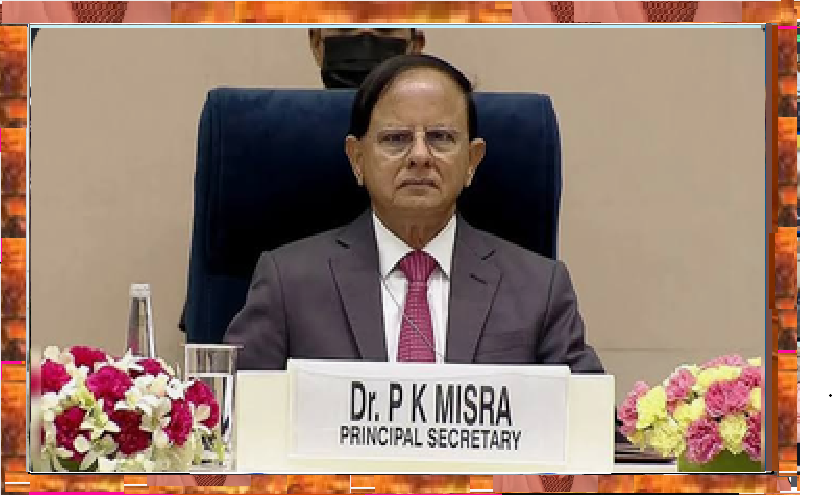
Principal Secretary to Prime Minister Narendra Modi, senior IAS officer Dr. P.K. Mishra (IAS:1972:Gujarat) has called for a major shift towards data-driven governance, saying that India’s ambition of becoming a ‘Viksit Bharat’ by 2047 can only be achieved through reliable statistics, evidence-based policymaking, and the effective use of administrative data.
Addressing the 20th Statistics Day celebrations in New Delhi on Monday, Dr. Mishra described administrative data generated across government departments as a strategic national asset capable of transforming governance, strengthening public service delivery, and making policymaking more accurate, efficient, and inclusive.
Speaking on this year’s theme, “Unlocking the Potential of Administrative Data,” he stressed that India possesses enormous volumes of valuable administrative information that remain underutilised. Harnessing this resource responsibly, he said, can significantly improve government programmes while ensuring transparency, accountability, and protection of citizens’ privacy.
His address reflected the growing emphasis being placed on data-led governance as India prepares for the long-term development goals envisioned under the Viksit Bharat 2047 mission.
Data-Driven Governance Central to Prime Minister Modi’s Vision
Dr. Mishra said that technology and data have become indispensable tools for modern governance and are integral to Prime Minister Narendra Modi’s vision of building a more responsive, efficient, and citizen-centric administration.
According to him, governments at every level must increasingly rely on credible and timely information while designing policies, implementing schemes, and evaluating outcomes.
He observed that evidence-based decision-making enables governments to allocate resources more effectively, identify gaps in service delivery, and ensure that development initiatives reach the people who need them most.
Reliable data, he remarked, should become the foundation upon which India’s development journey towards Viksit Bharat is built.
He added that accurate statistics not only improve governance but also help create policies that are inclusive, transparent, and capable of delivering measurable outcomes.
Quoting the broader objective of inclusive development, Dr. Mishra said that dependable data would help ensure that “every citizen is counted and no one is left behind.”
Administrative Data Is One of India’s Most Valuable National Resources
During his address, Dr. Mishra underlined the immense value of administrative data generated every day by government departments through routine governance and service delivery.
He described this information as one of the country’s most important strategic assets, capable of significantly improving public administration when effectively integrated into policymaking.
According to him, properly managed administrative data can help governments in several critical areas, including:
Designing more effective public programmes.
Improving targeted delivery of welfare schemes.
Monitoring implementation of government initiatives.
Supporting evidence-based policymaking.
Enabling real-time governance and quicker administrative responses.
Improving allocation of financial and institutional resources.
He noted that while enormous quantities of administrative data already exist within government systems, its true value can only be realised through stronger institutional frameworks and better governance mechanisms.
Integrated Data Ecosystems Essential for Better Governance
Dr. Mishra also highlighted the need to create seamless coordination among government institutions so that administrative data can be utilised more efficiently.
He stressed that data generated by various agencies should not remain confined within departmental silos.
Instead, he advocated for integrated and interoperable data ecosystems connecting:
Central Ministries.
State Governments.
Union Territories.
Various government departments and agencies.
Such integration, he said, would allow different databases to communicate effectively while maintaining consistency, reliability, and quality across administrative systems.
To support this objective, he referred to the National Metadata Structure 2.0, describing it as an important framework for creating common standards that enable interoperability between government databases.
He observed that improved coordination among institutions would strengthen governance while allowing policymakers to access comprehensive and reliable information in real time.
Focus on Better Data Quality and Timely Dissemination
Dr. Mishra emphasised that collecting data alone is not enough.
For administrative information to become genuinely useful, governments must ensure that it is accurate, standardised, easily accessible, and regularly updated.
He identified several areas that require sustained attention, including:
Improving data quality.
Strengthening interoperability among databases.
Better integration of administrative datasets.
Robust governance frameworks.
Timely dissemination of official statistics.
More granular statistical reporting for policy planning.
According to him, improvements across these areas would significantly enhance the reliability of government statistics and support more informed decision-making at every administrative level.
MoSPI’s Statistical Reforms Receive Appreciation
During the event, Dr. Mishra congratulated the Ministry of Statistics and Programme Implementation (MoSPI) for undertaking several important reforms aimed at modernising India’s statistical ecosystem.
He praised the Ministry for releasing a series of significant publications and policy documents that are expected to strengthen the country’s statistical infrastructure.
Among the key releases highlighted during the programme were:
Vision Document 2026-31.
Sustainable Development Goals (SDGs) Progress Report 2026.
India’s first city-level estimates of labour markets.
The first city-level estimates of informal enterprises.
Dr. Mishra noted that these initiatives represent important milestones in expanding the availability of high-quality official statistics for policymakers, researchers, and development planners.
He also appreciated the Ministry’s efforts to modernise India’s statistical framework through extensive consultations conducted between 2020 and 2025.
As part of this exercise, the Ministry accepted 216 expert recommendations aimed at strengthening the country’s statistical system and making it more responsive to contemporary governance needs.
Digital Platforms Are Transforming India’s Statistical Infrastructure
Highlighting the role of technology in statistical reforms, Dr. Mishra pointed to several digital initiatives that are modernising data collection and improving the credibility of official statistics.
He referred to important government platforms such as:
Computer-Assisted Personal Interviewing (CAPI).
e-Sankhyiki.
GoIStats.
PAIMANA.
e-SAKSHI.
According to him, these digital tools are helping government agencies collect information more efficiently while reducing delays, minimising manual errors, and improving the overall quality of official data.
He observed that digital transformation is making India’s statistical ecosystem faster, more transparent, and increasingly capable of supporting evidence-based governance.
Key Economic Indicators Being Updated
Dr. Mishra also drew attention to the ongoing exercise of updating several major macroeconomic indicators to better reflect the changing structure of India’s rapidly expanding economy.
He said work is currently underway to revise the base years of important economic indicators, including:
Gross Domestic Product (GDP).
Consumer Price Index (CPI).
Index of Industrial Production (IIP).
Updating these benchmarks, he explained, would improve the accuracy and relevance of national economic statistics, enabling policymakers to formulate more effective economic strategies based on current realities.
Accurate macroeconomic indicators, he added, remain essential for planning public expenditure, assessing economic performance, and designing future development policies.
Artificial Intelligence Must Be Built on Trusted Data
While acknowledging the enormous potential of Artificial Intelligence to transform governance, Dr. Mishra cautioned that the effectiveness of AI systems depends fundamentally on the quality of the data they are trained on.
He stressed that advanced technologies can deliver meaningful outcomes only when supported by reliable, verified, and high-quality datasets.
Poor-quality data, he warned, can lead to inaccurate analysis, flawed predictions, and ineffective policy decisions.
For this reason, strengthening the country’s statistical infrastructure remains just as important as adopting emerging technologies.
According to him, India’s digital governance ecosystem must continue investing in trusted datasets, strong institutional safeguards, and transparent data governance frameworks so that innovations such as AI can be deployed responsibly and effectively.
Building the Foundation for Viksit Bharat
Dr. P.K. Mishra’s address at the 20th Statistics Day celebrations underscored the increasingly central role of data in India’s governance architecture.
As the country works towards achieving the vision of Viksit Bharat 2047, he argued that administrative data should no longer be viewed merely as a by-product of government functioning but as a strategic national resource capable of shaping better policies, improving public service delivery, strengthening accountability, and ensuring inclusive development.
His message was clear – the future of governance will depend not only on technology but on the availability of accurate, credible, interoperable, and trusted data that enables governments to make informed decisions while ensuring that every citizen benefits from the country’s development journey.