

IAS Officer Manisha Khatri Leads Nashik’s Action-First Monsoon Task Force; Field-First Governance Model Focuses on Prevention Over Reaction
Breaking away from the conventional bureaucratic playbook of review meetings and post-rain damage assessments, the Nashik Municipal Corporation (NMC) has introduced a proactive, citywide Monsoon Task Force under the leadership of Municipal Commissioner Manisha Khatri (IAS:2014:Maharashtra). Built on the simple yet powerful philosophy of “Action First, Talks Later,” the initiative is designed to tackle civic issues before they snowball into emergencies during the monsoon season.
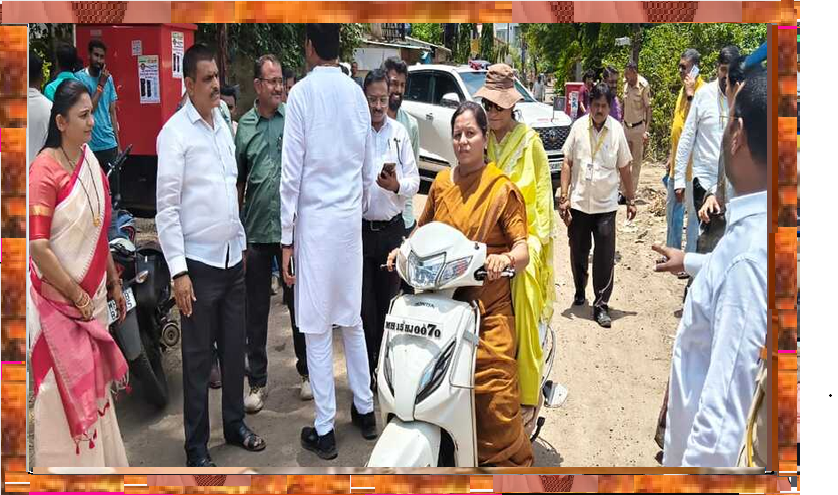
Rather than waiting for overflowing drains, flooded roads or mounting public complaints, the civic body has chosen to take administration directly to the streets. Senior officers, engineers, sanitation teams, elected representatives and local residents are working together in a coordinated effort to identify potential trouble spots, resolve issues in advance and improve the city’s preparedness for heavy rainfall.
The initiative marks a significant shift from reactive crisis management to preventive governance, placing accountability and quick decision-making at the heart of urban administration.
A Field-First Governance Model Takes Shape
At the centre of the initiative is a simple administrative principle – governance should happen where the problems exist, not only inside meeting rooms.
Municipal Commissioner Manisha Khatri has instructed senior civic officials to spend more time in the field, personally inspecting works, supervising operations and interacting directly with engineers, sanitation workers and local representatives.
Instead of relying solely on departmental presentations and review reports, senior officers are now expected to verify progress on the ground and make real-time decisions whenever issues arise.
The approach is intended to eliminate unnecessary delays, improve coordination between departments and ensure that civic works are completed before the peak monsoon period.
According to the Municipal Corporation, direct involvement of senior decision-makers at project sites is expected to enhance efficiency while making departments more accountable for the quality and speed of execution.
Six Dedicated Task Forces Deployed Across Nashik
To ensure comprehensive coverage of the city, the Nashik Municipal Corporation has divided the urban area into six administrative zones, with each zone receiving its own specialised Monsoon Task Force.
The six divisions include:
Panchavati
Nashik East
Nashik West
Nashik Road
New Nashik
Satpur
Every task force consists of nearly 15 personnel drawn from multiple departments, creating multidisciplinary teams capable of handling diverse civic challenges during the rainy season.
Each team includes senior municipal officers, engineers, sanitation personnel and technical staff who work in close coordination with elected representatives to address local issues quickly.
The teams are also equipped with heavy machinery and specialised equipment required for immediate field operations, including:
JCB machines.
Cranes.
Tippers.
Other technical equipment needed for emergency civic works.
The deployment ensures that resources remain available on the ground rather than being mobilised only after problems emerge.
Ward-Wise Intensive Drive Before Peak Monsoon
The Monsoon Task Force began its citywide field operations on June 26, following a structured schedule designed to cover every ward systematically.
Each task force spends four days conducting intensive inspections and civic works within one ward before moving on to the next area.
This ward-by-ward strategy allows officials to identify vulnerabilities, complete preventive maintenance, and resolve local issues before heavy rainfall creates larger challenges.
By the time the peak monsoon season arrives, the Municipal Corporation expects every part of Nashik to have undergone detailed inspections and essential pre-monsoon maintenance.
Officials believe that such systematic planning reduces the likelihood of last-minute emergency responses and enables better utilisation of municipal resources.
Beyond Drain Cleaning – A Comprehensive Civic Preparedness Plan
Unlike many traditional pre-monsoon campaigns that focus primarily on desilting drains, Nashik’s initiative adopts a much broader approach to urban preparedness.
The Monsoon Task Force integrates multiple municipal functions into a single coordinated operation covering infrastructure, sanitation, public health, and emergency response.
Among the activities currently being undertaken are:
Desilting storm-water drains and sewer networks.
Repairing potholes and damaged road stretches.
Addressing water supply complaints and pipeline leakages.
Removing hazardous tree branches that could collapse during heavy rain or strong winds.
Cleaning garbage-prone locations and waste accumulation points.
Conducting large-scale fogging operations to control mosquitoes.
Implementing vector-control measures to reduce the risk of monsoon-related diseases.
Organising vaccination drives for stray dogs as part of public health preparedness.
Responding immediately to reports of waterlogging and other civic emergencies.
By combining these responsibilities within a unified operational framework, the Municipal Corporation hopes to minimise disruptions while ensuring uninterrupted delivery of essential civic services throughout the rainy season.
Senior Officers Move Out of Offices and Into the Field
One of the most distinctive aspects of the initiative is the active involvement of senior officials in day-to-day field operations.
Rather than limiting themselves to administrative reviews, officers are personally inspecting roads, drainage systems, sanitation works and ongoing infrastructure projects across the city.
This hands-on approach enables faster decision-making because officers authorised to approve works are already present at the project sites.
The Municipal Corporation believes that reducing the gap between planning and execution will significantly improve implementation while allowing problems to be resolved before they become major public grievances.
It also creates greater accountability, as senior officers directly monitor the quality of work being carried out by field teams.
Citizen Participation Becomes a Core Element
The Monsoon Task Force is not limited to government officials alone.
The initiative actively encourages public participation, recognising that residents often identify local civic problems long before they become visible at the administrative level.
Citizens have been encouraged to communicate concerns through their elected corporators, who remain in direct contact with the municipal task forces working in their respective wards.
This collaborative model enables civic complaints to be prioritised more efficiently while reducing delays in response.
By involving residents, elected representatives and municipal officials within a common framework, the Corporation hopes to create a more responsive and participatory system of urban governance.
Officials believe that decentralised decision-making at the ward level will help ensure that local concerns receive immediate attention rather than becoming entangled in lengthy administrative procedures.
Prevention Instead of Crisis Management
Explaining the philosophy behind the initiative, Municipal Commissioner Manisha Khatri said the primary objective is to prevent problems before citizens experience inconvenience.
She emphasised that municipal teams are already working across the city instead of waiting for complaints after heavy rainfall.
According to her, senior officers, engineers, sanitation staff and elected representatives are jointly inspecting every ward so that potential risks can be identified early and corrective measures implemented without delay.
She also appealed to residents to actively participate in the effort by reporting civic concerns through their elected representatives, making citizens partners in the city’s preparedness strategy.
Her approach reflects a broader administrative shift from reactive governance towards preventive planning, where success is measured not by the speed of emergency response but by the absence of avoidable crises.
A Template for Climate-Resilient Urban Administration
Indian cities are increasingly facing unpredictable weather patterns, short-duration cloudbursts, urban flooding and other climate-related challenges that place enormous pressure on civic infrastructure.
Against this backdrop, Nashik’s Monsoon Task Force offers a governance model centred on preparedness rather than damage control.
By combining strong field leadership, interdepartmental coordination, modern equipment, decentralised planning and active citizen participation, the initiative seeks to improve the city’s resilience against extreme weather events.
The emphasis on integrated action also demonstrates how municipal departments can move beyond working in isolation and instead function as a coordinated administrative network.
Leadership That Begins on the Ground
Under the leadership of IAS officer Manisha Khatri, Nashik’s “Action First, Talks Later” initiative represents more than just another pre-monsoon campaign. It signals a change in administrative thinking, where governance is driven by visible action, continuous field monitoring and close engagement with citizens.
Instead of waiting for overflowing drains, damaged roads or emergency calls to dictate administrative priorities, the Municipal Corporation is attempting to stay several steps ahead by identifying and resolving issues before they escalate.
As urban centres across India grapple with increasingly complex climate and infrastructure challenges, Nashik’s field-first governance model demonstrates how proactive leadership, collaborative planning and timely execution can transform municipal administration from a reactive system into one focused on prevention, preparedness and efficient public service delivery.