

IAS Officer Dr Raju Narayana Swamy Urges ISTD to Drive Policy Reform, Lifelong Learning and Skill Development Amid Rapid Change
Senior Indian Administrative Service (IAS) officer Dr. Raju Narayana Swamy (IAS:1991:Kerala) has called upon the Indian Society for Training and Development (ISTD) to play a larger and more proactive role in shaping public policy, strengthening human resource development, and preparing organisations for the rapidly evolving technological and economic landscape.
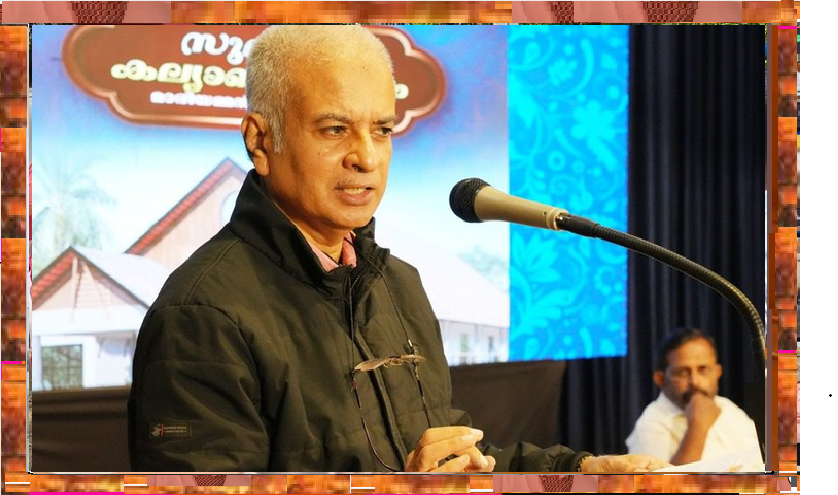
Addressing a gathering organised by ISTD, Kozhikode, the widely respected bureaucrat said organisations can no longer rely on traditional approaches to workforce development. Instead, they must embrace continuous learning, regular skill upgradation, and strategic redeployment of human resources to remain effective in an increasingly competitive environment.
Known across the country for his integrity, anti-corruption initiatives, and reform-oriented administrative approach, Dr. Swamy stressed that knowledge has become a rapidly changing asset and that both public and private institutions must adapt if they wish to remain relevant in the years ahead.
ISTD Must Continue to Shape Policy and Human Resource Development
Delivering the keynote address, Dr. Swamy said the Indian Society for Training and Development should continue functioning as a catalyst in policy formulation while also supporting the effective implementation of human resource interventions across organisations.
According to him, institutions like ISTD play a critical role in improving both individual capabilities and organisational performance by promoting structured learning, professional development, and evidence-based training practices.
He observed that the pace of technological advancement and economic transformation has fundamentally changed the way organisations operate, making continuous learning an essential requirement rather than an optional activity.
Dr. Swamy said organisations that invest in skill development and workforce capability today will be better positioned to respond to future challenges and opportunities.
Training, Re-Training and Redeployment Must Become a Strategic Priority
A major focus of Dr. Swamy’s address was the need for organisations to institutionalise continuous learning as part of their long-term strategy.
He pointed out that knowledge and professional skills are becoming obsolete at an unprecedented pace because of rapid technological changes, automation, digital transformation, and evolving industry requirements.
“Knowledge and skill obsolescence is a daily reality. Training, re-training and redeployment of human resources on a continuing basis must be a priority for any organization,” he said.
According to Dr. Swamy, organisations can no longer depend solely on the qualifications employees possess when they join the workforce.
Instead, employers must create systems that enable workers to continuously update their knowledge, acquire new competencies, and adapt to changing professional demands throughout their careers.
He stressed that workforce development should not be viewed as a one-time exercise but as an ongoing organisational responsibility.
Agility Is Essential in a Rapidly Changing World
Dr. Swamy noted that organisations today are functioning in an environment characterised by constant disruption, technological innovation, and intense competition.
In such circumstances, he said, institutions must become agile enough to respond quickly to changing conditions while remaining capable of identifying emerging opportunities before others.
He urged organisations to evolve into dynamic, forward-looking institutions capable of adapting rapidly to market changes, policy shifts, and technological advancements.
According to him, the ability to learn faster than competitors will increasingly become one of the defining characteristics of successful organisations.
Building a culture that encourages innovation, experimentation, and continuous improvement, he added, is essential for long-term sustainability.
Skill Shortages Continue to Challenge India’s Growth
Turning his attention to the broader economy, Dr. Swamy highlighted the growing concern over critical skill shortages across multiple sectors.
He observed that despite India’s large workforce, significant talent deficits continue to hamper productivity, industrial expansion, and economic recovery.
“There are critical skill shortages and talent deficits that act as obstacles to speedy recovery of the Indian economy,” he remarked.
He said bridging this gap requires sustained investments in education, vocational training, professional development, and lifelong learning.
Dr. Swamy also appreciated the efforts of ISTD in identifying, nurturing, and transferring knowledge and practical skills that contribute to improved human performance, organisational productivity, and sustainable development.
According to him, institutions engaged in capacity building have an increasingly important role to play in supporting India’s economic aspirations.
India Must Leverage Its Demographic Advantage
Highlighting India’s unique demographic profile, Dr. Swamy described manpower and technology as the twin engines of future industrial and economic growth.
He observed that India is passing through a historic phase of demographic transformation, providing the country with a significant comparative advantage over many developed economies experiencing ageing populations.
“Abundant manpower underlines India’s comparative advantage, especially in an era where India is in a phase of unprecedented demographic change,” he said.
However, he cautioned that demographic advantage alone would not automatically translate into economic success.
To fully benefit from its youthful population, India must equip its workforce with relevant skills, modern education, and opportunities for continuous professional development.
He argued that investing in human capital would enable the country to emerge as a more vibrant, competitive, and prosperous economy.
Strengthening the Social Sector Remains Equally Important
While discussing economic development, Dr. Swamy emphasised that growth should be accompanied by efficient and equitable delivery of public services.
He stressed the need to strengthen institutions responsible for education, healthcare, welfare, and other social sectors so that government services reach every section of society effectively.
According to him, improving institutional capacity is essential for ensuring fairness, equity, and social justice in public administration.
He observed that administrative systems should be designed not only to improve efficiency but also to ensure that development remains inclusive and accessible to all citizens.
Lifelong Learning Is the Need of the Hour
Towards the conclusion of his address, Dr. Swamy returned to one of the central themes of his speech – lifelong learning.
He encouraged professionals across sectors to continuously identify emerging skills and actively pursue opportunities to acquire them.
Rather than becoming comfortable with existing expertise, individuals should cultivate a mindset of constant learning and self-improvement, he said.
He also stressed the importance of creating workplaces where knowledge flows freely and employees are encouraged to share experiences, mentor colleagues, and learn from one another.
Calling for stronger collaboration within organisations, he remarked:
“Let us commit to fostering a culture of feedback and knowledge sharing within our teams.”
According to him, organisations that encourage open communication and collaborative learning are better equipped to innovate and adapt to future challenges.
Benjamin Franklin’s Timeless Lesson on Learning
Concluding his address, Dr. Swamy quoted one of Benjamin Franklin’s most widely known observations on education and learning:
“Tell me and I forget. Teach me and I remember. Involve me and I learn.”
The quotation reinforced his broader message that meaningful learning occurs through participation, practical engagement, and continuous experience rather than passive instruction alone.
It also reflected the emphasis he placed throughout his speech on experiential learning, skill development, and active organisational participation.
ISTD Kozhikode Event Focuses on Future of Human Resource Development
The programme was presided over by Shoukat Ali Eroth, President of ISTD Kozhikode.
The event brought together professionals, administrators, trainers, and human resource experts to deliberate on the changing landscape of organisational development, workforce capability, and the growing importance of continuous learning in both the public and private sectors.
Discussions centred on improving organisational effectiveness, strengthening professional competencies, and preparing institutions for future technological and economic challenges.
Who Is Dr. Raju Narayana Swamy?
Dr. Raju Narayana Swamy is one of Kerala’s most respected civil servants and is widely recognised for his uncompromising integrity, anti-corruption initiatives, and reform-oriented administrative leadership.
A 1991-batch IAS officer of the Kerala cadre, he secured All India Rank 1 in the 1990 Civil Services Examination, a distinction that established him among the country’s brightest civil servants.
Before joining the IAS, he graduated in Computer Science from the Indian Institute of Technology (IIT) Madras, earning an impressive CGPA of 9.41.
Over a career spanning more than three decades, Dr. Swamy has served in several significant administrative roles, including District Collector in five districts, Director of Fisheries, and Principal Secretary in the Kerala government.
His unwavering stand against corruption has often placed him at the centre of administrative controversies, and he has reportedly undergone more than 30 transfers during his career because of his uncompromising approach to governance.
His commitment to integrity in public service earned him the prestigious Satyendra K. Dubey Memorial Award, recognising his efforts to promote transparency and ethical administration.
Beyond his contributions as a civil servant, Dr. Swamy is also a prolific author. He has written more than 30 books on a variety of subjects and has received recognition from the Kerala Sahitya Akademi for his literary achievements.
His address at the ISTD event once again reflected the values that have defined his public career – integrity, continuous learning, institutional reform, and the belief that investing in people remains the strongest foundation for building effective organisations and a stronger nation.