

UP Governor Anandiben Patel Slams Bureaucratic Delays Over Rani Lakshmibai Scooty Scheme, Says “I Am Tired of Bureaucracy”
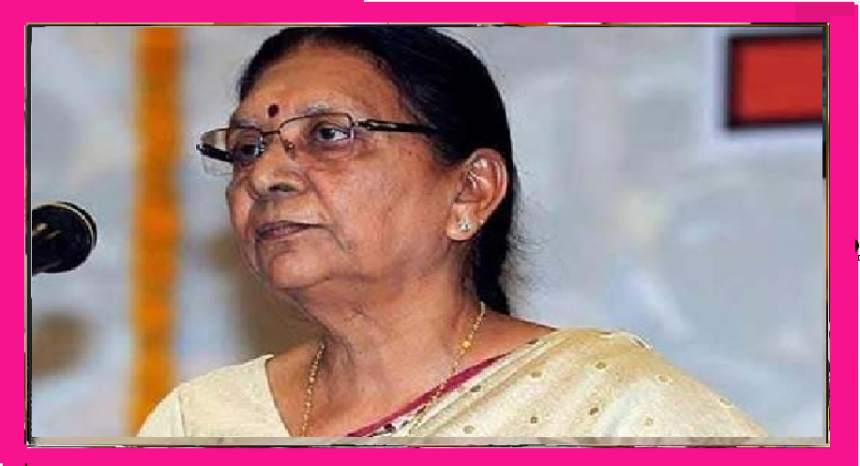
Uttar Pradesh Governor Anandiben Patel has delivered one of her sharpest public critiques of the state’s bureaucracy, openly questioning the functioning of senior IAS officers over delays in implementing the Rani Lakshmibai Scooty Scheme. Her candid remarks, made during a convocation ceremony, have triggered widespread discussion within administrative and political circles, with many viewing them as an unusually direct message to the state’s top bureaucrats.
Expressing visible frustration, the Governor remarked that she was “tired of bureaucracy” while questioning why officials had taken so long to prepare the operational framework for a flagship welfare scheme that had already received the government’s approval and financial backing.
According to her, announcing welfare programmes and allocating funds is the responsibility of the elected government. Once that is done, the responsibility shifts to the administrative machinery, which must prepare practical, transparent and timely rules so that the intended beneficiaries actually receive the benefits.
Governor Questions Delay in Framing Rules
Speaking before a large audience, Anandiben Patel drew a clear line between policymaking and implementation.
She noted that the Uttar Pradesh government, led by Chief Minister Yogi Adityanath, had already announced the Rani Lakshmibai Scooty Scheme and earmarked a substantial budget for it. Yet, despite the announcement, the rules governing the scheme were not prepared for several months.
The Governor questioned what senior officers had been doing during this period. She said nearly a year had passed after the scheme’s announcement, but the administrative process remained incomplete.
According to her, such delays undermine the very purpose of welfare programmes. A scheme cannot achieve its objectives if the implementing departments fail to put the required framework in place on time.
She also revealed that she had repeatedly discussed the matter with senior officers, including those serving at the level of Additional Chief Secretary (ACS), but remained dissatisfied with the pace of progress.
“The Government Announces Schemes, Bureaucracy Must Deliver”
One of the strongest messages in her speech was directed at the administrative machinery responsible for converting government decisions into ground-level action.
The Governor observed that once the Chief Minister announces a welfare programme and allocates the necessary financial resources, it becomes the responsibility of bureaucrats to prepare detailed guidelines, identify beneficiaries and ensure that implementation begins without unnecessary delay.
She suggested that prolonged administrative procedures often reduce the effectiveness of welfare initiatives, particularly those designed for economically weaker sections of society.
According to Anandiben Patel, policy announcements alone cannot transform lives. Real change begins only when officials ensure that every administrative requirement is completed efficiently and within a reasonable timeframe.
Rani Lakshmibai Scooty Scheme Under the Spotlight
The Governor’s criticism centred around the Rani Lakshmibai Scooty Scheme, one of the Uttar Pradesh government’s flagship initiatives aimed at encouraging girls to pursue higher education.
The scheme proposes to distribute scooters to eligible female students, helping them overcome transportation barriers that often discourage higher studies, particularly in rural regions.
Among those expected to benefit are:
Girls who have completed Class 12 and enrolled in higher education institutions.
Orphan girls meeting the prescribed eligibility conditions.
Students who travel long distances every day to attend colleges and universities.
The state government has reportedly allocated nearly Rs 400 crore for implementing the programme.
Officials have described the scheme as an important step towards improving mobility, increasing enrolment in higher education and promoting women’s empowerment across Uttar Pradesh.
Governor Questions the 90 Percent Eligibility Benchmark
While appreciating the intent behind the programme, Anandiben Patel raised serious concerns about one of its reported eligibility conditions – the requirement that beneficiaries should have secured around 90 percent marks in their examinations.
She argued that such a criterion may unintentionally favour students studying in urban centres where educational facilities, coaching institutes, digital resources and quality schools are more easily available.
According to her, students living in villages often study under much more challenging circumstances. Many travel several kilometres every day, have limited access to educational infrastructure and face financial as well as social constraints.
Expecting them to compete solely on examination scores with students enjoying better facilities may not reflect the true purpose of a welfare programme, she observed.
“Who Actually Needs Government Support?”
Throughout her address, the Governor repeatedly returned to a simple but significant question.
Who is the scheme really meant for?
She said students studying in cities, attending private schools and receiving expensive coaching are naturally better positioned to secure very high marks.
By contrast, girls living in remote villages often wake up early, walk long distances or depend on unreliable transport simply to continue their education.
These students, she said, are the ones for whom such government assistance was originally conceived.
According to Anandiben Patel, welfare programmes should identify genuine need rather than merely reward academic excellence.
She suggested that the beneficiary selection process should be designed in a manner that reaches those facing the greatest hardships.
Calls for More Inclusive Eligibility Criteria
The Governor indicated that the government could consider additional parameters while identifying beneficiaries instead of relying primarily on examination marks.
Among the factors she highlighted were:
Distance travelled every day for education.
Economic condition of the student’s family.
Availability of transport facilities.
Rural or remote location.
Overall need for financial assistance.
Such an approach, she argued, would ensure that the scheme fulfils its social objective of supporting girls who otherwise struggle to continue their education.
According to her, welfare initiatives should reduce inequality rather than unintentionally widen existing gaps between urban and rural students.
Administrative Delays Come Under Scanner
Anandiben Patel also revealed that she regularly monitors government announcements and implementation through official briefings as well as media reports.
She said that after reading about the progress of the scheme, she sought detailed information from senior officials regarding the rules that had been prepared.
The Governor questioned whether the guidelines truly reflected the original objective behind the programme and whether enough attention had been paid to the needs of rural students.
Her comments suggested concern not merely about delays but also about the quality and intent of administrative decision-making.
Focus Remains on Rural Girls
A recurring theme throughout the Governor’s speech was the importance of ensuring that welfare schemes reach girls studying under difficult circumstances.
She pointed out that in many villages, students travel anywhere between four and ten kilometres every day just to reach schools or colleges.
For these families, owning a scooter could significantly improve access to education, reduce travel time and enhance safety.
She maintained that government resources should first benefit such deserving students rather than those who already have access to better educational opportunities and transportation.
Bureaucracy Faces Public Scrutiny
The Governor’s unusually direct criticism has attracted considerable attention within bureaucratic circles.
Publicly questioning the functioning of senior IAS officers, particularly officers at the Additional Chief Secretary level, is relatively uncommon.
Her remarks have therefore sparked debate on administrative accountability and the pace at which welfare programmes move from announcement to implementation.
Many observers believe the comments underline a larger governance challenge faced by governments across the country – ensuring that policy decisions are backed by timely administrative action.
Women’s Empowerment Also Finds Mention
Apart from discussing governance, Anandiben Patel also spoke about women’s empowerment during the convocation ceremony.
She encouraged women to pursue professional success while also nurturing strong family values. Referring to motherhood, she said women should strive to become “expert mothers” even as they build successful careers.
Her remarks echoed observations she had made on earlier occasions regarding the importance of balancing professional achievements with family responsibilities.
A Larger Message on Governance
Beyond the immediate controversy surrounding the scooty scheme, the Governor’s address carried a broader message about public administration.
She emphasised that welfare programmes cannot succeed merely because they are announced or adequately funded. Their success ultimately depends on efficient implementation, practical rules and timely execution by the administrative machinery.
Her comments have once again highlighted the need for faster decision-making, greater administrative accountability and beneficiary-focused policymaking.
Whether her observations eventually lead to changes in the Rani Lakshmibai Scooty Scheme or prompt a review of its eligibility conditions remains to be seen. What is certain, however, is that her public criticism has brought renewed focus on the functioning of Uttar Pradesh’s bureaucracy and reignited the debate over how welfare schemes should be designed to ensure that government assistance reaches those who nee