Bhupender Yadav Chairs 91st NBWL Meeting, Reviews 118 Wildlife, Infrastructure and Defence Projects Across India
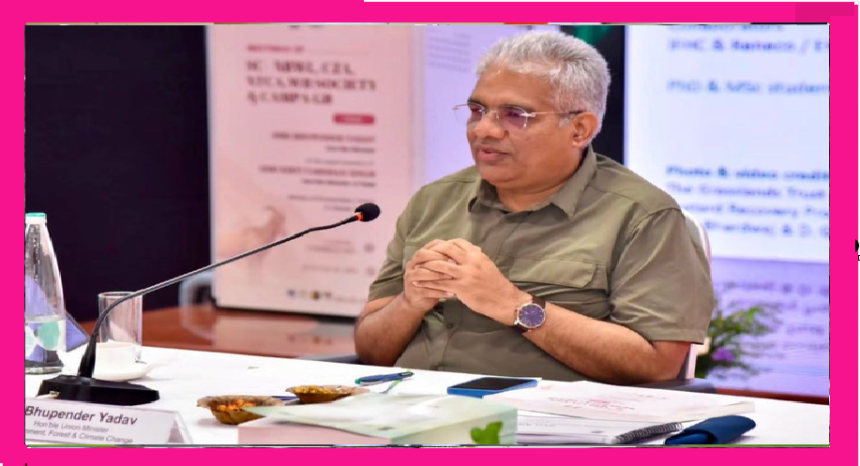
The Government of India has reaffirmed its commitment to striking a careful balance between environmental protection and national development, with Union Minister for Environment, Forest and Climate Change Bhupender Yadav chairing the 91st meeting of the Standing Committee of the National Board for Wildlife (SC-NBWL) in Coimbatore. The high-level meeting examined 118 proposals related to infrastructure, defence, public utilities and development projects from different parts of the country while also reviewing the progress of several flagship wildlife conservation initiatives.
Held at the Central Academy for State Forest Service (CASFOS) in Coimbatore, the meeting brought together senior officials, wildlife experts, conservation scientists and representatives from various government agencies. Apart from considering proposals requiring statutory wildlife clearances, the committee also discussed long-term strategies for protecting endangered species, strengthening habitat conservation and improving India’s science-driven approach to biodiversity management.
The deliberations reflected the government’s continued emphasis on ensuring that development projects move forward without compromising ecological sustainability or the long-term health of India’s forests and wildlife habitats.
Conservation Remains Central to India’s Environmental Vision
Addressing the gathering, Union Minister Bhupender Yadav stressed that wildlife conservation continues to remain a cornerstone of India’s environmental governance framework.
He observed that rapid infrastructure growth and economic development must proceed alongside robust ecological safeguards. According to the Minister, projects located in or around ecologically sensitive areas should be planned with careful scientific assessment so that environmental damage is minimised while developmental objectives are achieved.
He highlighted the importance of maintaining wildlife corridors and ecological connectivity, noting that fragmented habitats often create long-term challenges for species conservation.
The Minister also underlined the need for practical, solution-oriented policies capable of addressing emerging conservation challenges in a rapidly changing environmental landscape.
Greater Use of Science and Technology Encouraged
Bhupender Yadav called for wider integration of modern scientific tools into wildlife conservation programmes across the country.
He said conservation planning should increasingly rely on:
Scientific research
Advanced technological innovations
Sociological and behavioural studies
Traditional ecological knowledge
Community participation
Evidence-based policy making
According to the Minister, combining modern technology with indigenous knowledge systems can significantly improve habitat management, species recovery and conflict mitigation.
He noted that India’s conservation model should continue evolving through scientific innovation while remaining rooted in local ecological realities.
Review of Earlier Wildlife Conservation Decisions
One of the important agenda items before the Standing Committee was the review of decisions taken during previous meetings of both the National Board for Wildlife and its Standing Committee.
Members assessed the progress made on various directions issued earlier and examined the implementation status of pending conservation measures across different states.
The committee also reviewed follow-up action on important decisions taken during the 7th meeting of the National Board for Wildlife, which had been chaired by the Prime Minister.
Officials discussed the extent to which earlier recommendations have translated into on-ground conservation efforts and identified areas where additional intervention may be required.
Long-Term Protection Plans for Endangered Species
Wildlife conservation remained the dominant theme throughout the meeting.
Several endangered and vulnerable species were discussed in detail, with experts presenting updates on ongoing recovery programmes and future conservation strategies.
Among the major initiatives reviewed was the long-term conservation framework for the Greater One-Horned Rhinoceros.
The committee examined the progress of the Rhino DNA Indexing System (RhoDIS), an advanced scientific initiative that creates DNA profiles of individual rhinos. The technology is expected to strengthen anti-poaching investigations, improve wildlife forensics and assist conservation authorities in monitoring rhinoceros populations more effectively.
The meeting also reviewed conservation efforts aimed at protecting the Great Indian Bustard, one of India’s most critically endangered bird species.
Discussions focused on the future roadmap for protecting the species through habitat improvement, breeding programmes and scientific management.
Pygmy Hog Proposed for Species Recovery Programme
Another important proposal discussed during the meeting related to the inclusion of the Pygmy Hog under the Government’s Species Recovery Programme.
The Pygmy Hog, considered one of the world’s rarest wild pig species, survives only in limited grassland ecosystems and has long been regarded as a priority for conservation.
If formally included, the programme is expected to facilitate focused habitat restoration, scientific monitoring and long-term population recovery efforts.
Apart from these flagship species, the committee also reviewed ongoing conservation programmes covering several other threatened mammals, birds and wildlife species found across different ecological landscapes in India.
Tiger Population Management Reviewed
The Standing Committee also assessed the progress of active tiger population management initiatives being implemented in various tiger reserves across the country.
Officials reviewed strategies relating to:
Habitat management
Population monitoring
Human-wildlife conflict mitigation
Landscape connectivity
Scientific monitoring systems
The discussions reflected the government’s continued focus on sustaining India’s globally recognised tiger conservation programme while ensuring healthy ecosystems for other wildlife species sharing the same habitats.
Scientific Publications Released
As part of the meeting, the Ministry released a series of scientific publications intended to strengthen research-based wildlife management.
The publications cover several important species and conservation themes, including:
Great Indian Bustard
Sloth Bear
Small Wild Cats
Rhinoceros Conservation
These documents compile scientific findings, field experiences and conservation recommendations that can support policymakers, forest departments, researchers and wildlife managers in designing more effective conservation strategies.
Officials said such publications play an important role in promoting evidence-based decision making and improving conservation outcomes across different states.
118 Development Projects Examined
Apart from conservation issues, the Standing Committee undertook one of its most significant statutory responsibilities by examining 118 proposals requiring wildlife clearance under the provisions of the Wild Life (Protection) Act, 1972.
The proposals represented a broad spectrum of developmental sectors essential for public infrastructure and national growth.
Projects considered by the committee included:
National and state highways
Roads and bridges
Defence infrastructure
Drinking water supply schemes
Communication towers
Optical fibre networks
Electricity transmission lines
Oil and gas pipelines
Mining projects
Renewable energy projects
Educational institutions
Other public infrastructure projects
Each proposal was carefully evaluated to determine its likely impact on wildlife habitats and protected areas before any recommendation was made.
Scientific Assessment Remained the Guiding Principle
Officials explained that every proposal was examined on multiple environmental parameters before being considered for approval.
The committee assessed factors such as:
Ecological sensitivity of the project area
Potential impact on wildlife movement
Habitat fragmentation
Public utility and national importance
Availability of mitigation measures
Long-term conservation implications
Wherever required, project proponents were expected to incorporate mitigation measures designed to reduce ecological disturbance and protect wildlife.
This approach, officials said, allows infrastructure development to proceed while maintaining compliance with environmental safeguards.
Balancing Development with Biodiversity Protection
The Standing Committee reiterated that India does not view development and environmental conservation as competing priorities.
Instead, both objectives can progress together through careful planning, scientific assessment and responsible implementation.
Members emphasised that projects of strategic, economic or public importance should continue moving forward, provided adequate safeguards are adopted to minimise adverse impacts on forests, wildlife habitats and ecological connectivity.
The committee also reaffirmed that all wildlife-related approvals will continue to be governed by the provisions of the Wild Life (Protection) Act, 1972, along with other applicable environmental laws and regulatory frameworks.
Reinforcing India’s Long-Term Conservation Commitment
The 91st meeting of the Standing Committee highlighted the government’s continued emphasis on integrating conservation priorities into the country’s broader development agenda.
From reviewing endangered species recovery programmes and strengthening wildlife science to examining more than a hundred infrastructure proposals, the meeting reflected an effort to ensure that economic growth, national security and biodiversity conservation move forward together.
With increasing reliance on scientific research, advanced monitoring systems and evidence-based policymaking, the government aims to build a conservation framework capable of protecting India’s rich natural heritage while supporting the country’s expanding infrastructure and development needs.