

Jharkhand DGP Tadasha Mishra Urges Joint Anti-Maoist Operations, Shared Cybercrime Database at Eastern Region Police Coordination Meeting
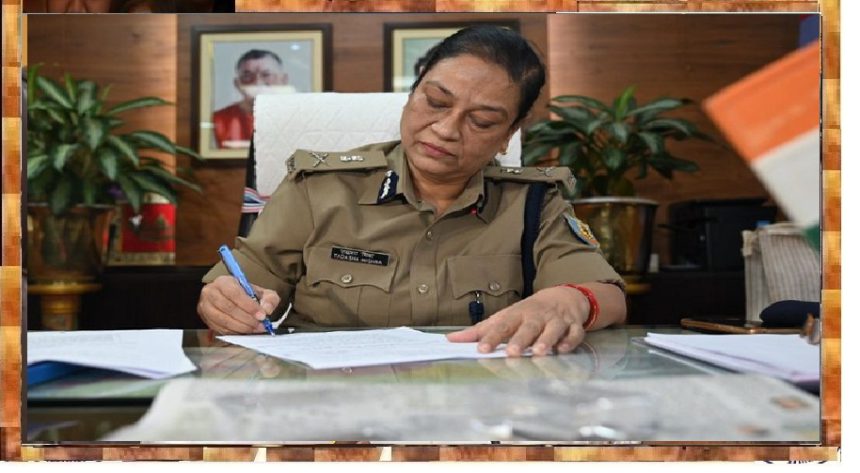
Jharkhand DGP Tadasha Mishra has urged eastern states to intensify joint anti-Maoist operations, strengthen intelligence sharing, create a shared cybercrime database, and coordinate action against drug trafficking during the Eastern Region Police Coordination Committee meeting.
Stressing that security challenges no longer stop at state borders, Jharkhand Director General of Police (DGP) Tadasha Mishra, a 1994-batch IPS officer, has called for a far more coordinated policing strategy among eastern Indian states. Speaking at the Eastern Region Police Coordination Committee meeting through virtual mode, she urged neighbouring states to deepen cooperation in tackling Left Wing Extremism (LWE), cybercrime, synthetic drug trafficking and cross-border smuggling.
The high-level meeting brought together the police leadership of several eastern states to discuss emerging security threats and identify ways to improve operational coordination. Mishra argued that isolated efforts are no longer sufficient, particularly when extremist groups, cybercriminals and organized smuggling syndicates operate across multiple states. She said stronger collaboration, seamless intelligence exchange and synchronized action are essential to maintain peace and security in the region.
DGP Calls for Intensified Joint Operations Against Maoist Activities
One of the key issues raised during the meeting was the continued need to prevent any resurgence of Maoist activities in eastern India. While security forces have made significant gains over the years, Mishra cautioned that extremist groups could attempt to regroup if enforcement agencies reduce pressure or fail to coordinate effectively across state boundaries.
She emphasized that police forces must continue conducting joint operations in sensitive border areas where Maoist movement has historically been a concern. According to her, sustained action is necessary to ensure that extremist organizations do not exploit administrative boundaries to evade law enforcement agencies.
Special attention was drawn to coordinated operations along several critical inter-state borders, including:
Jharkhand – Odisha
Jharkhand – West Bengal
Jharkhand – Chhattisgarh
Jharkhand – Bihar
Mishra observed that these border regions require continuous surveillance and close coordination between police units operating on either side. She said a united operational approach would make it significantly harder for extremist groups to regroup, establish safe hideouts or move logistics across neighbouring states.
Real-Time Intelligence Sharing Described as the Key to Success
The Jharkhand Police chief repeatedly highlighted the importance of intelligence-led policing during her address. She said that timely intelligence sharing between neighbouring states can often determine the success of anti-extremist operations.
Instead of working in isolation, she urged police headquarters, field officers and district-level units to remain in constant communication and exchange actionable intelligence on a real-time basis. According to Mishra, this kind of continuous information flow would enable security agencies to respond more quickly to changing ground situations and improve the effectiveness of coordinated operations.
She stressed that regular interaction between police forces should not remain limited to periodic meetings but should become an ongoing institutional mechanism that supports daily operational planning and rapid response.
Stronger Action Against Drug Smuggling and Synthetic Narcotics
The meeting also devoted considerable attention to the growing challenge posed by organized drug trafficking, particularly the spread of synthetic narcotics through inter-state networks.
Mishra underlined the need for a comprehensive enforcement strategy that targets not only individual offenders but also the larger criminal ecosystems responsible for producing, transporting and distributing illegal drugs.
To strengthen enforcement against narcotics trafficking, she proposed several coordinated measures, including:
Setting up joint check posts along important inter-state borders.
Conducting coordinated vehicle inspection and enforcement drives.
Ensuring real-time intelligence exchange among neighbouring police forces.
Carrying out backward and forward investigations to expose entire trafficking networks.
Taking stringent legal action against organizations involved in synthetic drug production and distribution.
She pointed out that merely arresting transporters or small-time operatives would not be enough to dismantle organized drug syndicates. Investigative agencies, she said, must identify financiers, suppliers, distributors and every link in the supply chain if the objective is to significantly weaken these criminal networks.
Cybercrime Emerges as a Major Regional Security Concern
With cyber fraud and digital financial crimes continuing to rise across the country, cybercrime formed another major agenda item during the coordination meeting.
Senior police officers participating in the discussions agreed that cybercriminals increasingly operate across multiple states, making regional coordination essential for faster investigation and prosecution.
As part of a collaborative strategy, participating states agreed to establish a shared database of cybercriminals. Such a database is expected to improve information sharing between police departments and help investigators quickly identify repeat offenders and interstate cybercrime syndicates.
The meeting also reached a consensus on appointing dedicated nodal officers in every participating state. These officers will serve as the primary points of contact for cybercrime-related coordination, enabling quicker communication and more efficient exchange of operational information.
Officials also discussed the need for joint verification of SIM card sellers, recognizing that illegally obtained or fraudulently activated mobile connections are frequently used in cyber fraud, online scams and digital financial crimes. Better monitoring of SIM distribution networks is expected to make it more difficult for cybercriminals to exploit anonymous mobile numbers for illegal activities.
Need for Coordinated Regional Policing
Throughout her address, Mishra emphasized that the changing nature of crime demands an equally dynamic policing model. Whether dealing with Maoist groups, cyber fraudsters or organized smuggling syndicates, she said no single state can effectively tackle these challenges on its own.
She advocated stronger institutional cooperation between neighbouring police forces, greater operational synchronization and regular coordination at every level of policing. Such collaboration, she noted, would improve intelligence collection, accelerate investigations and enhance the overall effectiveness of law enforcement agencies across the eastern region.
Her remarks reflected a broader recognition that modern security threats are increasingly interconnected, requiring seamless cooperation across state boundaries rather than isolated enforcement efforts.
DGPs of Five Eastern States Participate
The Eastern Region Police Coordination Committee meeting witnessed the participation of the Directors General of Police from Jharkhand, Bihar, West Bengal, Odisha and Chhattisgarh. Their presence underscored the shared commitment of these states to strengthen regional security through collective action and closer institutional coordination.
The discussions covered a wide spectrum of issues affecting law and order in eastern India, including Left Wing Extremism, cybercrime, organized narcotics trafficking, cross-border smuggling and intelligence-sharing mechanisms.
The participating police chiefs broadly agreed that stronger cooperation among states would enhance operational capabilities and improve the collective response to evolving security threats.
Focus on Long-Term Security and Better Coordination
The meeting concluded with a common understanding that sustained collaboration remains the most effective strategy for dealing with increasingly sophisticated criminal and extremist networks. Participants agreed on the need to deepen intelligence sharing, strengthen institutional partnerships and continue coordinated enforcement efforts across state borders.
With renewed emphasis on joint anti-Maoist operations, a shared cybercrime database, coordinated action against synthetic drug trafficking and improved inter-state policing mechanisms, the Eastern Region Police Coordination Committee has laid out a roadmap aimed at reinforcing security and strengthening law enforcement cooperation across eastern India.