

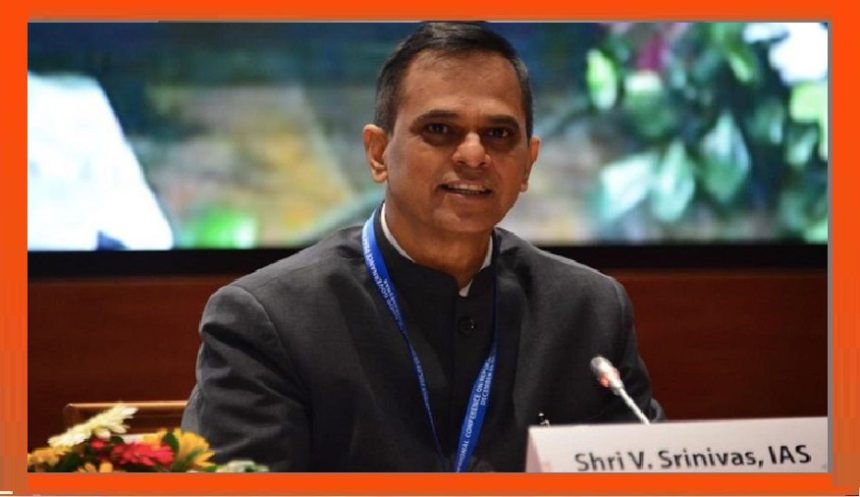
Rajasthan Government Recommends One-Year Extension for Chief Secretary V. Srinivas; IAS Succession Race Awaits Centre’s Decision
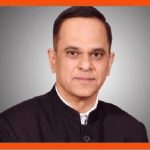
The Rajasthan government has formally recommended a one-year extension in service for Chief Secretary V. Srinivas, a move that could significantly reshape the state’s administrative landscape and postpone the appointment of a new Chief Secretary. If the proposal receives the Centre’s approval, Srinivas will continue as Rajasthan’s top bureaucrat beyond his scheduled retirement on August 31, 2026, delaying what had become one of the most closely watched succession races in the state’s civil services.
The proposal has already been forwarded to the Department of Personnel and Training (DoPT), which will examine the recommendation before placing it before the Appointments Committee of the Cabinet (ACC) for a final decision. Until the Centre issues a formal order, the recommendation will remain under consideration.
The development comes at a time when Rajasthan is implementing several large-scale investment, infrastructure and governance initiatives, prompting the state government to seek continuity at the highest level of the bureaucracy rather than opting for a leadership transition.
Proposal Sent to the Centre After Chief Minister’s Recommendation
According to official sources, the proposal seeking an extension for V. Srinivas was sent to the Centre following the recommendation of Chief Minister Bhajan Lal Sharma. Sources indicate that the proposal was forwarded on July 24, reflecting the state government’s confidence in Srinivas’s leadership and administrative performance over the past several months.
Officials familiar with the matter said the recommendation is based on multiple considerations, including his effective coordination with the Union Government, his experience in handling complex administrative assignments, and his role in steering key development initiatives currently underway in Rajasthan.
The state government believes that retaining the present administrative leadership for another year would help maintain policy continuity and ensure smoother execution of ongoing flagship programmes.
Government Keen on Administrative Stability
People familiar with the developments said the Chief Minister is satisfied with the functioning of the current administrative team and is not inclined to make major changes at the top level at this stage.
If the extension is approved, the existing leadership structure led by Chief Secretary V. Srinivas, along with Additional Chief Secretary Akhil Arora, is expected to continue overseeing several priority programmes linked to infrastructure development, industrial expansion, investment promotion and public service delivery.
The timing is particularly significant because Rajasthan is currently moving ahead with projects announced during the Rising Rajasthan Global Investment Summit 2024, besides implementing a series of industrial, manufacturing and logistics initiatives aimed at attracting large domestic and international investments.
Officials believe continuity in the administrative leadership could help accelerate decision-making and improve coordination among departments responsible for implementing these projects.
Extension Could Delay Appointment of a New Chief Secretary
The proposal has also altered the dynamics of the race for Rajasthan’s next Chief Secretary. For months, administrative circles had been discussing the possible successors to Srinivas, with several senior IAS officers emerging as strong contenders for the state’s highest bureaucratic post.
If the Centre approves the extension, however, the appointment of a new Chief Secretary is likely to be deferred by at least one year, effectively putting the ongoing succession discussions on hold.
The move could also influence the tenure prospects of officers who were expected to be considered for the position after Srinivas’s retirement.
V. Srinivas Took Charge in November 2025
V. Srinivas, a 1989-batch IAS officer of the Rajasthan cadre, assumed office as Rajasthan’s Chief Secretary on November 17, 2025, after returning from Central deputation.
Before taking over as the state’s senior-most civil servant, he held several important assignments in the Government of India and earned recognition for his work in governance reforms, administrative modernization and public policy.
Apart from serving as Chief Secretary, he is also the Chairman of Rajasthan State Mines and Minerals Limited (RSMML), one of the state’s key public sector enterprises.
Since assuming charge, Srinivas has been closely associated with policy implementation, investment promotion, governance reforms and coordination between the state and Central governments.
How the Extension Process Works
While a state government may recommend an extension for its Chief Secretary, the final authority rests with the Union Government. The process generally follows a well-defined administrative procedure.
The state government first forwards its recommendation to the Department of Personnel and Training (DoPT). The department examines the proposal before placing it before the Appointments Committee of the Cabinet (ACC).
The ACC, chaired by the Prime Minister, considers the recommendation and takes the final decision. Only after the ACC grants approval and the Centre issues a formal notification does the extension become effective.
Until then, the proposal remains pending and no extension is deemed to have been granted.
Succession Race Could Be Deferred
A one-year extension for Srinivas would directly affect the prospects of several senior IAS officers who have been viewed as likely candidates for the Chief Secretary’s post. Among the names frequently discussed in bureaucratic circles is Abhay Kumar, a 1992-batch IAS officer, who has widely been regarded as one of the strongest contenders.
His seniority, administrative experience and close association with Chief Minister Bhajan Lal Sharma’s flagship Ramjal Setu Link Project have strengthened his credentials.
With his retirement scheduled only in August 2028, Kumar would have sufficient remaining service to provide long-term administrative continuity if appointed. However, an extension for the incumbent Chief Secretary would postpone his opportunity to assume the state’s top bureaucratic office.
Rajat Kumar Mishra Also in the Fray
Another senior officer whose name has repeatedly surfaced is Rajat Kumar Mishra, also a 1992-batch IAS officer.
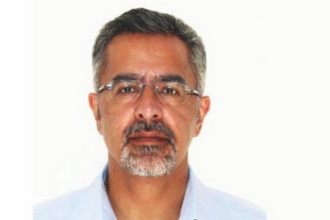
Currently serving on Central deputation as Secretary in the Union Ministry of Chemicals and Fertilizers, Mishra is widely respected for his administrative experience, financial management expertise and familiarity with Central government functioning.
Since he is due to retire in January 2028, a one-year extension for Srinivas would reduce the period during which Mishra could potentially serve as Rajasthan’s Chief Secretary if selected.
Akhil Arora Remains a Strong Possibility
Another prominent name is Akhil Arora, a 1993-batch IAS officer, who currently serves as Additional Chief Secretary and oversees important departments, including Finance and Public Health.
Arora enjoys the advantage of a longer remaining service tenure, with retirement due in February 2029. However, appointing him immediately as Chief Secretary would require superseding officers senior to him from the 1992 batch, a decision governments generally weigh carefully.
If Srinivas receives a one-year extension, the government would gain additional time before taking a final call on succession, potentially making the eventual transition administratively less complicated.
Nearly Four Decades of Administrative Experience
Born on September 1, 1966, in Andhra Pradesh, V. Srinivas holds B.Tech and M.Tech degrees in Chemical Engineering.
He joined the Indian Administrative Service at the remarkably young age of 22, beginning a distinguished career that has spanned nearly four decades across both the state and Central governments.
During this period, he has handled 24 major assignments, covering a wide range of sectors including governance reforms, public administration, finance, international cooperation and policy implementation.
Among his notable assignments was serving as Private Secretary to former External Affairs and Finance Minister Jaswant Singh, where he gained extensive exposure to national policy formulation and international affairs.
He also headed the Department of Administrative Reforms and Public Grievances (DARPG) in the Government of India for four years, where he played an important role in promoting digital governance, administrative modernization and citizen-centric reforms.
International Recognition in Public Administration
Beyond his administrative responsibilities in India, Srinivas has earned recognition internationally for his work in governance and public administration.
He currently serves as President of the International Institute of Administrative Sciences (IIAS), headquartered in Brussels, making him one of the few Indian civil servants to hold such a prestigious global position.
Over the years, he has authored several books, research papers and publications on governance reforms, administrative innovation and public policy.
His contributions have also been recognized through several honours, including the Rajbhasha Kirti Puraskar and the Digital India Award, reflecting his work in promoting administrative excellence and digital transformation within government institutions.
Centre’s Decision Now Holds the Key
For now, the Rajasthan government’s recommendation marks only the first stage of the process.
The proposal will undergo scrutiny at the Central level before being placed before the Appointments Committee of the Cabinet for a final decision.
If approved, V. Srinivas will continue as Rajasthan’s Chief Secretary for another year beyond his scheduled retirement date of August 31, 2026, allowing the present administrative leadership to continue overseeing key development initiatives and investment projects.
If the proposal is not approved, the state government will have to initiate the process of appointing a new Chief Secretary, bringing the long-discussed succession race among senior IAS officers back into focus.
Until the Centre announces its decision, Rajasthan’s bureaucratic establishment is expected to closely watch developments, as the outcome will determine not only the state’s administrative leadership but also the future trajectory of one of the most significant top-level appointments in the Rajasthan cadre.