

J&K Chief Secretary Atal Dulloo Reviews 908 NABARD Projects Worth ₹4,303 Crore, Directs Departments to Speed Up Rural Infrastructure Development
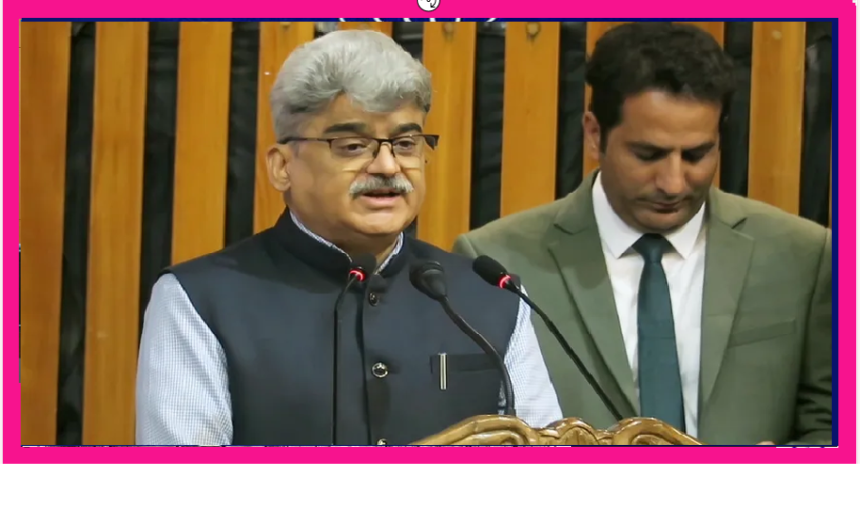
Jammu and Kashmir Chief Secretary Atal Dulloo, a 1989-batch IAS officer, has directed all departments to significantly accelerate the execution of hundreds of NABARD-funded infrastructure projects across the Union Territory, stressing that delays in implementation must be minimised to ensure timely benefits for rural communities.
Chairing a meeting of the High Powered Committee (HPC), the Chief Secretary reviewed the progress of 908 projects being implemented under different phases of the Rural Infrastructure Development Fund (RIDF), a flagship funding mechanism of the National Bank for Agriculture and Rural Development (NABARD). Together, these projects represent a total financial assistance of more than ₹4,303 crore and cover a wide range of infrastructure sectors considered vital for rural growth.
During the review, Dulloo underscored the importance of efficient planning, close monitoring and better coordination among departments so that ongoing projects are completed on schedule and future proposals are submitted without delay.
The meeting reflected the Jammu and Kashmir administration’s continued focus on strengthening rural infrastructure through timely execution of development projects and effective utilisation of institutional funding.
Chief Secretary Calls for Faster Project Execution
Atal Dulloo made it clear that the pace of implementation must improve across all departments handling RIDF-funded works.
He instructed executing agencies to eliminate avoidable procedural delays and ensure that projects move steadily from approval to completion. According to the Chief Secretary, timely execution is essential not only for efficient utilisation of financial resources but also for delivering infrastructure that directly improves the lives of people living in rural areas.
He observed that every delay in execution postpones the benefits intended for villages and farming communities, making strict adherence to timelines a key administrative priority.
Departments were therefore asked to strengthen internal coordination and regularly review project progress at every stage.
Focus on Better Preparedness for Future RIDF Funding
One of the major issues discussed during the meeting was the need to improve preparedness for future funding cycles under the Rural Infrastructure Development Fund.
Reviewing departmental performance, Dulloo directed all executing agencies to maintain a ready shelf of projects with complete Administrative Approval (AA) and Technical Sanction (TS) well before new RIDF tranches become available.
He explained that keeping projects fully prepared in advance would allow departments to immediately submit proposals to NABARD as soon as fresh funding windows open or new sanctions are announced.
Such advance planning, he noted, would significantly reduce delays in appraisal, approval and commencement of development works.
The Chief Secretary stressed that administrative preparedness is just as important as financial availability when it comes to infrastructure development.
Senior Officials Participate in High-Level Review
The High Powered Committee meeting witnessed the participation of senior officers from several important departments involved in planning, financing and implementing RIDF projects.
Among those present were the Additional Chief Secretaries of the Agriculture Production Department, Public Works (Roads and Buildings) Department and Finance Department.
The meeting also included the Director General (Resources), the Chief General Manager of NABARD and senior officials representing departments such as Health, Jal Shakti and other key administrative wings responsible for infrastructure development across the Union Territory.
The broad participation highlighted the multi-sectoral nature of RIDF investments and the need for coordinated action among departments.
RIDF Continues to Drive Rural Infrastructure Growth
During the review, the Chief Secretary described the Rural Infrastructure Development Fund as one of the most important institutional financing mechanisms supporting rural development in Jammu and Kashmir.
He pointed out that projects funded under RIDF are playing a crucial role in expanding and modernising essential infrastructure across rural regions.
These investments are helping strengthen rural road connectivity, making transportation easier for remote communities and improving access to markets, healthcare and educational institutions.
The programme is also supporting irrigation infrastructure, enabling better water management and improving agricultural productivity.
Besides agriculture, RIDF assistance is contributing to the development of drinking water facilities, horticulture infrastructure, fisheries projects and several other public assets that directly improve the quality of life in villages.
According to Dulloo, successful implementation of these projects is closely linked to long-term rural prosperity and balanced regional development.
Departments Asked to Intensify Monitoring
While reviewing ongoing works, the Chief Secretary instructed all executing departments to adopt a more rigorous monitoring mechanism.
He directed officers to closely track both the physical progress and financial utilisation of every project to ensure that implementation remains on schedule.
Regular field inspections were emphasised as an essential component of project management. Dulloo asked senior officers to personally review work on the ground instead of relying solely on periodic reports.
He also called for stronger inter-departmental coordination so that bottlenecks arising from administrative or technical issues can be resolved quickly.
Alongside faster implementation, the Chief Secretary stressed that quality standards must not be compromised. Departments were instructed to maintain complete transparency, accountability and compliance with NABARD’s operational guidelines throughout the execution process.
Finance Department Suggests District-Level Oversight
During the meeting, Additional Chief Secretary (Finance) Shailendra Kumar highlighted the importance of continuous monitoring at every administrative level.
He observed that regular supervision is necessary to ensure that investments under the Rural Infrastructure Development Fund produce visible and measurable improvements for rural communities.
To strengthen oversight, he proposed the creation of District-Level Monitoring Committees under the leadership of the respective Deputy Commissioners.
According to the proposal, these committees would monitor project implementation at the district level, improve coordination among departments and help address implementation challenges more efficiently.
Such local-level monitoring is expected to enhance accountability while ensuring that projects progress according to approved timelines.
NABARD Presents Detailed Progress Report
The Chief General Manager of NABARD made a comprehensive presentation before the High Powered Committee outlining the current status of RIDF-funded projects across Jammu and Kashmir.
The presentation revealed the scale of ongoing rural infrastructure development under various RIDF phases.
According to the latest figures, a total of 908 projects have been sanctioned under RIDF Tranches XXVIII to XXXI.
The overall financial assistance approved for these projects stands at ₹4,303.08 crore.
Out of this amount, ₹2,301.48 crore has already been released to support project implementation.
The data also showed that 157 projects have been completed successfully so far.
At the same time, 751 projects remain under different stages of execution, making timely implementation a major administrative priority for the Union Territory.
The review focused on ensuring that these ongoing projects are completed without unnecessary delays while simultaneously improving readiness for future funding opportunities.
Rural Infrastructure Remains a Key Development Priority
The discussions during the meeting reflected the administration’s continued emphasis on strengthening infrastructure in rural Jammu and Kashmir through sustained investment and effective execution.
Projects supported under the Rural Infrastructure Development Fund extend beyond the construction of physical assets. They contribute to improving agricultural productivity, expanding irrigation coverage, enhancing water supply systems, strengthening transport connectivity and creating better public infrastructure for rural residents.
Officials noted that efficient implementation of these projects has the potential to generate long-term socio-economic benefits by improving access to essential services and supporting local economic activity.
The administration believes that maintaining the momentum of RIDF-funded works will play an important role in accelerating inclusive development across the Union Territory.
Chief Secretary Calls for Sustained Momentum
Concluding the review meeting, Chief Secretary Atal Dulloo reiterated that departments must maintain a strong pace of execution and avoid delays that could affect project outcomes.
He instructed all implementing agencies to remain proactive, strengthen monitoring mechanisms and ensure that every NABARD-funded project is completed efficiently, transparently and within the prescribed timeframe.
The meeting ended with a clear message that rural infrastructure development will remain a major governance priority in Jammu and Kashmir. With more than 900 projects currently under implementation and investments exceeding ₹4,300 crore, the administration is looking to maximise the impact of every RIDF-funded initiative so that rural communities across the Union Territory receive the intended benefits without unnecessary delay.