

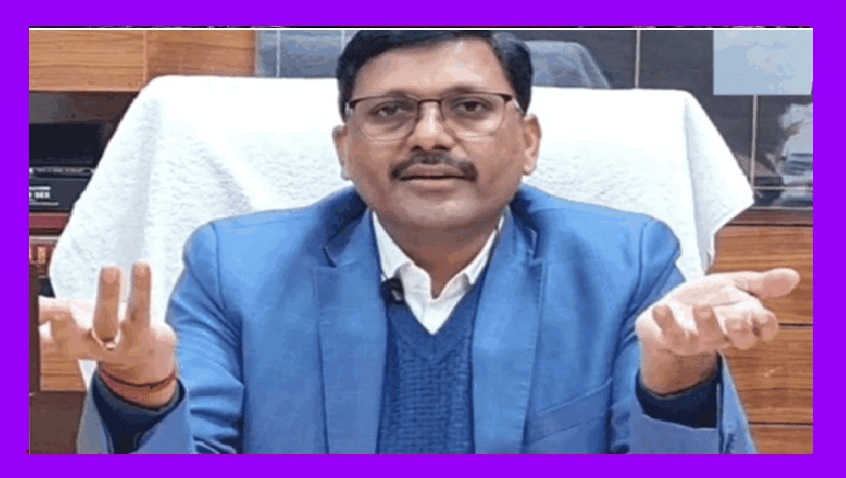
Why Uttar Pradesh Wants to Retain IAS Aunjaneya Kumar Singh After 11 Years: The Extension Row Testing India’s Cadre Rules
A senior IAS officer’s future has once again become one of the most closely watched stories in India’s bureaucracy. Aunjaneya Kumar Singh, a 2005-batch IAS officer of the Sikkim cadre, has completed nearly 11 years on deputation in Uttar Pradesh, an unusually long tenure that has stretched well beyond the normal inter-cadre deputation period.
His latest deputation has technically come to an end. He handed over charge as Moradabad Divisional Commissioner on August 14 and proceeded on leave after another extension was not approved before his tenure expired. That, however, may not be the final chapter in his Uttar Pradesh journey.
The UP government has reportedly sent another proposal to the Centre seeking an extension. If cleared, it would become the eighth relaxation granted during his deputation, reopening a debate over administrative necessity, cadre management, and whether repeated exceptions risk weakening the very rules designed to govern India’s All India Services.
A Departure That May Not Be Permanent
Singh’s exit from Moradabad has created intense speculation across administrative circles. While he is no longer holding the divisional commissioner post, officials familiar with the matter believe his association with Uttar Pradesh could continue if the Centre approves the state’s fresh proposal. This is not the first time such uncertainty has surrounded his tenure.
A similar situation unfolded last year when his extension was not cleared before his term ended. He relinquished charge, went on leave, and later returned after the deputation issue was resolved. Many observers now believe the current situation could follow a comparable path.
Even if another extension is approved, sources indicate he may not necessarily return to Moradabad. Instead, he could be assigned another politically significant administrative division where his experience is considered valuable.
Why Is Uttar Pradesh Keen to Keep Him?
The answer appears to lie in Singh’s long administrative record in western Uttar Pradesh, one of the state’s most politically sensitive regions. His tenure as Rampur District Magistrate brought him into the spotlight during the government’s legal and administrative action involving senior Samajwadi Party leader Azam Khan, his associates, and issues linked to Jauhar University.
Those years established Singh as an officer associated with handling politically charged situations under intense public scrutiny. Later, as Moradabad Divisional Commissioner, he spent nearly five-and-a-half years overseeing another strategically important region known for its complex law-and-order dynamics and communal sensitivities.
Political observers and senior journalists have pointed to this combination of administrative experience and familiarity with western Uttar Pradesh as a major reason behind the state’s reported interest in retaining him.
Election Year Raises the Stakes
Timing has added another layer to the discussion. With Uttar Pradesh moving toward an important election cycle, experienced officers who understand local administrative realities become particularly significant for governments managing sensitive regions.
Officials who have spent years working in areas with complex political equations often require less time to understand district-level challenges, law-and-order issues, and institutional coordination.
That familiarity is being viewed by many as one of Singh’s biggest administrative strengths.Some discussions within bureaucratic circles have even suggested that, if retained, he could be considered for another important division instead of returning to Moradabad.
The Azam Khan Cases Continue to Matter
Another issue frequently mentioned is the continuing legal proceedings involving Azam Khan and his associates. Several cases connected to land matters, recoveries, and Jauhar University remain at different stages of the legal process.
Those who support Singh’s continuation argue that replacing an officer who already understands the background of these cases could disrupt administrative coordination and prosecution-related work.
At the same time, it is important to note that these remain discussions within political and bureaucratic circles rather than officially stated reasons behind the government’s reported proposal.
An Extraordinary 11-Year Deputation
What makes Singh’s case unusual is the sheer length of his stay. As a 2005-batch IAS officer of the Sikkim cadre, he has spent around 11 years serving Uttar Pradesh through repeated extensions.
That is particularly noteworthy because Singh originally belongs to Mau district in Uttar Pradesh, meaning his continued posting in the state required relaxation of normal deputation provisions. His case has therefore become one of the most discussed examples of repeated flexibility under India’s cadre management framework.
Which Rules Came Into Question?
The debate surrounding Singh’s deputation revolves around two important aspects of the All India Services rules. The first concerns an officer’s home state. Generally, IAS officers cannot simply move on deputation to the state from which they originally belong without satisfying specific conditions.
The second concerns the duration of inter-cadre deputation. Such deputations normally have prescribed limits, even after permissible extensions. Singh’s tenure has gone well beyond those ordinary timelines. Under Rule 3, however, the competent authority has the power to relax provisions in the public interest or under extraordinary circumstances.
According to available information, this flexibility has reportedly been exercised seven times in his case. An eighth relaxation would once again put the spotlight on how frequently such exceptional provisions should be used.
The Sikkim Cadre Has Its Own Concerns
There is another important dimension that often receives less attention. Sikkim has a relatively small IAS cadre, and the prolonged absence of a senior officer can affect the parent state’s administrative strength.
Whenever an experienced officer remains outside the cadre for an extended period, questions naturally arise about balancing the needs of the borrowing state against those of the parent cadre.
Sources indicate that the Sikkim government has issued a No Objection Certificate (NOC) supporting Singh’s continuation in Uttar Pradesh, which could make the proposal easier for the Centre to examine. The final decision, however, remains with the competent authorities in New Delhi.
Can the Centre Refuse Another Extension?
Yes, it can. A proposal from a state government does not automatically result in approval. The Centre can consider several factors before making a decision, including:
-
The officer’s prolonged absence from the parent cadre.
-
Administrative requirements of the Sikkim cadre.
-
Whether repeated relaxations remain consistent with the broader cadre management framework.
Experts have also argued that making repeated exceptions for an individual officer could eventually weaken the spirit of the All India Services system if similar relaxations become routine.
The Centre therefore faces a balancing act between administrative continuity in Uttar Pradesh and maintaining the integrity of cadre management rules.
Could Delhi Become His Next Destination?
If Uttar Pradesh’s proposal is not approved, Singh still has other possible career pathways.
One option reportedly under discussion is his appointment as Resident Commissioner at Sikkim House in New Delhi.
Such a posting would allow him to remain in Delhi while returning to the administrative framework of his parent state.
Another possibility could emerge later through central deputation, although that would require following the normal empanelment process and applicable cooling-off provisions.
Given that Singh belongs to the 2005 batch, he is eligible for consideration for Joint Secretary-level positions at the Centre through the prescribed selection mechanism.
How Did His UP Journey Begin?
Singh’s deputation to Uttar Pradesh has attracted attention not only because of its duration but also because of how it began.
In February 2015, then Union Home Minister Rajnath Singh reportedly recommended his deputation to Uttar Pradesh.
At that time, the state was governed by the Samajwadi Party under then Chief Minister Akhilesh Yadav, who approved the recommendation despite political differences.
The exact circumstances under which his original deputation received approval have not been publicly disclosed in detail.
A Career Marked by Sensitive Assignments
Few officers spend so much of their careers handling politically sensitive districts.
Singh’s tenure in Rampur placed him at the centre of high-profile administrative actions. His subsequent years as Moradabad Divisional Commissioner gave him extensive experience in one of western Uttar Pradesh’s most strategically significant administrative regions.
Supporters view this record as proof of strong administrative capability.
Critics, meanwhile, continue questioning whether repeated relaxation of cadre rules aligns with the broader principles governing India’s All India Services.
What Happens Next?
For now, Aunjaneya Kumar Singh remains on leave after handing over charge as Moradabad Divisional Commissioner.
The next major development depends entirely on the Centre’s decision regarding Uttar Pradesh’s reported proposal.
Three possibilities remain open.
He could receive an eighth extension and continue serving in Uttar Pradesh, possibly in another important assignment. He could return to his parent Sikkim cadre if the proposal is rejected. Or he could move into a Delhi-based role connected with the Sikkim government before eventually becoming eligible for central deputation through the regular process.
Whatever the outcome, Singh’s case has evolved into more than just an individual posting dispute. It has become a significant test of how far governments can stretch inter-cadre deputation rules while balancing administrative needs with the integrity of India’s cadre management system.