

IAS Divya Mittal Resigns After 13 Years in Service: From London Finance to UP’s Grassroots Governance
UP cadre IAS officer Divya Mittal has resigned after 13 years of service. From IIT Delhi and IIM Bangalore to London finance and grassroots governance, know her remarkable journey.
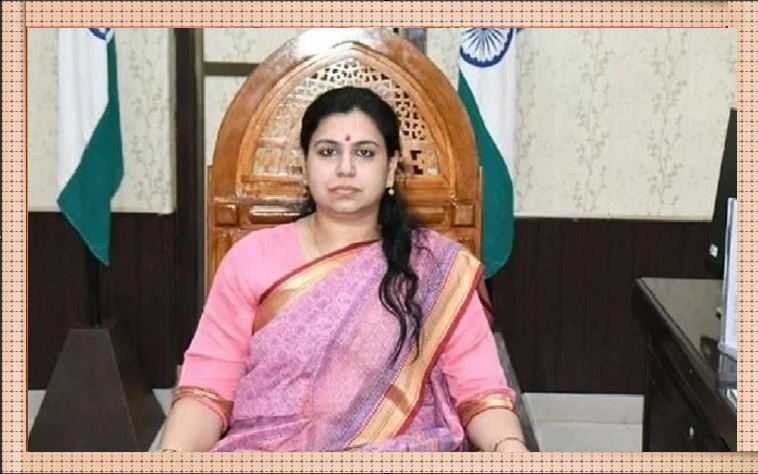
After spending nearly 13 years in the Indian Administrative Service, 2013-batch Uttar Pradesh cadre IAS officer Divya Mittal has decided to step away from government service. Mittal announced her voluntary resignation on August 30, 2026, bringing to an end a career that took her from the world of international finance in London to some of Uttar Pradesh’s most challenging grassroots administrative assignments.
At the time of her resignation, Mittal was serving as Special Secretary in the Revenue Department of the Uttar Pradesh government. In an emotional reflection on social media, she described her years in the IAS as an unforgettable journey and looked back at the people, places and experiences that shaped her understanding of public service. Her message made it clear that her decision was not simply about leaving a government position, but about moving into another phase of life where she hopes to pursue the dreams she has carried for the people she served.
From a Modest Beginning to IIT Delhi and IIM Bangalore
Divya Mittal’s journey to the IAS was anything but ordinary. She grew up in modest surroundings and initially focused on building a successful career through education, eventually earning admission to two of India’s most prestigious institutions.
She studied engineering at the Indian Institute of Technology Delhi before pursuing management education at the Indian Institute of Management Bangalore. Her academic background gave her a strong combination of technical knowledge and management skills, which later became valuable both in the corporate sector and during her years in public administration.
After completing her education, Mittal moved to London and entered the financial sector. She worked as an Exotic Derivatives Trader, taking up a highly specialised role in the international financial markets and building a successful professional career abroad.
On paper, she had many of the things that define a comfortable and successful life. Yet, despite the professional opportunities and financial security she had found in London, Mittal increasingly felt that something was missing because she was away from her own country.
Why Divya Mittal Returned to India
The pull of India eventually became stronger than the attractions of her overseas career. In her resignation message, Mittal reflected on how her education and confidence had been shaped by the country in which she had grown up, and she felt a personal responsibility to give something back.
She wrote about wanting to contribute directly to the India she had imagined and to use what she had learned to make a difference on the ground. That decision led her away from international finance and towards one of the country’s most demanding career paths, the Civil Services.
Returning to India meant starting afresh in a completely different professional environment. Instead of financial markets and derivatives trading, Mittal chose public administration, where decisions can have an immediate impact on communities, villages and individual lives.
First Cleared IPS, Then Secured IAS With AIR 68
Mittal’s civil services journey also involved more than one attempt. In her first attempt at the UPSC Civil Services Examination, she was selected for the Indian Police Service and allotted the Gujarat cadre.
But she was not satisfied with stopping there. Driven by a desire to work more closely with people through grassroots administration, she appeared for the examination again and eventually secured All India Rank 68, earning entry into the IAS.
She joined the 2013-batch IAS of the Uttar Pradesh cadre. Over the next 13 years, her career included important field assignments as well as senior responsibilities within the state government.
Her professional journey subsequently became closely associated with districts where administrative decisions were not merely matters of paperwork. In places such as Deoria and Mirzapur, she encountered issues involving land, water, infrastructure and the everyday challenges faced by ordinary citizens.
Deoria Taught Her the Importance of Standing Up
Among the experiences Mittal remembered most strongly was her tenure in Deoria. According to her reflection, the district taught her an important lesson about public administration: standing up for what is right is not simply a choice for an officer, but a responsibility.
Her tenure in Deoria was associated with Operation Kabza Mukti, a community-oriented administrative initiative aimed at reclaiming government land from illegal encroachments. The drive reportedly resulted in hundreds of acres of government land being freed through administrative action that focused on peaceful resolution rather than the use of brute force.
For Mittal, however, the significance of such work went beyond the numbers. Her experiences in the field reinforced the idea that every government file represents a real person, a family or a community, and that governance ultimately has to protect human dignity.
That perspective became one of the recurring themes of her years in public service. Administrative achievements, in her view, mattered most when they translated into a tangible improvement in somebody’s life.
Mirzapur and the Village That Waited 75 Years for Tap Water
Her posting as District Magistrate of Mirzapur became another important chapter in her career. One of the initiatives associated with her tenure involved efforts to bring piped drinking water to Lahuria Deh, a remote village that had reportedly waited for around 75 years for a proper tap-water connection.
The project was not straightforward. The geographical conditions and financial limitations made the task difficult, requiring coordination with Jal Nigam engineers and changes to the water-lifting system so that the project could actually become viable.
The effort eventually succeeded, bringing running tap water to the homes of 125 families. For a government file, that may appear to be a simple infrastructure achievement, but for the families who had spent decades without a piped water supply, it represented a dramatic change in everyday life.
Mittal recalled one particularly moving moment from the project. An elderly woman from the hills of Lahuria Dah reportedly saw water finally reach her village and, rather than saying anything, touched Mittal’s head with trembling hands and blessed her.
That gesture stayed with the officer. Mittal said that although she had now given up her official position, the memory of that blessing would remain with her forever.
‘Impossible’ Was Never the Final Word
The experiences of Mirzapur also shaped another belief that Mittal carried from her time in administration. She reflected that the district taught her that the word “impossible” is not necessarily a fact, but can simply be an opinion.
For her, solving difficult problems required persistence, imagination and a willingness to look beyond conventional solutions. The story of the village water project was one example of how an apparently difficult administrative challenge could eventually be overcome when officials worked together and redesigned the approach.
Mittal also spoke about her association with Goddess Vindhyavasini during her time in Mirzapur. She said that sitting at the deity’s feet gave her a different understanding of power, teaching her that true strength does not come simply from holding an official position.
Instead, she came to see power as something connected with divine grace and the trust placed in an officer by the people. That understanding appears to have had a lasting influence on the way she viewed her role in government.
‘Now It’s Time to Live the Dreams I Held for My People’
After 13 years, Mittal has now chosen to close the IAS chapter of her life. Her resignation comes after a career that began in London’s financial markets, passed through the competitive world of the UPSC examination and eventually took her deep into grassroots administration in Uttar Pradesh.
Her farewell message suggests that the dreams she once held for herself have, in many ways, already been fulfilled. She now wants to devote herself to the aspirations she developed for the people she encountered during her years in public service.
That makes her resignation particularly significant. Rather than presenting her departure simply as an exit from government, Mittal has framed it as the beginning of another journey, one in which the experiences gathered over 13 years of administration could be put to a different purpose.
From IIT Delhi and IIM Bangalore to London’s financial sector, from clearing the UPSC examination with an impressive rank to serving in Uttar Pradesh’s districts, Divya Mittal’s career has crossed several very different worlds. Her decision to leave the IAS now marks yet another turning point in a professional journey that has consistently been shaped by the desire to do something meaningful with the opportunities she received.