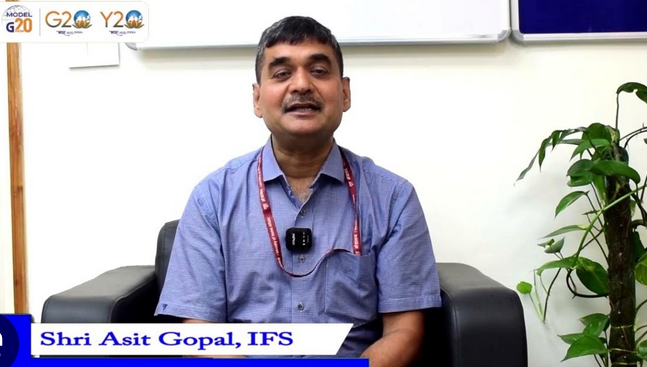
Former IAS officer Dr Ashok Khemka has called for an independent investigation into a long-running dispute involving around 15 acres of land in Panchkula, Haryana. He has also urged the state government to take immediate steps to ensure that the disputed property is not transferred, mortgaged, subdivided or developed while the ownership issue is being examined.
Khemka, a 1991-batch Haryana cadre IAS officer, has approached Haryana Chief Minister Nayab Singh Saini with a detailed set of demands concerning revenue orders that recognised Polo Hotels Limited and its director Abhey Ram Dahiya as owners of the land. In his August 25 communication, the former bureaucrat sought a review of the relevant orders and called for revision proceedings, along with an independent probe, preferably by the Central Bureau of Investigation.
The dispute has attracted fresh attention after a significant Supreme Court judgment delivered on August 3, 2026. The ruling dealt with the legal requirements for excluding land classified as shamlat deh, or village common land, from the ambit of the Punjab Village Common Lands (Regulation) Act, 1961. The judgment has now raised questions about whether the statutory requirements were adequately established in the case of the Panchkula property.
Khemka Seeks Immediate Protection of Disputed Land
Khemka has asked the Haryana government to prevent any further transaction or development involving the approximately 15-acre property until the dispute is properly examined. His concerns extend to the possibility of transfer, alienation, mortgage, subdivision, licensing, construction and other forms of development taking place while the matter remains under consideration.
Among his key demands is the initiation of revision proceedings against the May 13, 2026 order passed by the Ambala divisional commissioner as well as the January 16, 2024 order of the Panchkula district collector. He has also sought the collection and examination of the village’s sharat-wajib-ul-arz, jamabandis and other available revenue records so that the historical status of the land can be established more conclusively.
Another important demand relates to the identification of the old and present land records. Khemka has sought an authenticated correlation statement connecting the pre-consolidation khasra numbers with the present khasra numbers 68/5/2, 69 and 73/3. He has also called for the existing change of land use, or CLU, and other planning permissions to be kept in abeyance until the dispute is resolved.
He has additionally asked the government to obtain an official assessment of the property’s current market value. Given the location and size of the land, Khemka has argued that establishing its prevailing value is important while examining the implications of the ownership dispute.
Why Is the Panchkula Property Being Questioned?
The immediate controversy stems from the January 16, 2024 order of the Panchkula district collector. Through that order, Polo Hotels Limited and Abhey Ram Dahiya were recognised as owners of roughly 15 acres of land, with the finding that the property was not an asset of the erstwhile Chowki gram panchayat.
The order consequently held that the land could not have vested in the municipal corporation. The Panchkula Municipal Corporation challenged this determination, but the Ambala divisional commissioner, in an order dated May 13, 2026, upheld the collector’s findings concerning the ownership claim.
The municipal corporation has maintained that the land was never partitioned and that the proprietors were not in individual cultivating possession before January 26, 1950. That date is crucial because the statutory framework governing shamlat deh land attaches significance to the status and possession of land around that period.
Polo Hotels and its director, meanwhile, have based their ownership claim on predecessors and purchasers connected with the original village proprietors. Their position relies on historical revenue records and the argument that the land was in the cultivating possession of co-sharers before the relevant statutory cut-off date.
Supreme Court Judgment Adds Fresh Legal Dimension
The legal debate has become more significant following the Supreme Court’s August 3 judgment in Suraj Bhan and Others v. Ashvarya Estate Pvt. Ltd. and Others. The case examined the conditions that must be fulfilled for land to qualify for exclusion from shamlat deh under the 1961 legislation.
The Supreme Court made it clear that simply showing that village proprietors were in possession before January 26, 1950 is not, by itself, sufficient. A claimant seeking exclusion from the village commons framework must satisfy the applicable statutory requirements, including establishing that the land was partitioned before the cut-off date and subsequently came into individual cultivating possession.
The court also examined the significance of the expression “makbuja malkan”. According to the judgment, that expression generally indicates joint possession by the proprietary body and cannot, on its own, establish that the land was in individual cultivating possession after partition.
That interpretation has particular relevance to the Panchkula dispute. The earlier revenue orders, according to the material cited by Khemka, did not appear to contain specific findings demonstrating that the disputed property had actually been partitioned before January 26, 1950.
Khemka Questions Reliance on Historical Revenue Entries
Khemka has challenged the reasoning that relies heavily on possession entries appearing in the 1942-43 jamabandi and subsequent revenue records. His contention is that the statutory test cannot be reduced simply to whether possession by proprietors is reflected in historical documents.
He has pointed to what he considers significant gaps in the available revenue record. In particular, he has highlighted the absence of jamabandis for the period from 1962-63 to 1974-75 and the lack of a jamabandi between the 1942-43 record and January 26, 1950.
For Khemka, the missing records matter because the precise legal position of the land on the statutory cut-off date cannot necessarily be established through assumptions drawn from documents created before or after that date. The question, he argues, requires a direct and legally sustainable examination of the evidence available for the relevant period.
Former IAS Officer Warns Against Further Delay
Khemka has described the disputed property as roughly 15 acres of prime land in Sector 32, Panchkula. He has argued that any delay in examining the matter could make eventual restitution more difficult, particularly if the property changes hands or third-party interests are created.
In his communication to the Haryana Chief Minister, Khemka said the land had effectively moved out of the public domain into private hands through a decree that had subsequently been affirmed on appeal. He has therefore urged the government to act while legal and administrative remedies remain available.
He has also stressed that every passing month could make the situation more complicated. Any additional transactions, development activity or third-party claims could potentially create what are known as third-party equities, making any eventual corrective action harder to implement.
Khemka said he was raising the matter in the public interest and drawing upon his more than nine years of experience as Haryana’s financial commissioner. His intervention seeks not only a fresh examination of the revenue decisions but also safeguards to ensure that the disputed property remains protected during the process.
What Could Happen Next?
Khemka has urged the Haryana government to initiate revision proceedings before the Financial Commissioner and simultaneously prevent further transactions or development involving the property. The proposed measures are intended to preserve the status of the land while the legal and revenue questions surrounding its ownership are considered.
The Supreme Court’s recent interpretation of the requirements governing shamlat deh land has given the controversy an important additional legal dimension. At the heart of the dispute is now a fundamental question – whether the claim over the Panchkula property satisfies all the statutory conditions necessary for the land to remain outside the village commons framework.
The government will also have to consider the historical revenue material, the ownership claims advanced by the private parties, the objections raised by the municipal corporation and the implications of the Supreme Court’s latest interpretation. Khemka has specifically sought an independent investigation, preferably by the CBI, into the conduct of the defence in the matter.
Who Is Ashok Khemka?
Dr Ashok Khemka is a 1991-batch IAS officer of the Haryana cadre who spent more than three decades in public service before retiring in April 2025. During his long administrative career, he served in several departments and handled responsibilities linked to transport, archives, archaeology, science and technology, social welfare and sports.
He became widely known in 2012 after cancelling the mutation of a land transaction involving a company associated with Robert Vadra and DLF. The episode brought considerable public attention to his administrative career, and he was subsequently transferred numerous times during his service in Haryana.
Khemka has also previously called for independent investigations into issues involving public assets and government decision-making. His latest intervention in the Panchkula land dispute therefore fits into a broader pattern of his focus on administrative accountability, government property and matters that he believes warrant closer scrutiny.
For now, the controversy remains centred on the legal status and ownership of the roughly 15-acre Panchkula property. With the Supreme Court having recently clarified the statutory requirements concerning shamlat deh land, the next steps taken by the Haryana government and the revenue authorities could prove important in determining how the dispute moves forward.