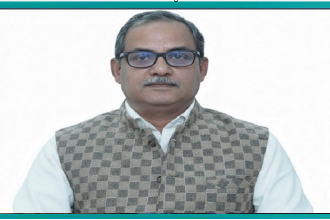


Senior IAS officer Vivek Kumar Dewangan has been appointed Secretary of the National Commission for Scheduled Castes (NCSC), marking a significant new assignment in a career that has spanned state administration, central government ministries, public sector leadership and infrastructure finance. The appointment has been cleared by the Appointments Committee of the Cabinet (ACC) and comes at a time when Dewangan is serving in his parent cadre of Manipur.
A 1993-batch Indian Administrative Service officer of the Manipur cadre, Dewangan will assume charge of the Secretary’s post from the date he takes over. According to the order issued by the Department of Personnel and Training (DoPT) on September 5, 2026, he will remain in the position until his superannuation or until further orders, whichever is earlier.
Dewangan Moves to Key Constitutional Institution
The new assignment places Dewangan in an important institutional role under the Ministry of Social Justice and Empowerment. The National Commission for Scheduled Castes is a constitutional body entrusted with monitoring and reviewing the safeguards available to Scheduled Castes under the Constitution, laws and government policies.
For Dewangan, the appointment represents a notable shift from his recent responsibilities in state administration and the power sector. His career has taken him through a wide range of portfolios, including finance, elections, agriculture, food processing, education, sericulture, cooperation, revenue administration and Panchayati Raj, giving him experience across both policy formulation and field-level governance.
The Secretary of the Commission plays a crucial administrative role in ensuring that the institution functions effectively. The position involves supporting the Commission’s constitutional mandate, facilitating inquiries and reviews, coordinating with government departments and maintaining communication with state authorities on matters concerning Scheduled Castes.
Currently Serving as Additional Chief Secretary in Manipur
Dewangan is currently posted in Manipur, where he is serving as Additional Chief Secretary in charge of Tribal Affairs and Hills. The assignment has placed him at the centre of administrative issues concerning tribal communities and the governance of the state’s hill areas, an area that requires considerable understanding of local administration and complex social and developmental concerns.
His present role is also part of a broader career in which he has handled responsibilities at different levels of government. He has served in both state and central assignments and has had exposure to district administration as well as senior policy-making positions.
Dewangan’s field experience includes district-level postings in both Chhattisgarh and Manipur. Such assignments have given him first-hand exposure to grassroots administration, while his later postings at the Centre and in senior state positions have involved larger policy and institutional responsibilities.
That combination of field experience and senior-level administrative exposure is likely to be particularly relevant in his new role at the NCSC, where the Commission regularly deals with issues that require coordination between central ministries, state governments and administrative authorities.
Former REC Chairman and Managing Director
One of the most prominent chapters of Dewangan’s career came at REC Limited, the public sector enterprise involved in financing projects in India’s power sector. He was appointed Chairman and Managing Director of REC in May 2022 after serving as Additional Secretary in the Ministry of Power.
His tenure at REC added another major dimension to his administrative profile, bringing him into the leadership of an organisation involved in financing power generation, transmission and distribution projects across the country. The position required oversight of a large public-sector institution operating at the intersection of government policy, infrastructure development and financial management.
Before taking charge of REC, Dewangan had served in the Ministry of Power at senior levels. He had worked as Joint Secretary in the ministry before being elevated to the position of Additional Secretary, giving him substantial experience in the country’s power and energy policy framework.
His central government career, however, was not limited to the power sector. Over the years, he has handled assignments associated with petroleum and natural gas, economic affairs, commerce and industry, law and justice, rural development and education.
The breadth of these postings has exposed him to a variety of policy areas, from economic management and infrastructure to social development and public administration. His return to a constitutional body focused on the rights and safeguards of Scheduled Castes therefore adds another important chapter to an already diverse career.
Engineering Graduate With Technology Specialisation
Dewangan also brings an academic background in engineering and technology to his administrative career. He holds a Bachelor of Engineering degree in Electronics from NIT Bhopal and a postgraduate degree in Optoelectronics and Optical Communication from IIT Delhi.
His technical education has been followed by more than three decades of experience in public administration, policy implementation and institutional leadership. His career trajectory reflects the varied roles that senior civil servants can take on over time, moving between field administration, ministries, public sector organisations and state government responsibilities.
The latest appointment now takes him into an area closely connected with constitutional safeguards, social justice and the protection of rights.
What the NCSC Does
The National Commission for Scheduled Castes has a wide-ranging mandate under the Constitution. It monitors and investigates matters relating to the safeguards provided to Scheduled Castes and examines whether these protections are being properly implemented by governments and authorities.
The Commission can also investigate specific complaints and grievances concerning the deprivation of rights and safeguards available to members of Scheduled Castes. Its work extends beyond individual complaints, as it also reviews the broader implementation of constitutional and legal protections.
Another important part of its mandate is advising the government on socio-economic development policies and programmes concerning Scheduled Castes. This places the Commission in an important position within India’s institutional framework for social justice and inclusion.
The Commission also interacts with government departments and state authorities on issues that affect Scheduled Castes. Its recommendations, reviews and inquiries can therefore involve a broad administrative network extending from the Centre to individual states and their field-level machinery.
New Role Brings Diverse Experience Together
Dewangan’s appointment comes after a career that has included seemingly different areas of administration, but many of his previous assignments have involved managing complex institutions and coordinating across multiple levels of government.
His experience in Manipur gives him familiarity with issues concerning tribal and hill administration. His years in central ministries provide an understanding of how policies are formulated and implemented at the national level, while his tenure at REC brought exposure to large-scale public-sector management and infrastructure financing.
The new responsibility at the NCSC will require a different institutional focus, particularly on constitutional safeguards, social justice and administrative coordination. As Secretary, Dewangan will support the functioning of the Commission and assist its leadership in carrying out its statutory and constitutional responsibilities.
He will also be involved in coordinating with ministries, departments, state governments and other authorities whenever matters concerning Scheduled Castes require administrative follow-up.
For a 1993-batch officer with experience across state and central government, public-sector leadership and multiple policy domains, the appointment represents another significant responsibility in a long administrative career. His formal tenure as NCSC Secretary will begin once he assumes charge, with the DoPT order providing that he will continue until retirement or until further orders, whichever comes earlier.