

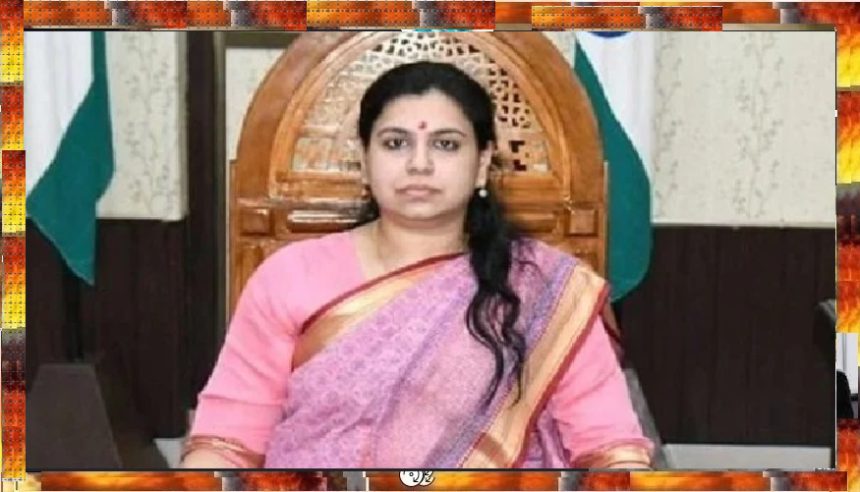
Former IAS Officer Divya Mittal Announces Independent Political Entry in Uttar Pradesh, Rules Out Joining Any Party
Former Uttar Pradesh-cadre IAS officer Divya Mittal has announced that she will enter politics independently, saying she wants to work directly with citizens and build a political platform around issues raised by ordinary people.
Lucknow: Former IAS officer Divya Mittal has formally announced her entry into politics, making it clear that she does not plan to join any political party at this stage. After spending around 13 years in the Indian Administrative Service, Mittal has decided to begin a new public journey in Uttar Pradesh, a state she describes as her karmabhoomi.
In a video released on social media, Mittal spoke about her decision to enter public life outside the established political parties. She said she wants to work with citizens and develop a political platform based on issues that people encounter in their everyday lives. Her announcement comes shortly after her resignation from the IAS was accepted and became effective on September 15, 2026.
Mittal said she had taken time to think about what she wanted to do after leaving the civil services. She also acknowledged that one of the questions she had repeatedly faced was whether she would join a political party. Her answer was clear: she said she would not associate herself with any political party and instead wanted to work with citizens to build a platform of her own.
Divya Mittal Says Her Political Journey Will Begin in Uttar Pradesh
For Mittal, Uttar Pradesh is more than just the state where she served as an administrator. During her years in the state bureaucracy, she worked in different districts and dealt with a range of issues involving public services, infrastructure, education and land-related grievances.
She said she wants to start her political journey from Uttar Pradesh because of the connection she developed with people during her administrative career. Her message was also directed at citizens, whom she encouraged to take an active role in addressing problems rather than simply waiting for an individual leader or politician to solve them.
According to her stated approach, the proposed political platform would seek to bring citizens’ concerns into the public conversation and create greater participation around issues affecting their daily lives.
Education, Roads, Land and Public Grievances Among Key Issues
Mittal referred to several issues that she encountered during her administrative career while explaining the kind of subjects she wants to raise in her new public role. These include access to education, land-related grievances, roads and bridges, road safety and examination paper leaks.
She recalled an interaction with a woman in Lahuria Dah in Mirzapur when she was overseeing work connected with water supply in the area. According to Mittal’s account, the woman raised a simple but important concern about the local school.
The village school, she said, provided education only up to Class 5. The woman wanted a higher class to be started so that children from the village could continue their education locally instead of facing the difficulty of travelling elsewhere.
Mittal said she subsequently looked into the approval process for expanding the school. She questioned why construction work had not started even though approval had already been given. The incident, as she described it, reflected the gap that can sometimes exist between administrative approval and actual implementation on the ground.
Land Records and Accountability Also Part of Her Agenda
Mittal also spoke about an incident from her tenure as Special Secretary in the Revenue Department. According to her account, a person had documents related to a government land lease but had not received possession of the land.
She said she examined the records associated with the matter and found discrepancies in a report prepared in connection with the case. According to her account, action was subsequently taken against the person responsible for preparing that report.
The former IAS officer referred to the episode while discussing questions of accountability and the importance of ensuring that administrative decisions and official records translate into actual relief for citizens.
She also spoke about infrastructure concerns in rural areas, including roads and bridges. Road safety, delays in addressing infrastructure problems and the way government agencies respond to such concerns are among the issues she indicated she wants to raise through her proposed political platform.
Examination Paper Leaks and Employment Concerns
Another major area discussed by Mittal was the situation facing young people preparing for competitive examinations. She referred to examination paper leaks and the effect such irregularities can have on students who spend years preparing for government recruitment examinations.
For many young aspirants, competitive examinations involve a significant investment of time and effort. Mittal said problems in the examination system can therefore have consequences far beyond an individual examination, particularly for candidates who have devoted years to preparing for government jobs.
She also raised the issue of employment in the context of rapid technological change. The increasing use of artificial intelligence, she suggested, could have an impact on employment opportunities in the future.
The question of how young people will adapt to a changing job market is therefore another issue she has highlighted while explaining the concerns she wants to bring into the political arena.
Four Words She Wants to Associate With Her Politics
While describing her proposed approach to politics, Mittal referred to four themes: intention, justice, concern and thinking. She said these principles would form part of the way she wants to approach public issues.
She also said her objective was not simply to replace one politician with another. Instead, she wants to focus on changing the way political representatives and political platforms respond to problems raised by citizens.
Mittal also said she does not intend to base her political work around caste or religious calculations. She said she would seek public support rather than relying on money or muscle power.
These statements outline the approach she has publicly described for her proposed independent political platform. Whether and how that platform develops will depend on its organisation, public response and the issues it eventually takes up.
Why Did Divya Mittal Leave the IAS?
Divya Mittal belongs to the 2013 batch of the Uttar Pradesh cadre. She announced her resignation from the IAS on August 30, 2026, after approximately 13 years in the service.
At the time of her resignation, she cited personal reasons, family priorities and new goals in life. Her resignation was subsequently accepted and became effective on September 15, 2026.
Before leaving the civil services, Mittal was serving as Special Secretary in the Uttar Pradesh Revenue Department. Earlier in her career, she served as District Magistrate in districts including Mirzapur, Sant Kabir Nagar and Deoria.
Her transition from the civil services to politics now marks a significant change in her professional career, with her administrative experience forming an important part of the public profile with which she enters political life.
From IIT Delhi and IIM Bangalore to the IAS
Mittal’s professional journey began with an academic background in engineering and management. She studied engineering at IIT Delhi and later completed an MBA from IIM Bangalore.
She subsequently worked in London before returning to India. After coming back, she prepared for the UPSC Civil Services Examination and joined the Indian Administrative Service in 2013.
During her tenure in Mirzapur, she attracted attention for her work related to providing piped water to Lahuria Dah, a remote village where residents had previously relied on tanker supplies. Her experience in the field, including interactions with residents and work on public-service delivery, has now become part of the background she is bringing into her new political role.
Political Reactions After Her Resignation
Mittal’s resignation from the IAS had already attracted political attention. Congress leader Ajay Rai had said that his party could consider her if she decided to contest an election.
Samajwadi Party chief Akhilesh Yadav also commented on her resignation and raised allegations concerning pressure on officers. Those comments came in the context of the discussion surrounding her decision to leave the civil services.
Mittal’s latest announcement provides clarity on one aspect of the speculation that followed her resignation. She has now said that she does not intend to join a political party and instead plans to work independently with citizens.
Her announcement places Uttar Pradesh at the centre of her proposed political journey. She has indicated that her focus will be on public concerns ranging from education and infrastructure to land grievances, examination systems and employment challenges linked to technological change.
For now, the former IAS officer is positioning her political entry around an independent platform rather than an existing party structure. The next stage will be to see how she develops that platform, how she organises her political activities and how citizens respond to the issues and approach she has outlined.