
Who Is Ram Bahadur Pasi IAS? Former Mayawati Aide Joins Akhilesh Yadav’s Samajwadi Party Ahead of 2027 UP Elections
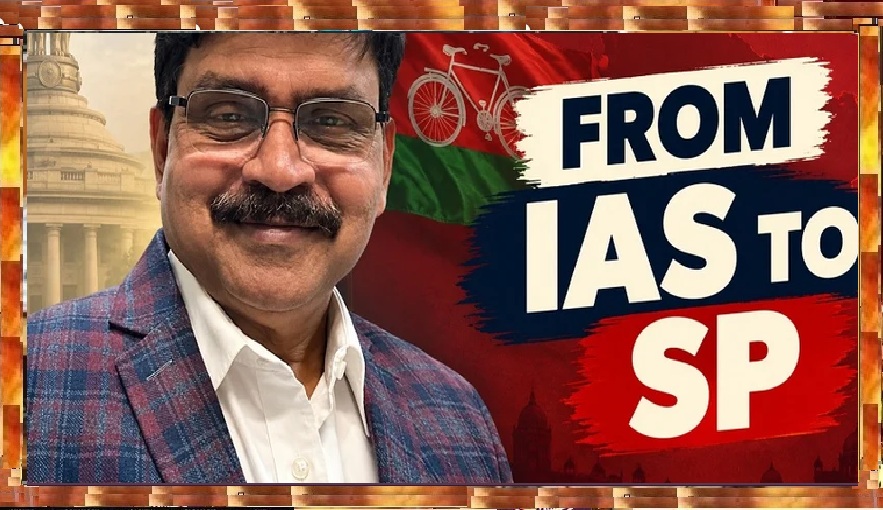
Former Uttar Pradesh-cadre IAS officer Ram Bahadur Pasi, who was once considered close to Bahujan Samaj Party (BSP) chief Mayawati, has joined the Samajwadi Party (SP), marking another shift in his political journey ahead of the 2027 Uttar Pradesh Assembly elections. Pasi joined the party on October 26 in the presence of SP president Akhilesh Yadav and senior party leader Shivpal Singh Yadav.
His induction comes as the Samajwadi Party seeks to expand its political base across Uttar Pradesh, with particular emphasis on its PDA strategy, which stands for Pichhde, Dalit, Alpsankhyak, referring to backward classes, Dalits and minorities. Pasi brings with him decades of administrative experience, a previous electoral contest on a BSP ticket and links with political organisations associated with the wider Bahujan movement.
His political journey has included service in the Uttar Pradesh government, a narrow defeat in the 2017 Assembly elections, the formation of his own political outfit and a move to the Bharatiya Janata Party (BJP) in January 2022. His latest decision to join the SP adds another chapter to a career that has moved between administration and electoral politics.
Who Is Ram Bahadur Pasi?
Ram Bahadur Pasi is a retired IAS officer of the Uttar Pradesh cadre who began his career in government service as a Provincial Civil Service (PCS) officer in the 1977 batch. After serving in the state administration for several decades, he was promoted to the Indian Administrative Service in 2010. He retired from government service in December 2015.
During his administrative career, Pasi held several important positions, including District Magistrate of Gonda and Vice-Chairman of the Lucknow Development Authority (LDA) and Ghaziabad Development Authority (GDA). He served in senior administrative roles during Mayawati’s tenure as Uttar Pradesh Chief Minister and was regarded as a bureaucrat close to the BSP leadership.
Pasi was also associated with the Backward and Minority Communities Employees Federation (BAMCEF), an organisation linked to the broader social and political movement from which the BSP emerged. His administrative background and subsequent political involvement have kept him connected with Uttar Pradesh’s political landscape, particularly around the Mohanlalganj Assembly constituency.
Following his retirement, Pasi entered electoral politics and contested the 2017 Uttar Pradesh Assembly elections as a BSP candidate. He later established the Nagrik Ekta Party before joining the BJP in 2022. His induction into the Samajwadi Party represents another change in political affiliation as parties begin positioning themselves ahead of the next Assembly election.
Ram Bahadur Pasi’s Administrative Career in Uttar Pradesh
Pasi entered government service through the Uttar Pradesh Provincial Civil Service in 1977. His promotion to the IAS in 2010 came after a long career in the state administration, during which he held assignments involving district administration and urban development.
Among his notable postings was his tenure as Vice-Chairman of the Lucknow Development Authority. He also served as Vice-Chairman of the Ghaziabad Development Authority and District Magistrate of Gonda. These assignments placed him in positions involving administrative coordination, development planning and the implementation of government decisions.
His tenure at the Lucknow Development Authority attracted attention in June 2008, when the authority carried out a demolition drive against part of Sahara Shaher. The action was linked to structures that the authority described as encroaching on land earmarked for a zonal road under Lucknow’s master plan. The demolition attracted considerable public attention and controversy.
Pasi’s administrative career coincided with a period when the BSP government placed emphasis on urban development and enforcement of land-use regulations. His subsequent political career drew partly on his experience in government and his association with the social and political networks connected with the Bahujan movement.
Pasi retired in December 2015, bringing his career in government service to a close before he began pursuing electoral politics more actively.
From Mayawati’s Administrative Circle to BSP Candidate
After retiring from the IAS, Pasi entered politics through the Bahujan Samaj Party. His association with the BSP reflected his links with the wider Bahujan movement and his reported association with BAMCEF, which has historical connections with the movement that contributed to the emergence of the party.
In the 2017 Uttar Pradesh Assembly elections, Pasi contested the Mohanlalganj reserved constituency on a BSP ticket. The election produced a close contest, with Pasi reportedly losing to the Samajwadi Party candidate by a margin of just 530 votes.
The narrow defeat made the contest a notable episode in his political career. Mohanlalganj has been an important constituency in the state’s electoral landscape, and the Pasi community has a significant presence in the area.
After the election, Pasi moved away from the BSP and established the Nagrik Ekta Party. The move gave him an independent political platform as he sought to continue his political activities outside the party on whose ticket he had contested the Assembly election.
His transition from senior bureaucrat to BSP candidate also illustrates how retired civil servants can use their administrative experience and local connections to enter electoral politics. However, the extent to which such experience translates into electoral success depends on a range of factors, including party organisation, constituency dynamics and voter support.
Why Did Ram Bahadur Pasi Join the BJP in 2022?
In January 2022, ahead of the Uttar Pradesh Assembly elections, Pasi joined the Bharatiya Janata Party. The decision marked a shift from the BSP, the party he had represented in the 2017 Mohanlalganj contest, and followed his effort to establish an independent political platform through the Nagrik Ekta Party.
His move placed him within the BJP’s political organisation at a time when parties across Uttar Pradesh were preparing for another major Assembly contest. The report, however, does not provide specific details about the reasons Pasi gave for joining the BJP or the organisational responsibilities he may have held after entering the party.
His latest move to the Samajwadi Party, nearly five years after joining the BJP, adds another change to his political trajectory. Pasi now enters the SP at a time when Akhilesh Yadav is seeking to strengthen the party’s outreach among social groups that are central to its PDA strategy.
What Did Ram Bahadur Pasi Say After Joining the Samajwadi Party?
After joining the Samajwadi Party, Pasi thanked Akhilesh Yadav for inducting him into the organisation. He referred to his retirement from government service in 2015 and recalled that Akhilesh Yadav was the Uttar Pradesh Chief Minister at the time.
“I feel fortunate that the national president inducted me into the Samajwadi Party, and I thank him. I was in service until 2015. Akhilesh Yadav was the Chief Minister when I retired,” Pasi said.
He also expressed confidence in the Samajwadi Party’s prospects in the 2027 Uttar Pradesh Assembly elections. Pasi said the party would form the government in 2027 and that Akhilesh Yadav would return as Chief Minister.
His remarks indicate his support for the SP leadership and its electoral ambitions. However, the statement does not establish whether Pasi will be given a specific organisational role or fielded as a candidate in the next Assembly elections.
How Ram Bahadur Pasi’s Entry Fits into Akhilesh Yadav’s PDA Strategy
Pasi’s induction is being viewed in the context of the Samajwadi Party’s efforts to broaden its social and political base ahead of the 2027 Uttar Pradesh Assembly elections. The party’s PDA strategy focuses on building support among backward classes, Dalits and minorities, with the aim of bringing different social groups together under a broader electoral coalition.
The entry of leaders with administrative experience and backgrounds in other political formations can help the SP widen its organisational network. Pasi’s previous association with the BSP, his electoral contest from the reserved Mohanlalganj constituency and his long career in the Uttar Pradesh administration give him a profile that the party may seek to draw upon as it expands its outreach.
His political background also connects him with the Bahujan movement and the electoral history of a constituency where community representation can be an important consideration. Whether these connections translate into wider support for the SP will depend on how the party integrates him into its organisation and the role he plays in its campaign.
Pasi’s induction reportedly coincided with the joining of several other political figures from different districts and parties, including leaders from Badaun and western Uttar Pradesh. The simultaneous entry of multiple leaders suggests a broader effort to expand the party’s network before the next state election, although the electoral significance of these individual inductions remains to be seen.
Ram Bahadur Pasi’s Political Journey Ahead of the 2027 UP Assembly Elections
Ram Bahadur Pasi’s entry into the Samajwadi Party marks another transition in a political journey that began after his retirement from the IAS in December 2015. From serving as District Magistrate of Gonda and heading development authorities to contesting the Mohanlalganj Assembly seat on a BSP ticket, he has moved through several roles in administration and politics.
His subsequent formation of the Nagrik Ekta Party and decision to join the BJP in January 2022 were followed by his latest move into the SP. Each shift has placed him within a different political platform, reflecting the changing affiliations that have shaped his post-retirement career.
For Akhilesh Yadav’s party, Pasi’s induction comes as preparations for the 2027 Uttar Pradesh Assembly elections gather importance. His administrative experience, past association with the BSP and electoral history could offer the party additional connections in its efforts to strengthen its PDA outreach.
The extent of his future role in the Samajwadi Party has not yet been specified in the report. Whether he contests an election, assumes an organisational responsibility or contributes primarily to the party’s outreach will become clearer as the SP advances its preparations for the 2027 polls.