

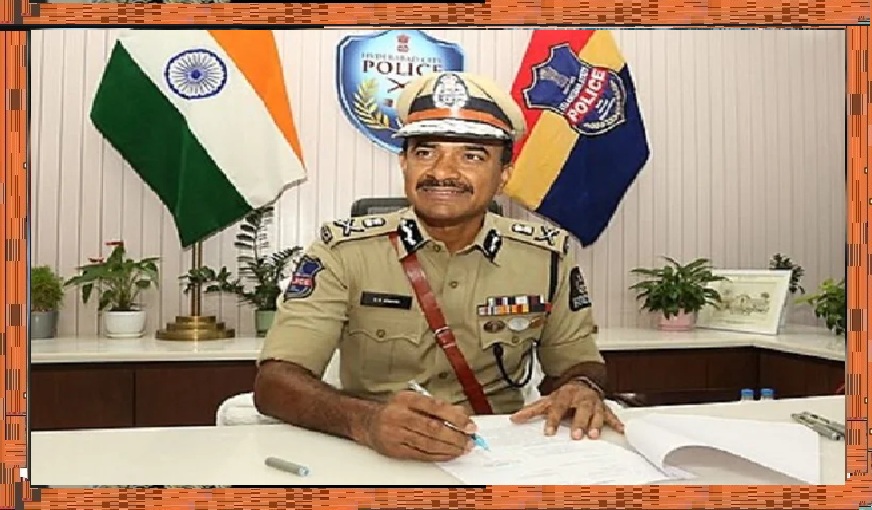
Telangana DGP C.V. Anand Launches Digital Policing Tools, Facial Search App and Jail Release Monitoring System
Telangana DGP C.V. Anand has launched a series of digital initiatives to strengthen criminal investigations, improve police accountability and enhance coordination between law enforcement agencies. The rollout includes a mobile facial search application, a Jail Release Surveillance System, digital case management for 35 Bharosa Centres and five volumes of investigation Standard Operating Procedures.
Telangana Director General of Police C.V. Anand, a 1991-batch IPS officer of the Telangana cadre, launched several digital initiatives for the Telangana Crime Investigation Department (TG-CID) on October 28, 2026. The measures are aimed at improving investigative efficiency, strengthening accountability and making police services more accessible to citizens.
The initiatives include a Citizen Feedback Centre, Bharosa case-management software, a new TG-CID website, a Jail Release Surveillance System (JRSS) and a Mobile Face Search application. Anand also released five volumes of Standard Operating Procedures (SOPs) to guide investigating officers handling different categories of criminal cases.
According to Anand, the initiatives are intended to make policing more transparent, accountable and efficient while equipping officers with improved technological tools and standardised procedures.
The new systems cover several aspects of police work, including citizen feedback, support for survivors, information-sharing between prisons and police units, facial identification and the standardisation of criminal investigations.
Five Digital Initiatives to Modernise Telangana Policing
The technology rollout introduces platforms designed to improve police service delivery, strengthen investigative support and facilitate coordination across the department.
The five key initiatives are:
Citizen Feedback Centre (CFC): Collects feedback from people who have recently accessed police services. Bharosa software: Digitally tracks cases and support services provided through 35 Bharosa Centres.
TG-CID website: Provides a public-facing digital platform for the Crime Investigation Department.Jail Release Surveillance System: Integrates prison and police databases to facilitate information-sharing and prisoner-release monitoring.
Mobile Face Search application: Provides field personnel with a tool for facial searches to assist identification.Alongside these digital platforms, the DGP released five volumes of investigation SOPs covering different categories of offences.
Five Volumes of SOPs to Standardise Criminal Investigations
The five SOP volumes are intended to provide investigating officers with standardised procedures for handling different types of criminal cases.
The manuals cover the following categories:
Bodily offences
Property offences
Crimes against women and children
Special and local laws
Other offences
The guidelines are intended to improve consistency in investigative practices, including evidence handling, documentation and other procedures relevant to criminal cases.
Anand said the SOPs were designed to strengthen investigations and improve the prospects of securing convictions. By providing officers with standardised guidance across different categories of offences, the manuals aim to support more consistent investigative practices throughout the department.
Citizen Feedback Centre to Monitor Police Service Delivery
The newly established Citizen Feedback Centre is designed to obtain direct responses from people who have recently interacted with the police.
The feedback mechanism covers several services, including:
Filing petitions with the police
Registration of First Information Reports (FIRs)
e-Challan services
Passport verification
The centre is intended to help the department understand citizens’ experiences and identify areas where police service delivery may require improvement. Collecting feedback from people who have recently used these services can provide the department with information about how its procedures are experienced by the public.
The initiative is aimed at strengthening accountability and supporting more responsive policing. The available information does not specify how feedback will be evaluated or what corrective-action mechanisms will follow from the responses received.
Bharosa Software Connects 35 Centres Through Digital Case Management
Bharosa software is a digital case-management platform intended to coordinate services provided through Telangana’s 35 Bharosa Centres. The system brings case information and survivor-support services into a unified digital framework, enabling the progress of cases to be tracked from initial contact to closure.
Its functions include:
Registration and tracking of cases
Counselling services
Medical assistance
Legal support
Rehabilitation services
The platform is designed to improve coordination among Bharosa Centres and facilitate monitoring of the different stages of assistance provided to survivors.
By bringing case information into a centralised system, the initiative aims to reduce fragmented record-keeping and support continuity of services. The stated objective is to make case tracking more systematic and help ensure that the different forms of assistance can be monitored through the digital platform.
Jail Release Surveillance System Integrates e-Prisons With CCTNS
One of the major initiatives launched by the Telangana Police is the Jail Release Surveillance System, developed by integrating the National Informatics Centre’s e-Prisons platform with the Crime and Criminal Tracking Network and Systems (CCTNS). The integration is designed to improve information-sharing between prison authorities and police units by providing timely information about prisoner releases.
The system includes several features:
Automated release monitoring: Tracks prisoner-release information through integrated digital records. SMS alerts: Sends notifications to relevant police stations and officers. Statewide dashboards: Provides a consolidated view of information for monitoring and coordination.
AI-based analytics: Supports analysis of available data.
Prisoner-search facilities: Helps officers access relevant information for investigative purposes.Anand said the system would use automated data synchronisation and crime classification to strengthen investigative support, assist in identifying criminal networks and promote intelligence-led policing across Telangana.
The integration is intended to help police units access relevant information more efficiently and improve coordination with prison authorities. The system’s effectiveness will depend on the quality and timeliness of the underlying records, as well as the procedures used by police units to act on the information received.
Mobile Face Search Application for Field Personnel
The Mobile Face Search application is another component of the digital policing rollout. It is intended to help field personnel conduct facial searches for identification purposes.
The application adds a facial-search capability to the department’s technology tools and is intended to support police personnel during field operations. However, the available information does not specify the application’s database sources, matching accuracy, access controls, retention policies or safeguards governing its use.
These details are relevant to understanding how the application will operate in practice, particularly regarding the handling of personal data and the verification of potential matches. A facial-search result should be treated as an investigative lead rather than conclusive proof of identity, with identification requiring appropriate verification.
Technology-Driven Policing and Public Accountability
The initiatives launched by Anand address different parts of police administration, from citizen feedback and survivor support to criminal investigations and coordination with prison authorities.
The Citizen Feedback Centre is focused on public service delivery, while Bharosa software is intended to improve the monitoring of survivor-support services. The Jail Release Surveillance System seeks to strengthen information-sharing, and the Mobile Face Search application adds a digital identification tool for field personnel.
The five SOP volumes complement these systems by providing standardised guidance for investigating different categories of offences. Together, the initiatives represent Telangana Police’s effort to expand the use of digital platforms and structured procedures across its operations.
Their practical impact will depend on implementation, data quality, officer training, appropriate safeguards and the department’s ability to use the information generated by these systems effectively.