
Ladakh Chief Secretary Ashish Kundra Defends December 4 Hill Council Polls, Calls Them a Milestone for Democracy
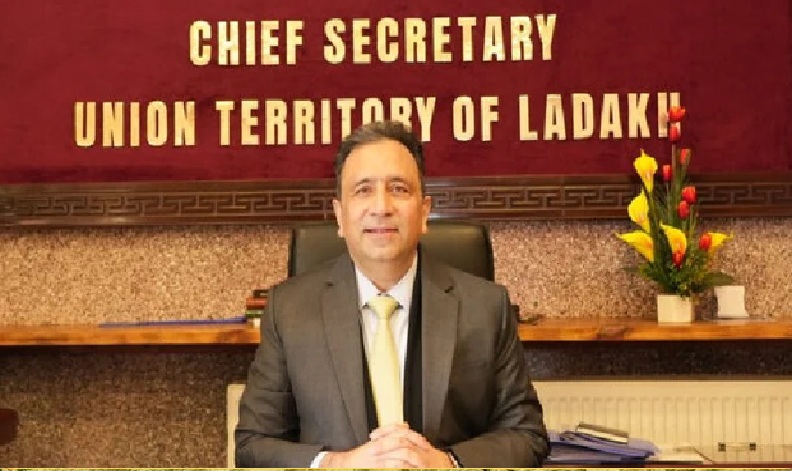
Ladakh Chief Secretary Ashish Kundra has urged political leaders and residents to participate in the December 4 elections to all eight Ladakh Autonomous Hill Development Councils, describing the polls as a significant milestone in the Union Territory’s democratic journey. His appeal comes amid protests over the winter election schedule and the recent delimitation exercise.
Ladakh Chief Secretary Ashish Kundra (IAS: 1996: AGMUT) has defended the administration’s decision to hold elections to all eight Ladakh Autonomous Hill Development Councils (LAHDCs) on December 4, describing the exercise as an important step in strengthening democratic institutions across the Union Territory.Speaking to reporters on November 10, Kundra appealed to political leaders, young voters, women, senior citizens and government employees to participate in the electoral process and exercise their democratic rights.
His remarks followed the State Election Commission’s announcement of the polling schedule. However, the decision to conduct elections during December has triggered objections from several political, social and religious organisations, which have raised concerns about the region’s severe winter conditions and their potential impact on voter participation.
LAHDC Elections 2026: Important Dates and Schedule
The State Election Commission has announced the schedule for constituting the eight hill councils under Ladakh’s expanded administrative structure.
The key dates and details are as follows:
* Polling date: December 4, 2026
* Polling hours: 8 am to 5 pm
* Last date for filing nominations: November 17
* Scrutiny of nominations: November 18
* Last date for withdrawal of nominations: November 20
* Completion of the election process: December 8
The elections will cover 100 constituencies across the eight councils. The expansion follows the creation of six new districts, increasing Ladakh’s total number of districts from two to eight. Around 1.87 lakh electors are expected to participate in the elections.
Why the Administration Is Supporting December Elections
Addressing concerns about the timing of the polls, Kundra maintained that winter weather should not become a barrier to democratic participation. He pointed out that schools in Ladakh have continued to function until around December 15 in recent years.
Drawing a comparison, he suggested that if children could attend school during this period, eligible adult voters should also be able to reach polling stations.The Chief Secretary said Deputy Commissioners had been directed to ensure adequate facilities at polling stations, including heaters, to make the voting process more comfortable for residents.
He also explained that the election timetable had been drawn up keeping in mind the financial planning requirements of the newly constituted councils.According to Kundra, completing the elections on schedule would give the newly elected councils January, February and March to prepare their budgets for the next financial year. This, he indicated, was an important consideration behind the administration’s decision.
Kargil Shutdown Highlights Opposition to Poll Schedule and Delimitation
The announcement of the election schedule has come amid protests in parts of Ladakh, particularly over the decision to hold polling during the winter and concerns surrounding the delimitation exercise.
Kargil observed a complete shutdown on November 10 following a call by local groups opposing the winter election schedule. Markets and commercial establishments remained closed as part of the protest.
Several organisations have argued that harsh weather conditions and seasonal migration could affect voter turnout. Concerns have also been raised about the delimitation exercise undertaken following the creation of six new districts.
Kundra acknowledged that it was difficult for the administration to satisfy every stakeholder. However, he maintained that the delimitation exercise had received a largely positive response, based on feedback from the districts.
He also recognised peaceful protests and shutdowns as forms of democratic expression, while urging political and social leaders to engage with the electoral process.
Eight Hill Councils Under Ladakh’s Expanded District Structure
The upcoming elections will constitute eight LAHDCs under the Union Territory’s revised administrative framework. Previously, the hill council structure comprised 26 constituencies each in Leh and Kargil. Following the reorganisation, the electoral framework has expanded to 100 constituencies across Ladakh.
The LAHDCs are significant local self-governing institutions. Their elected representatives play an important role in local administration and development under the applicable hill council framework.
The Ladakh Administration has maintained that the delimitation exercise was conducted in accordance with prescribed rules, taking into account population figures, existing Panchayat Halqas and municipal wards.
Ashish Kundra Appeals to Leh and Kargil Residents
Reiterating his appeal, Kundra urged residents of both Leh and Kargil to participate in the December 4 elections.He described the polls as an opportunity to strengthen democratic institutions and ensure public participation in local governance.
With objections over the winter schedule and delimitation continuing, the administration faces the challenge of ensuring a smooth electoral exercise while addressing concerns raised by sections of the local population.