
Who Will Become CEO of Shri Ram Janmabhoomi Teerth Kshetra Trust? Nripendra Misra, Awanish Awasthi and Prashant Kumar Among Top Contenders
The search for the next Chief Executive Officer (CEO) of the Shri Ram Janmabhoomi Teerth Kshetra Trust has entered a crucial phase, with three of India’s most experienced retired bureaucrats emerging as the strongest contenders for one of the country’s most prestigious administrative positions.
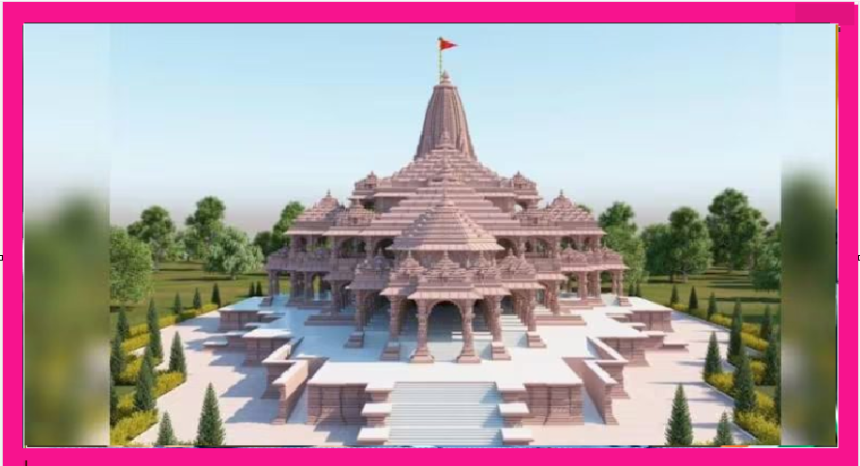
According to highly placed sources, former Principal Secretary to Prime Minister Narendra Modi Nripendra Misra, former Uttar Pradesh Additional Chief Secretary Awanish Kumar Awasthi, and former Uttar Pradesh Director General of Police Prashant Kumar are among the leading names under consideration to head the executive administration of the Trust that manages the iconic Shri Ram Temple in Ayodhya.
Although no formal announcement has been made, discussions are understood to be progressing at multiple levels. Sources indicate that the government is keen to place an experienced administrator at the helm of the Trust to strengthen governance, improve institutional management and oversee the rapidly expanding responsibilities associated with one of India’s most visited religious destinations.
Government Looking for an Experienced Administrator
People familiar with the developments say the government is inclined towards appointing a retired senior civil servant with an outstanding administrative record and proven leadership experience.
The role of the CEO has become increasingly significant as the Ram Temple continues to attract millions of devotees from across India and abroad. Along with managing pilgrim facilities, the position also involves overseeing infrastructure expansion, financial administration, institutional coordination and long-term development projects.
Sources suggest that authorities believe a seasoned bureaucrat would be well-equipped to handle these complex responsibilities while ensuring greater efficiency and transparency in the Trust’s day-to-day functioning.
While the names of Nripendra Misra and Awanish Kumar Awasthi have been discussed for quite some time, the inclusion of former Uttar Pradesh Police chief Prashant Kumar has added fresh interest to the selection process.
Each of the three contenders brings decades of experience in public administration, governance and institutional leadership, making the race highly competitive.
Administrative Oversight Gains Importance
The discussions over appointing a professional administrator come against the backdrop of reports alleging irregularities in the management of donations and financial affairs associated with the Trust.
Although there has been no official confirmation regarding these reports, sources say the government is exploring ways to strengthen institutional mechanisms by introducing professional administrative leadership.
The proposed appointment is expected to improve financial oversight, enhance transparency, streamline administrative procedures and establish stronger governance systems within the Trust.
Officials believe that as the scale of operations continues to expand, dedicated executive leadership will become increasingly important for managing the institution effectively.
Nripendra Misra Emerges as a Strong Frontrunner
Among the leading contenders, Nripendra Misra is widely regarded as having a significant advantage because of his existing association with the Ram Temple project.
A retired 1967-batch IAS officer of the Uttar Pradesh cadre, Misra has already been playing a central role in supervising various aspects of the temple’s construction. His familiarity with the project and his long administrative career make him one of the strongest candidates for the CEO’s post.
One of India’s most respected civil servants, Misra served as Principal Secretary to Prime Minister Narendra Modi from 2014 to 2019. During this period, he was considered one of the Prime Minister’s closest and most trusted bureaucratic advisers.
Born on March 8, 1945, in Kasili village of Uttar Pradesh’s Deoria district, Misra pursued postgraduate studies in Chemistry and Political Science at the University of Allahabad before earning a Master’s degree in Public Administration from Harvard University’s John F. Kennedy School of Government.
Over a distinguished career spanning several decades, he occupied numerous high-profile positions, including:
Principal Secretary to the Prime Minister
Chairman, Telecom Regulatory Authority of India (TRAI)
Telecom Secretary
Fertilizers Secretary
Principal Secretary (Finance), Government of Uttar Pradesh
His contribution to public administration was recognised with the Padma Bhushan in 2021.
Sources believe that his direct involvement with the Ram Temple project, combined with his extensive governance experience, places him in a particularly strong position during the selection process.
Awanish Kumar Awasthi Brings Vast Administrative Experience
Another prominent name under consideration is Awanish Kumar Awasthi, a retired 1987-batch IAS officer of the Uttar Pradesh cadre.
Known for his long administrative career and extensive experience in state governance, Awasthi has handled several crucial assignments during more than three decades in public service.
Originally from Kanpur, he completed his Electrical Engineering degree from the Indian Institute of Technology (IIT) Kanpur before joining the Indian Administrative Service.
His field experience includes serving as District Magistrate in several important districts such as:
Lalitpur
Badaun
Azamgarh
Varanasi
Ayodhya (then Faizabad)
Meerut
Gorakhpur
His earlier tenure in Ayodhya is viewed by many as a valuable qualification, given his understanding of the region’s administrative, religious and developmental landscape.
Apart from district postings, Awasthi also served in several important leadership roles, including:
Additional Chief Secretary, Government of Uttar Pradesh
Chairman and Managing Director, Uttar Pradesh Power Corporation Limited (UPPCL)
Chief Executive Officer, Uttar Pradesh Expressways Industrial Development Authority (UPEIDA)
Joint Secretary, Government of India
During his tenure in the Uttar Pradesh Government, he handled major portfolios including Home, Information and Religious Affairs, earning a reputation as one of the state’s most experienced administrators.
His deep understanding of governance and infrastructure management continues to make him a serious contender for the Trust’s top executive position.
Prashant Kumar Adds a New Dimension to the Race
The emergence of Prashant Kumar as a potential candidate has introduced an interesting twist to the selection process.
A retired 1990-batch IPS officer of the Uttar Pradesh cadre, Prashant Kumar spent more than three decades in policing and internal security before retiring as the state’s Acting Director General of Police in 2025.
Originally from Bihar’s Siwan district, he built a distinguished career by holding several senior positions in the Uttar Pradesh Police.
His major assignments included:
Inspector General of Police
Additional Director General
Special Director General (Law and Order)
Acting Director General of Police, Uttar Pradesh
Throughout his tenure, he earned recognition for handling major law-and-order situations, supervising large-scale security operations and strengthening policing mechanisms across the state.
Although his background differs from the two retired IAS officers, sources say his administrative capabilities, leadership experience and ability to manage large organisations have brought him into serious consideration for the CEO’s role.
CEO’s Role Becoming Increasingly Significant
The position of Chief Executive Officer has gained enormous importance as the Shri Ram Temple evolves into one of India’s largest religious and cultural destinations.
Apart from managing the daily administration of the Trust, the CEO is expected to oversee infrastructure projects, pilgrim facilities, financial management, coordination with multiple government agencies and long-term development initiatives.
With the number of devotees visiting Ayodhya continuing to rise, experts believe professional management will be essential to ensure efficient operations while maintaining transparency and accountability.
The executive head is also expected to play an important role in future expansion projects and institutional planning.
Final Decision Yet to Be Announced
Despite intense speculation surrounding the appointment, no official decision has been announced so far.
Sources indicate that the Shri Ram Janmabhoomi Teerth Kshetra Trust is likely to arrive at a final decision after completing consultations with the concerned authorities.
Until an official notification is issued, all three distinguished bureaucrats remain among the leading contenders for the coveted position.
Whoever eventually assumes charge will inherit one of the country’s most significant administrative responsibilities, overseeing the governance of a globally recognised religious institution that continues to attract millions of devotees while shaping the future development of Ayodhya’s iconic Ram Temple complex.