


A Nationwide Administrative Shake-Up: Centre, Assam, and J&K Implement Major IAS Restructuring; Punya Salila Srivastava Takes Additional Charge of AYUSH
In a sweeping round of high-level bureaucratic adjustments, the Central Government, alongside the administrations of Assam and Jammu & Kashmir, has issued an extensive list of transfers and additional assignments for senior IAS and ACS officers. The reshuffle targets ministries and departments central to governance—such as Health, AYUSH, Parliamentary Affairs, Administrative Reforms, and Personnel—signaling a renewed emphasis on streamlined operations and enhanced policy coordination.
Key Appointments and Additional Charges at the Central Level
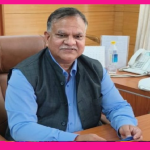
Punya Salila Srivastava, a 1993 batch IAS officer currently serving as Secretary, Department of Health and Family Welfare, has been entrusted with the additional charge of Secretary, Ministry of AYUSH, from November 15 to November 30, during the leave of Vaidya Rajesh Kotecha.
In another notable decision, V. Srinivas—a 1989 batch IAS officer heading the Department of Administration & Public Grievances and the Department of Pension & Pensioners’ Welfare—has been repatriated to his home cadre, following a request by the concerned State Government.
Further consolidating administrative responsibilities, Rachna Shah, a 1991 batch IAS officer serving as Secretary, Department of Personnel and Training (DoPT), has been given the additional charge of Secretary, Department of Administrative Reforms & Public Grievances as well as the Department of Pension & Pensioners’ Welfare, strengthening interdepartmental synergy.
Additionally, Nikunj Bihari Dal, a 1993 batch IAS officer and Secretary, Ministry of Parliamentary Affairs, will manage the additional charge of Secretary, Department of Justice, Ministry of Law & Justice, from November 17 to November 30, during the leave of Neeraj Verma.
Assam Announces Major IAS and ACS Reshuffle
On November 15, Assam initiated one of its most extensive administrative reshuffles in recent years, transferring more than 55 ACS officers along with several IAS officers. The restructure aims to energize district administration, improve service delivery, and accelerate development initiatives.
Sanskriti Somani, IAS, has been appointed Co-District Commissioner of Rangapara, transitioning from her previous assignment in Dhakuakhana.
Dr. MS Lakshmi Priya, a 2014 batch IAS officer and Commissioner of the Guwahati Municipal Corporation, has been posted as Secretary, Skills, Employment & Entrepreneurship Department. She will simultaneously serve as
Managing Director, Assam Skills Development Mission, and Registrar, Assam Skills University, reflecting Assam’s strategic focus on skill-building and workforce expansion.
Among the ACS reshuffles:
Anish Rasool Majumdar has been moved as Additional District Commissioner, Kokrajhar. Manorama Morang is now Additional District Commissioner, West Karbi Anglong.
Additional District Commissioners from Kamrup, Barpeta, Baksa, and Jorhat have also been reassigned to reinforce district-level governance.
Key Transfers and New Roles in Jammu & Kashmir
Jammu & Kashmir has issued its own set of transfer orders aimed at improving administrative oversight and departmental functioning.
Neeraj Kumar, Administrative Secretary of the Public Grievances Department, will also handle the Guest and Protocol Department until further directions.
Ramesh Kumar, Divisional Commissioner, Jammu, has taken on the added role of Resident Commissioner of J&K in New Delhi, strengthening communication and coordination with the Union Government.
Anshul Garg, Divisional Commissioner, Kashmir, has been assigned the additional post of Additional CEO, Srinagar Metropolitan Region Development Authority, a position crucial to urban growth and infrastructural planning.
A Larger Vision of Cohesive Governance
These far-reaching administrative decisions—spanning the Central Government and two key states—highlight a coordinated effort to optimize bureaucratic performance, reinforce leadership roles, and advance a governance model rooted in responsiveness and policy-driven execution.