The Rise and Fall of DSP Rishikant Shukla: Inside the ₹100-Crore Scandal Shaking Uttar Pradesh Police
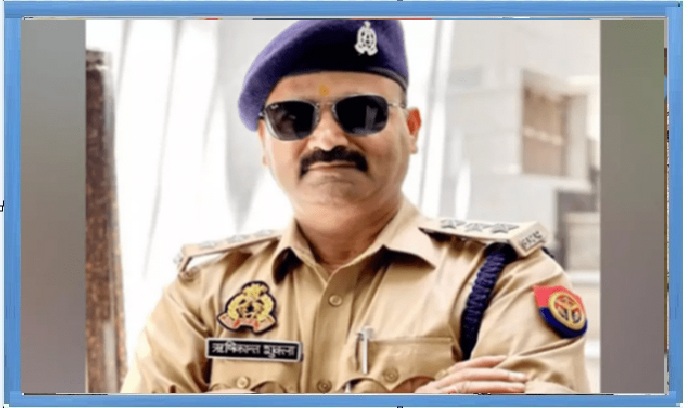
In one of the most high-profile corruption crackdowns in recent memory, Uttar Pradesh Police officer Rishikant Shukla, serving as Deputy Superintendent of Police (DSP), has been suspended and placed under a vigilance probe. The officer is accused of amassing benami assets worth over ₹100 crore and allegedly maintaining links with lawyer Akhilesh Dubey, a central figure in a major Kanpur case.
Who Is DSP Rishikant Shukla?
Born on July 7, 1968, in Deoria district, Shukla joined the Provincial Police Service (PPS) in 2021 after nearly three decades in uniform. Over his 28-year career, he served in various key postings in Kanpur, Unnao, and Mainpuri, earning a reputation for being disciplined and assertive. However, his long-standing connection with influential figures — particularly Akhilesh Dubey — has now placed him at the center of a widening investigation.
Inside the SIT Probe: Hidden Wealth and Secret Networks
The Special Investigation Team (SIT), tasked with probing Dubey’s network, uncovered a complex web of financial dealings tied to Shukla. Investigators allege that he and his family own 12 land plots and 11 commercial properties across Kanpur, collectively valued at nearly ₹92 crore. Additional properties are believed to be registered under other names, raising suspicions of large-scale benami transactions.
Sources also point to Shukla’s involvement in a nexus of police officials, lawyers, and journalists allegedly working together to shield Dubey’s operations. Other officers, including DSP Vikas Pandey, DSP Santosh Kumar Singh, and former KDA official Mahendra Solanki, are also being investigated.
A Wedding That Sparked a Scandal
The case gained further traction when reports emerged about Shukla’s son’s extravagant wedding at Kanpur’s Eternity Resort, estimated to cost between ₹200–₹250 crore. The guest list featured a host of high-profile attendees — MPs, MLAs, senior bureaucrats, and even 18 district BJP presidents.
Videos of senior police officers dancing at the event went viral, igniting a public debate about unchecked corruption and the misuse of power. The vigilance department soon began tracing the financial trail behind the lavish celebration.
Shukla’s Defense: “It Was the Bride’s Family’s Expense”
In his defense, Shukla claimed the wedding expenses were not his responsibility. “It was my son’s wedding, not my daughter’s. The girl’s family chose the venue and paid for everything. How could I object?” However, this explanation failed to convince the public or the investigators, with critics pointing out that such grand displays of wealth by public servants undermine public trust.
“Good Political Relations Are Not a Crime”
When questioned about the attendance of political leaders at the wedding, Shukla dismissed allegations of impropriety. “If politicians respect me and criminals fear me, what’s wrong in that? Having cordial ties with leaders isn’t a crime.” He further alleged that the probe was “a conspiracy by jealous colleagues” seeking to tarnish his reputation.
Vigilance Tightens Its Net
Investigators are now meticulously reviewing property deeds, bank accounts, company records, and tax filings linked to Shukla’s family. Several of these assets are situated in prime Kanpur locations like Arya Nagar, pointing to years of systematic accumulation.
Preliminary findings suggest that Shukla’s declared income is grossly disproportionate to his wealth, making it increasingly difficult for him to justify ownership through legitimate earnings.
“It’s My Family’s Legacy,” He Insists
Shukla continues to maintain his innocence, insisting that most of his assets are ancestral. “My grandfather was a police inspector and my father a bank manager. The properties we own are inherited. Calling ancestral wealth illegal is unfair.” He has expressed willingness to present documentation to back his claims.
The Bigger Picture: Ethics and Accountability in Uniform
The case has reignited debate over ethics, transparency, and integrity in law enforcement. Administrative experts argue that Shukla’s downfall underscores the need for mandatory asset disclosures, frequent vigilance audits, and strict anti-corruption protocols across the bureaucracy.
The UP government’s decision to suspend and investigate him is seen as a clear signal that no officer is above scrutiny.
What Lies Ahead
The vigilance probe into DSP Shukla’s assets and alleged ties with the Dubey network is ongoing. The outcome will likely set an important precedent for anti-corruption enforcement in the state. For now, the once-celebrated officer finds himself at the center of a storm — a stark reminder that authority without accountability is a danger to justice itself.