Former Haryana DGP O.P. Singh Appointed CEO of New SANKALP Anti-Drug Society in Haryana
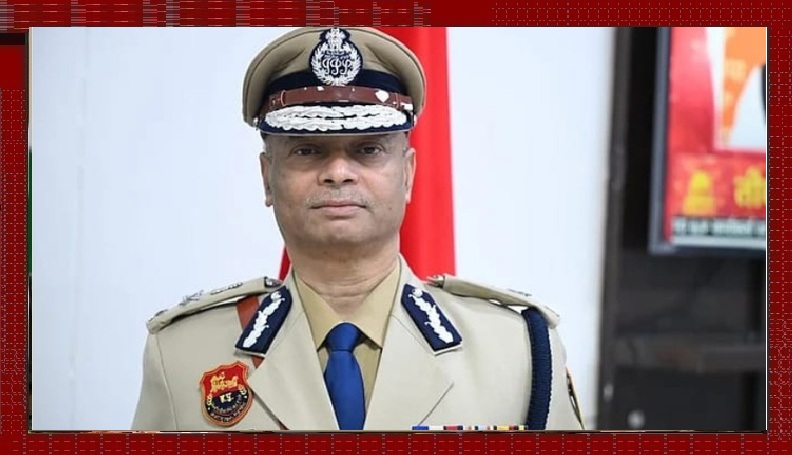
Former Haryana Director General of Police O.P. Singh, a 1992-batch IPS officer of the Haryana cadre, has been appointed Chief Executive Officer of the newly constituted SANKALP Society, a state-level initiative aimed at bringing together government departments, enforcement agencies and communities in a coordinated effort against substance abuse. The new organisation is expected to work across prevention, treatment, awareness, rehabilitation and community participation, with particular attention to young people and vulnerable groups.
The Haryana government has constituted the society through a formal notification, outlining an institutional framework that brings several departments under one coordinated platform. Chief Minister Nayab Singh Saini will chair the society, while senior officials from key departments including Home, Health, School Education, Higher Education, Social Justice and Empowerment, Women and Child Development, Urban Local Bodies, Development and Panchayats, and Law and Legislative Affairs will be part of its broader structure.
O.P. Singh Gets Three-Year CEO Tenure
O.P. Singh will serve as CEO of SANKALP for a period of up to three years. The appointment brings into the new organisation an officer who has already worked in areas directly connected with policing and narcotics control, including his earlier role as head of the Haryana State Narcotics Control Bureau.
Singh has also served as Haryana’s Sports Director, giving him experience in an area closely connected with youth engagement and community programmes. His new responsibility at SANKALP places him at the centre of a state-level framework that is intended to combine government intervention with local participation rather than relying exclusively on conventional enforcement measures.
The appointment also gives the society a dedicated executive head who will be responsible for coordinating its activities and translating the objectives outlined in the government notification into programmes at the district and community levels.
What Does SANKALP Stand For?
The new initiative is formally named the Substance Abuse and Narcotics Knowledge, Awareness and Liberation Programme, abbreviated as SANKALP. The society has been designed as a state-level coordination mechanism to bring together different arms of the government and society in tackling substance abuse.
Its stated approach covers several stages of the problem, including prevention, awareness, treatment, counselling, rehabilitation and community action. Instead of treating drug abuse solely as a policing issue, the framework also brings health, education, social welfare, local government and community institutions into the programme.
That structure is particularly relevant to the society’s stated focus on young people. The notification defines young persons as those between 10 and 35 years of age and identifies the protection of young people, future generations and vulnerable sections of society from substance abuse as an important objective.
Programme to Reach Villages, Schools and Workplaces
SANKALP is expected to operate at several levels of society, including villages, urban wards, schools, colleges and workplaces. The programme will seek participation from youth clubs, religious leaders, resident welfare associations, local influencers and other community institutions.
The idea is to create a network in which prevention and awareness activities are not confined to government offices or police establishments. Local institutions and community groups are expected to participate in identifying risks, spreading awareness and supporting efforts aimed at preventing substance abuse.
One of the proposed components is the development of SANKALP-certified Nasha Mukt Villages and Wards. Panchayats, urban local bodies and district administrations will have roles in the process, creating a framework under which communities can work towards the certification criteria specified by the programme.
This approach puts local administration and community participation alongside government departments and enforcement agencies, with the broader objective of creating sustained awareness at the grassroots level.
Three Measurable Priorities in the First Year
For its first year, SANKALP has identified three measurable priorities. One is to reduce first-time registrations under the Narcotic Drugs and Psychotropic Substances Act among people below the age of 25, with progress to be measured against a fixed 2025-26 baseline.
The second priority is to create additional capacity for de-addiction and counselling. This component recognises that prevention and enforcement are only part of the response to substance abuse and that people struggling with addiction may require access to treatment and counselling services.
The third objective is to identify and certify eligible villages and urban wards as Nasha Mukt under the SANKALP framework. The certification process is intended to provide a measurable community-level component to the state’s anti-drug programme.
SANKALP Will Not Replace Police Enforcement
An important feature of the new society is that it has not been created as another law enforcement agency. The notification specifically establishes SANKALP primarily as a coordination and prevention mechanism, while existing enforcement authorities will continue to exercise their statutory powers.
The society will facilitate coordination between enforcement agencies, examine drug-related information, identify emerging risks and monitor follow-up action. However, it will not itself exercise powers of investigation, search, seizure, arrest or detention.
Those powers will remain with the authorities legally empowered to exercise them under the NDPS Act and other applicable laws. This distinction gives SANKALP a different role within Haryana’s overall anti-drug framework, with its principal focus on coordination, prevention, treatment, data and community mobilisation.
District-Level Narcotics Data to Feed State Dashboard
The new framework also places considerable emphasis on data and monitoring. District Narcotics Coordination Centre committees, commonly referred to as NCORD committees, will continue to operate under the leadership of Deputy Commissioners.
These district-level committees will submit monthly reports, which will then be integrated into a state-level dashboard. The system is intended to provide the government with a more structured view of drug-related trends, interventions and follow-up action across districts.
SANKALP may also establish a dedicated data and analytics unit. Among the proposed functions of such a unit would be developing a State Narcotics Risk Index, conducting baseline surveys and assessments, and undertaking research relating to substance abuse.The use of data could help the government identify areas requiring greater attention and assess whether interventions are producing measurable changes over time.
Haryana Steps Up Prevention Alongside Enforcement
The creation of SANKALP comes as Haryana continues to expand its focus on drug prevention alongside conventional enforcement measures. According to figures cited in reports concerning the SANKALP notification, the state recorded 3,738 FIRs under the NDPS Act and 6,801 arrests during 2025.
The government has also undertaken youth-focused initiatives. In August 2026, Haryana launched a separate 100-week Nashamukt Yuva for Viksit Bharat – Sankalp Abhiyaan, involving youth-led awareness and community activities aimed at addressing substance abuse.
The new SANKALP Society now provides a broader institutional framework around these kinds of activities, bringing multiple government departments and community stakeholders into a common structure.
O.P. Singh’s Experience in Narcotics Control
Singh’s appointment is notable because of his previous experience with narcotics-related policing in Haryana. As a former head of the Haryana State Narcotics Control Bureau, he has worked in an institutional environment directly concerned with drug-related enforcement and coordination.
His experience as an IPS officer, combined with his previous assignments in narcotics control and sports administration, will now be brought into a programme that places equal emphasis on prevention, community participation, treatment and data-driven monitoring.
The new assignment also marks a shift from a traditional policing role to a broader administrative and coordination responsibility. As CEO, Singh will be expected to work with departments and institutions whose functions extend well beyond policing.
New State-Level Framework Against Substance Abuse
The constitution of SANKALP gives Haryana a dedicated mechanism for coordinating its response to substance abuse across different levels of government and society. With the Chief Minister as chairperson and senior officials from multiple departments forming part of the structure, the society is designed to connect enforcement, health, education, social welfare and local administration.
O.P. Singh’s appointment as CEO for up to three years places him in charge of the organisation’s executive functioning at a time when Haryana is placing greater emphasis on prevention and youth participation. The programme’s first-year targets, district-level reporting mechanism, proposed risk index and Nasha Mukt certification framework are intended to give the initiative measurable components rather than limiting it to awareness campaigns alone.
For Haryana, SANKALP therefore represents a new layer in its anti-drug architecture, with the emphasis extending from enforcement to prevention, treatment, rehabilitation, community action and systematic monitoring. Its effectiveness will depend on coordination among the participating departments, the availability of treatment and counselling capacity, and sustained participation by communities across villages, towns, educational institutions and workplaces.