


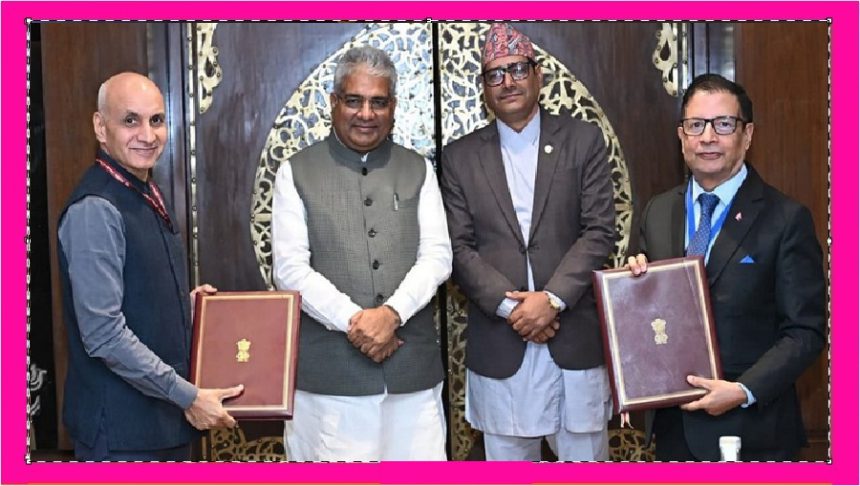
India and Nepal Sign MoU to Boost Cooperation in Forest, Wildlife and Climate Conservation
India and Nepal have signed a Memorandum of Understanding (MoU) to strengthen bilateral cooperation in environmental conservation, forest management, wildlife protection, biodiversity conservation, and climate change action.
The agreement was signed in New Delhi by Bhupender Yadav, Union Minister for Environment, Forest and Climate Change, and Madhav Prasad Chaulagain, Nepal’s Minister for Forests and Environment.
The MoU aims to promote coordinated efforts for the protection and sustainable management of shared ecosystems and transboundary wildlife habitats between the two neighbouring nations.
Focus on Biodiversity and Key Wildlife Species
A major focus of the agreement is landscape-level biodiversity conservation, particularly for key species such as:
Elephants
Gangetic dolphins
Rhinoceroses
Snow leopards
Tigers
Vultures
Both countries will work together to restore wildlife corridors, connect conservation areas, and improve the management of protected zones to establish stronger transboundary conservation landscapes.
Strengthening Forest Management and Conservation Efforts
The MoU outlines several strategic actions, including:
Enhancing forest and protected area management
Restoring interconnected ecosystems and wildlife corridors
Addressing biodiversity threats and combating forest and wildlife crime
Building capacity among frontline forest and enforcement personnel
Promoting sustainable and smart green infrastructure in biodiversity-rich regions
Through technical collaboration and shared expertise, India and Nepal aim to improve the effectiveness and efficiency of conservation initiatives.
Knowledge Exchange and Technical Cooperation
The agreement also promotes the exchange of knowledge, best practices, and technical expertise in environmental conservation and climate change mitigation. This includes cooperation in sustainable forest management, wildlife monitoring systems, and climate-resilient infrastructure development in ecologically sensitive areas.
Expected Regional Impact
The MoU is expected to:
Protect shared ecosystems and cross-border wildlife habitats
Promote sustainable use of natural resources
Support long-term ecological balance in the region
Strengthen regional cooperation on climate action and environmental sustainability
This agreement marks an important milestone in India–Nepal environmental partnership, reinforcing both countries’ commitment to preserving biodiversity and ensuring sustainable development for future generations.