

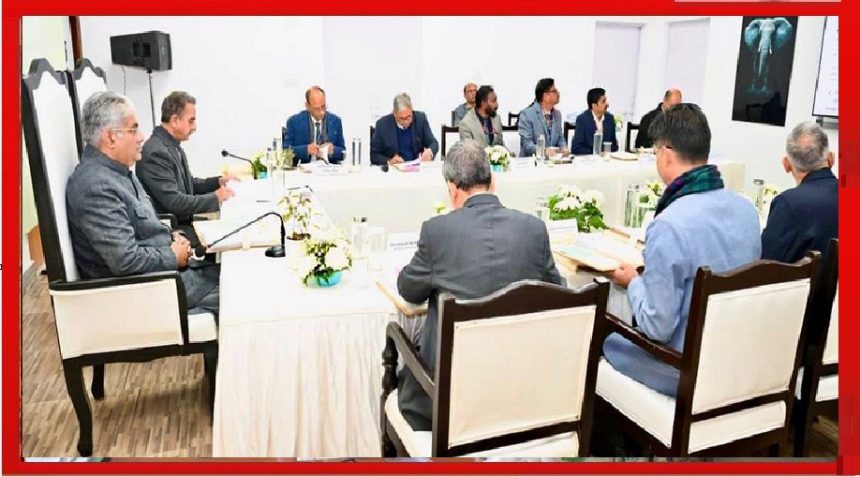
In a major push toward modernizing India’s wildlife management, Union Minister for Environment, Forest and Climate Change, Mr. Bhupender Yadav, chaired the 43rd Meeting of the Central Zoo Authority (CZA) at the National Zoological Park, New Delhi. The session marked a strategic shift in how Indian zoos are perceived, transitioning them from simple recreational spots to centers of excellence for Ex-Situ conservation and research.
The meeting also coincided with the 34th Foundation Day of the CZA, bringing together Chief Wildlife Wardens and Zoo Directors from across the nation.
Strategic Mandates and Key Decisions
The 43rd meeting introduced several institutional changes aimed at improving transparency and financial sustainability:
Management Effectiveness Evaluation (MEE): The Minister directed the swift completion of the second round of MEE for all Indian zoos. This independent, evidence-based assessment is crucial for maintaining global standards in animal welfare and education.
CSR Integration: A new sub-committee has been formed to explore Corporate Social Responsibility (CSR) funding. This move aims to invite private sector participation in supporting zoo infrastructure and animal adoption programs.
Operational Alignment: To ensure better coordination with national wildlife policies, the frequency of CZA meetings will now be synchronized with the Standing Committee of the National Board for Wildlife.
Outreach & Education: Zoos are mandated to create an annual action plan featuring species-specific conservation themes and public awareness calendars.
Zoos as Research and Connectivity Hubs
Minister of State Mr. Kirti Vardhan Singh highlighted the critical psychological and scientific role of zoos in the modern era:
Digital Detachment: With the younger generation increasingly glued to screens, zoos serve as vital physical touchpoints to reconnect youth with the natural world.
Veterinary Excellence: The MoS urged officials to leverage cutting-edge technology to study animal behavior and improve veterinary care practices, positioning zoos as hubs for “One Health”—the interconnected health of animals, humans, and the environment.
Collaborative Governance: A call was made for deeper partnerships between state forest departments, NGOs, and research institutions to foster professional zoo management.
The Evolution of Indian Zoos
Professionalization: ADG of Forests, Mr. Ramesh Kumar Pandey, noted that India’s 150+ zoos are no longer just state-run facilities but are evolving into professional conservation institutions.
Key Conference Themes: The 34th Foundation Day conference delved into sustainable zoo architecture, conservation breeding programs for endangered species, and optimized animal nutrition.
Member Secretary of CZA, Mr. V. Clement Ben, concluded that the current trajectory of Indian zoos reflects a transformation into modern, science-based conservation centers that prioritize ethics over mere exhibition.