

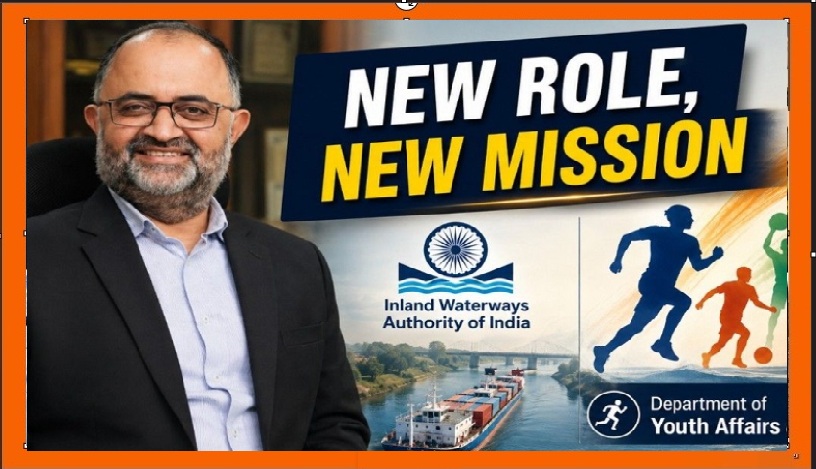
Who Is IAS Sunil Paliwal? From IWAI Chairman to Youth Affairs Secretary, the 1993-Batch Officer’s Remarkable Administrative Journey
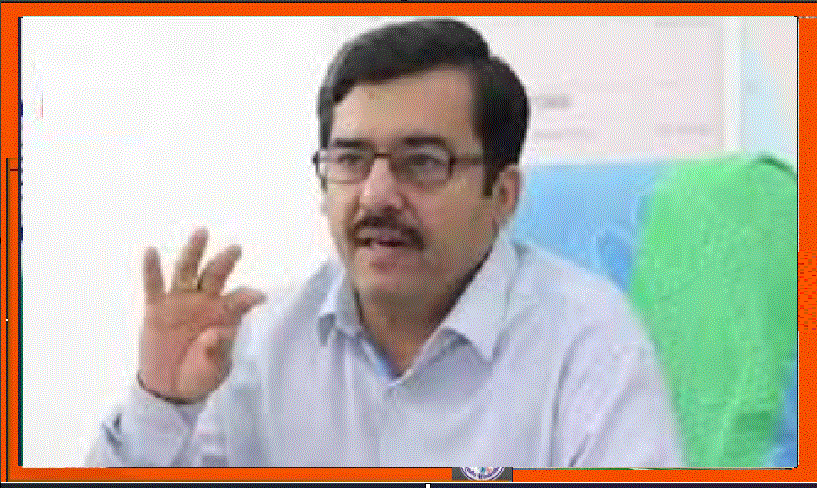
Senior IAS officer Sunil Paliwal, a 1993-batch Tamil Nadu cadre officer, has taken charge as Secretary, Department of Youth Affairs after completing his tenure as IWAI Chairman. Here’s a detailed look at his career, key postings and leadership in India’s inland waterways expansion.
Veteran IAS Officer Sunil Paliwal Begins a New Chapter at the Centre
Senior IAS officer Sunil Paliwal, a 1993-batch officer of the Tamil Nadu cadre, has embarked on a new phase of his distinguished bureaucratic career after taking charge as Secretary, Department of Youth Affairs under the Ministry of Youth Affairs and Sports. His appointment comes immediately after completing his tenure as Chairman of the Inland Waterways Authority of India (IWAI), where he presided over a period marked by expanding infrastructure, multimodal logistics and growing emphasis on sustainable water transport.
As Paliwal moved into his new Secretary-level assignment, IWAI bid him a warm farewell, with officers and employees acknowledging his leadership during an important phase of India’s inland waterways transformation. His transition also reflects the government’s continued reliance on experienced administrators with cross-sector expertise to lead key national institutions.
With more than three decades of administrative experience spanning state governance, infrastructure development and Central Government leadership, Paliwal now steps into a role that will shape policies concerning one of India’s largest demographic groups – its youth.
A Farewell After a Transformative IWAI Tenure
Sunil Paliwal’s departure from IWAI marks the end of a tenure that coincided with growing national attention on inland waterways as a strategic pillar of India’s transport and logistics ecosystem.
The farewell ceremony organized by the authority was more than a formal send-off. It became an opportunity for colleagues and officials to recognize his administrative guidance while wishing him success in his new responsibility at the Ministry of Youth Affairs and Sports.
During his leadership, IWAI operated at a time when the government accelerated efforts to make inland waterways more commercially viable, environmentally sustainable and better integrated with the country’s broader transportation network.
Leading India’s Inland Waterways Expansion
As Chairman of the Inland Waterways Authority of India, Paliwal oversaw an organization responsible for developing, maintaining and regulating India’s National Waterways.
The authority functions under the Ministry of Ports, Shipping and Waterways and plays a central role in strengthening river-based transportation across the country. Its responsibilities extend across multiple areas, including:
- Fairway development
- Navigation infrastructure
- Hydrographic surveys
- Cargo terminals
- Safety systems
- Waterway regulation
- Coordination with road and rail transport
Under Paliwal’s leadership, inland waterways continued evolving from being viewed as an alternative transport option to becoming an increasingly important component of India’s multimodal logistics strategy.
Why Inland Waterways Matter
India possesses approximately 14,500 kilometres of navigable waterways, offering enormous potential for freight movement and regional connectivity. Compared with conventional road transportation, inland water transport offers several long-term advantages, particularly for bulk cargo movement.
These include:
- Lower fuel consumption
- Reduced transportation costs
- Improved environmental sustainability
- Better movement of heavy cargo
- Reduced pressure on highways
During Paliwal’s tenure, these advantages became central to the government’s broader logistics transformation agenda, which seeks to improve connectivity while reducing transportation costs across sectors.
Focus on Multimodal Logistics
One of the defining themes of Paliwal’s tenure was the increasing integration of waterways with other modes of transport. Rather than developing river transport in isolation, IWAI’s initiatives increasingly aligned with the government’s multimodal logistics vision, where waterways complement highways, rail corridors and ports.
This approach has gained importance because seamless connectivity between different transport systems is considered essential for reducing logistics costs and improving freight efficiency across the country.
Green Transport Takes Centre Stage
Environmental sustainability emerged as another major priority during Paliwal’s association with IWAI. The inland waterways sector witnessed growing emphasis on:
- Green vessels
- Hybrid propulsion technologies
- Cleaner transport solutions
- Environment-friendly cargo movement
As India works toward reducing the environmental footprint of its transportation sector, inland waterways are increasingly being promoted as a cleaner alternative for moving goods across long distances. The push toward greener vessels represents one of the sector’s most significant long-term transitions.
Digital Navigation and Modern Infrastructure
Technology also became an important pillar of inland waterways development during this period. The sector saw continued emphasis on:
- Digital navigation systems
- Modern cargo terminals
- Community jetties
- Improved safety infrastructure
- Better cargo-handling facilities
These developments are intended to make river transport more reliable, safer and commercially attractive for businesses seeking alternative logistics solutions.
National Waterways Receive Fresh Momentum
India’s inland waterways programme stretches across multiple regions, connecting major river systems through designated National Waterways. Among the most important waterways receiving continued development attention are:
- National Waterway-1 (NW-1): The Ganga waterway
- National Waterway-2 (NW-2): The Brahmaputra waterway
- Multiple waterways across eastern, southern and northeastern India
Development initiatives during this broader phase included strengthening navigation infrastructure, expanding terminal facilities and improving cargo movement across these river corridors.
The government has also placed increasing emphasis on improving connectivity in eastern and northeastern India, where waterways can support regional trade and cross-border economic activity.
River Tourism and Cargo Growth
The inland waterways sector has gradually expanded beyond freight transportation alone. River cruise tourism has emerged as an important area of focus, with policymakers viewing waterways as both an economic and tourism opportunity.
Alongside tourism, cargo transportation has continued receiving sustained policy attention through initiatives involving:
- Roll-on/Roll-off (Ro-Ro) services
- Bulk cargo movement
- Multimodal freight integration
- Improved river connectivity
These developments reflect a broader attempt to unlock the commercial potential of India’s extensive river network.
Inland Waterways Development Council Priorities
Paliwal’s tenure also coincided with important policy discussions within the Inland Waterways Development Council, which has identified several emerging priorities for the sector’s future.
Key focus areas include:
- Green mobility
- Digitalisation
- Modern terminals
- Shipbuilding
- Ship repair
- River cruise tourism
- Improved cargo logistics
These priorities align closely with India’s larger infrastructure strategy, where sustainability, technology and efficiency increasingly shape public investment decisions.
From Infrastructure Leadership to Youth Affairs
After leading one of India’s most important infrastructure institutions, Paliwal now enters an entirely different policy domain. As Secretary, Department of Youth Affairs, he assumes responsibility for a department that plays a crucial role in youth engagement, leadership development, volunteerism, national integration and youth-focused programmes across the country.
The assignment requires coordination with multiple government departments, educational institutions and youth organizations while supporting policies designed to empower India’s young population.
His extensive administrative background is expected to help strengthen policy implementation in a department that directly influences millions of young citizens.
A Career Defined by Diverse Administrative Leadership
Sunil Paliwal’s transition from IWAI Chairman to Youth Affairs Secretary highlights the versatility often expected of senior IAS officers. Over more than three decades in public service, the 1993-batch Tamil Nadu cadre officer has worked across diverse administrative sectors, building expertise in governance, infrastructure and institutional management.
His latest appointment represents another important milestone in a career that has consistently placed him in leadership positions at the highest levels of government. As he takes charge of the Department of Youth Affairs, attention will now turn to how his experience in managing large-scale infrastructure institutions translates into policies aimed at strengthening youth participation, leadership development and national programmes that shape India’s future generations.