

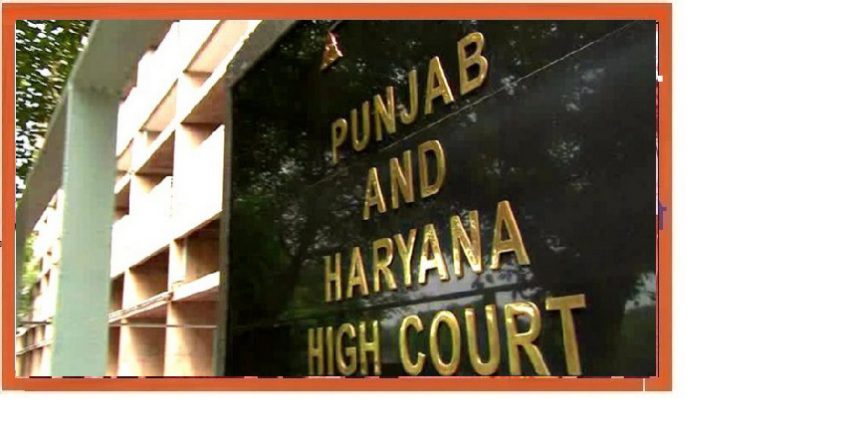
High Court Issues Final Warning to Punjab Government Over IAS Ajoy Kumar Sinha’s Multiple Power Roles
The Punjab and Haryana High Court has delivered a sharp rebuke to the Punjab government for failing to provide clear and meaningful answers regarding the concentration of key power-sector positions in the hands of a single IAS officer. The court has now granted the state authorities a last opportunity to submit a proper response, making it clear that continued non-compliance will not be tolerated.
Court Criticises “Evasive” and Inadequate Affidavit
While hearing the matter, Justice Harpreet Singh Brar expressed strong dissatisfaction with the affidavit filed on behalf of the Principal Secretary, Power Department, Government of Punjab. The court observed that the document was vague, evasive and merely a formality, failing to address the core legal and administrative issues raised earlier.
Justice Brar noted that the state counsel had already been given several chances to comply with prior court directions, yet no substantive explanation or clarity was forthcoming. Emphasising judicial restraint, the court said that it was granting one final opportunity purely in the interest of justice, adding that such leniency would not ordinarily be warranted. The matter has now been listed for final consideration on December 15.
Focus of the Dispute: Concentration of Power in Punjab’s Energy Sector
The case centres on IAS officer Ajoy Kumar Sinha, who currently holds three powerful positions simultaneously—
Chairman-cum-Managing Director of Punjab State Power Corporation Limited (PSPCL)
Chairman-cum-Managing Director of Punjab Transmission Corporation Limited (Transco)
Principal Secretary, Department of Power, Government of Punjab
The High Court has repeatedly flagged concerns over this arrangement, pointing out that PSPCL and Transco were deliberately established as independent and autonomous entities to ensure functional separation, accountability, and efficiency. The appointment of the same officer to head both corporations while also serving as the administrative head of the power department has raised serious questions about conflict of interest, governance transparency, and statutory compliance.
How the Case Began: Petitions by Senior Lawyers
Judicial scrutiny was triggered by multiple petitions filed by senior advocates Amit Jhanji, Manu K. Bhandari, and H.C. Arora. The petitioners questioned whether existing rules and government notifications actually permit an IAS officer to concurrently occupy the top executive posts in both PSPCL and Transco.
During earlier hearings, the court was informed that the former Punjab State Electricity Board (PSEB) was split into PSPCL and Transco following a government notification dated April 16, 2010. This notification detailed the separation of functions, transfer of assets and liabilities, and deployment of personnel. It also empowered the state government to oversee staff transfers and ensure permanent absorption of employees, particularly in Transco.
Administrative Gaps and Non-Compliance Highlighted by the Court
Justice Brar observed that the Punjab government had failed to set up the mandatory committee meant to supervise personnel transfers and absorption between PSPCL and Transco, an omission that has contributed to continuing administrative ambiguity.
The court further noted that affidavits filed by Mr. Sinha—despite his holding both corporate and government roles—did not sufficiently explain how governance safeguards were being maintained or how statutory requirements were being met.
Chief Secretary Directed to Intervene
In a significant development, the High Court has now directed the Chief Secretary of Punjab to step in and file a detailed, comprehensive affidavit. The affidavit must clearly explain:
The legal basis for assigning multiple senior roles to one officer
The governance framework of PSPCL and Transco
Compliance with statutory provisions and past court directions
The court expects the new affidavit to provide clear answers rather than procedural formalities, signalling that further delay or ambiguity will invite stricter judicial action.
What Lies Ahead
With the next hearing scheduled for December 15, the Punjab government faces mounting pressure to justify its decisions and restore clarity in the state’s power-sector administration. The case is being closely watched, as it could set an important precedent on bureaucratic concentration of authority and corporate governance in public sector undertakings.