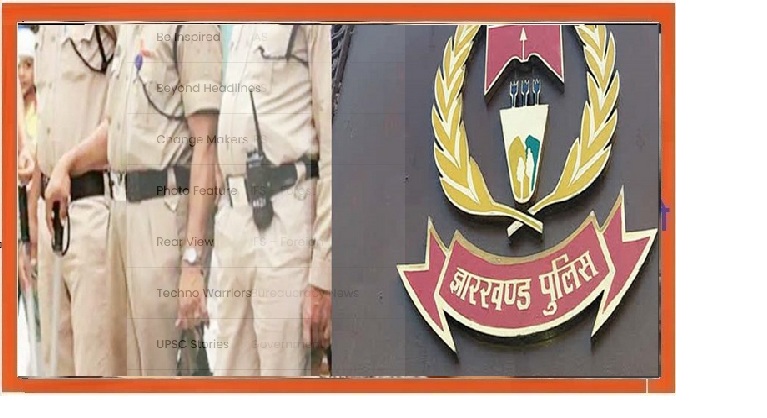
Jharkhand Fast-Tracks Pending Criminal Cases: Five Senior IPS Officers, Including Manoj Kaushik, Given Statewide Oversight
In a major administrative push to speed up the criminal justice process, the Jharkhand Police Headquarters, under the direction of the Director General of Police (DGP), has assigned five senior Indian Police Service (IPS) officers with statewide supervisory responsibility to ensure rapid disposal of long-pending criminal cases. The initiative is aimed at tightening police accountability, reducing procedural delays and delivering justice to citizens within defined timelines.
Under this special drive, the selected officers will exercise direct oversight over all districts falling within their respective ranges. They have been instructed to conduct a comprehensive review of ongoing investigations and ensure that any pending police action—ranging from evidence collection to filing of charge sheets—is completed within 15 days.
Clear Deadlines to Accelerate Justice
According to official instructions issued by the Police Headquarters, all pending criminal cases must be forwarded to the concerned courts within 60 days of FIR registration. In exceptional or complex cases, the outer limit has been fixed at 90 days. Any deviation from these timelines is expected to invite strict scrutiny.
To ensure strict compliance, the entire review and monitoring mechanism will be conducted digitally through the Crime and Criminal Tracking Network & Systems (CCTNS). The online system will enable senior officers to monitor case progress in real time, flag delays and intervene where investigations are found to be stagnant.
Senior officials believe that these time-bound measures will significantly reduce case backlogs and improve the overall efficiency of police investigations across the state.
Senior IPS Officers Entrusted With Responsibility
The following five senior IPS officers have been entrusted with the responsibility of supervising the fast-tracking exercise within their respective ranges:
Mr. Manoj Kaushik (IPS, 2001 batch), Inspector General, Ranchi Range, tasked with supervising all districts under the capital range.
Mr. Y.S. Ramesh (IPS, 2010 batch), Deputy Inspector General, overseeing the Santhal Pargana and Hazaribagh Ranges.
Mr. Kartik S, Deputy Inspector General, in charge of the Coal Area Bokaro Range, a region with significant industrial and law-and-order sensitivity.
Mr. Chandan Jha (IPS, 2011 batch), Deputy Inspector General, responsible for the Kolhan Range, which includes several tribal and border districts.
Mr. Ehtesham Waquarib (IPS, 2015 batch), Superintendent of Police, leading the effort in the Palamu Range.
These officers have been directed to hold regular review meetings with district police units, assess investigation quality, address bottlenecks and ensure that all required reports and charge sheets are filed within the prescribed deadlines.
Improving Accountability and Public Confidence
The decision to place senior IPS officers in direct supervisory roles reflects Jharkhand’s intent to make the police force more responsive, results-oriented and accountable. Officials say that the absence of close monitoring has been a key factor behind delays in investigation and prosecution in the past.
By fixing responsibility at higher levels, the state hopes to eliminate complacency, ensure quicker justice delivery and reinforce public trust in law enforcement agencies. Timely disposal of cases is also expected to act as a strong deterrent to criminal activity, thereby improving overall law and order.
Technology-Driven Policing and Transparency
The mandatory use of CCTNS marks a strong emphasis on technology-enabled policing. The digital platform allows seamless coordination between police stations, senior officers and courts while creating a transparent record of every stage of investigation.
Officials say the system will reduce manual intervention, prevent data manipulation and ensure that both courts and citizens can track case progress without unnecessary delays. The initiative aligns closely with the national vision for digital governance and criminal justice system reforms.
With this focused and time-bound intervention, Jharkhand aims to set a new benchmark in police accountability and justice delivery, signalling a firm commitment to law enforcement reform and citizen-centric governance.