


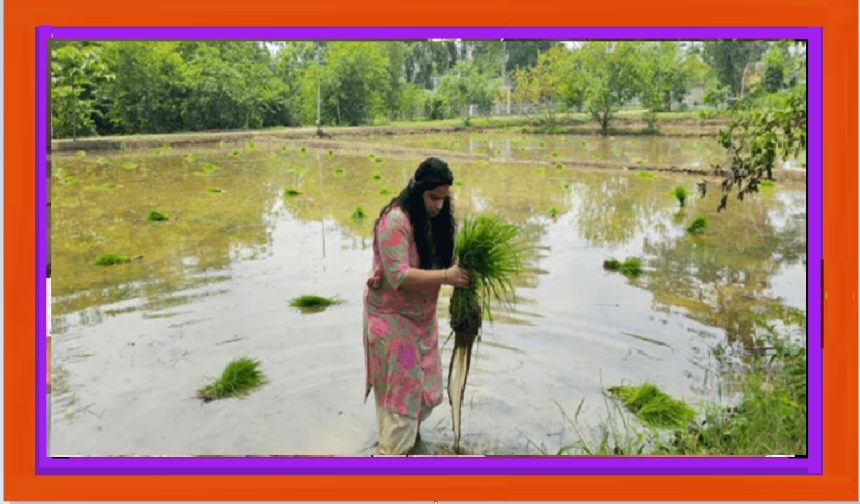
Embracing Local Traditions: The SP Sang Folk Songs, Offered Prayers, and Stepped into the Fields with the Community Spirit of ‘Dhanrapani’
Palamu Superintendent of Police (SP) Rishma Rameshan has captured hearts across Jharkhand by participating in the age-old tradition of paddy planting—right within her official residence. Demonstrating cultural respect and a deep community connection, she offered prayers, sang local folk songs, and personally transplanted paddy seedlings, fully immersing herself in the ritual known as ‘Dhanrapani’.
More than a symbolic gesture, this act reflected a genuine bond with agricultural roots. Coming from a middle-class background with in-laws from a farming family in Bihar, Ms. Rameshan shared that she has been fascinated by farming—especially paddy cultivation—since her childhood. Her participation during the monsoon season sent a strong message of solidarity with rural life and reverence for Jharkhand’s cultural heritage.
The ‘Dhanrapani’ tradition is a community-focused ceremony that includes prayer for a good harvest, folk music, and collective participation in the fields. SP Rameshan observed all these customs with sincerity, sending a powerful signal: no matter one’s rank or uniform, staying connected to culture and tradition is essential. Her gesture has earned widespread appreciation and strengthened the bond between the administration and the people of Palamu.
This is not the first time she has connected with the local ethos. Previously, she celebrated the Chhath festival with equal authenticity, consistently reinforcing her image as an officer rooted in simplicity, humanity, and tradition.
Who is IPS Rishma Rameshan?
Born in Kerala, Ms. Rameshan completed her early education in her home state. She is married to Mr. Anjani Anjan, an IPS officer from the Jharkhand cadre and a native of Patna, Bihar. After marriage, she switched her cadre to Jharkhand in 2020.
Currently serving as Palamu’s first woman SP, Ms. Rameshan previously held the post of Rural SP in Dhanbad. Known for her humble approach, deep cultural engagement, and people-first policing, she has become a respected and much-loved figure in the region.
Her recent participation in the Dhanrapani tradition reaffirms a simple but profound truth—real leadership lies in empathy, respect for culture, and genuine connection with the people.