

Ladakh Article 371 Framework: Ashish Kundra Says New Constitutional Safeguards Could Protect Land, Jobs, Culture and Natural Resources
Ladakh has begun working on a proposed constitutional safeguard framework under Article 371 of the Constitution, with Chief Secretary Ashish Kundra saying the proposed arrangement is being designed around the Union Territory’s distinctive requirements. The framework is expected to address some of the region’s most closely watched concerns, including protection of land, employment opportunities, culture and heritage, the environment and natural resources.
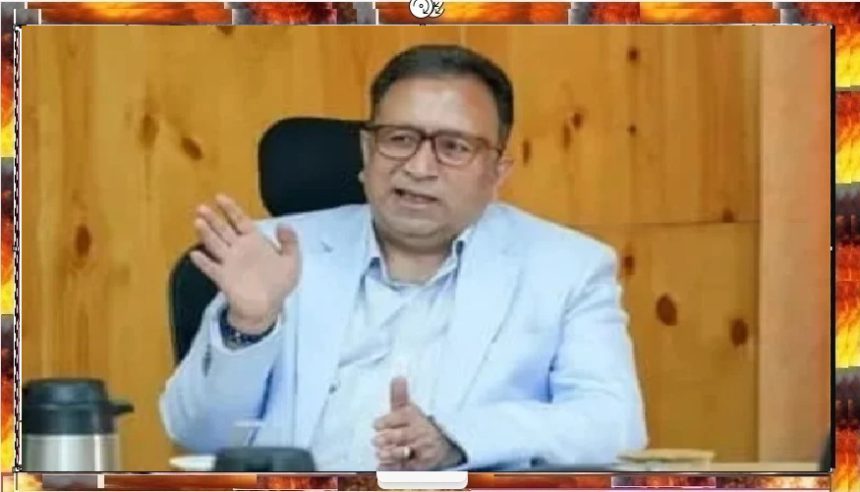
Kundra, a 1996-batch IAS officer and Chief Secretary of the Union Territory, made the remarks during a consultative meeting with representatives of Ladakh’s civil society in Leh. The meeting brought together people from different sections of the community and provided an opportunity to discuss constitutional safeguards along with a wider set of administrative, developmental, environmental and social issues affecting the Union Territory.
Constitutional Protection for Land, Employment and Culture
According to the Chief Secretary, there is broad agreement among stakeholders on the need for constitutional protection tailored to Ladakh. He said the proposed protection should cover land, employment, culture, environment and natural resources, reflecting concerns that have remained central to discussions over the region’s future governance framework.
Kundra said the administration is working on a new model keeping in mind the aspirations and specific circumstances of Ladakh. The administration has described the proposed arrangement as a framework that would be suited to the Union Territory’s particular requirements rather than simply replicating an existing institutional model elsewhere in the country.
The proposal is part of a continuing dialogue between Ladakh representatives and the Ministry of Home Affairs (MHA). The discussions are looking at constitutional as well as legislative safeguards and at the institutional structure through which greater protection could be provided to the region’s land, culture, employment interests and natural resources.
October Meeting Likely to Take Up the Draft
The next important stage is expected in October. Kundra said a draft of the proposed framework would be discussed during the next round of talks, which is proposed to take place in the first week of October.
The draft is particularly significant because earlier discussions between representatives of Ladakh and the Centre have focused on the structure of a proposed Union Territory-level body and its relationship with the existing Ladakh Autonomous Hill Development Councils, or LAHDCs. Ladakh representatives have been asked to work on a document examining how powers could be distributed between the existing councils and the proposed UT-level institution.
The September discussions have therefore moved beyond the broad question of whether safeguards are required and towards the more detailed issue of how a new governance arrangement could actually function. The precise distribution of authority, institutional responsibilities and relationship between different levels of governance remain matters for consultation.
Direct Elections Proposed for the UT-Level Body
One of the significant proposals emerging from the Centre-Ladakh dialogue concerns the method of constituting the proposed UT-level body. According to the Ladakh Administration, representatives of the Leh Apex Body and the Kargil Democratic Alliance expressed consensus on having direct elections through constituencies for this proposed institution.
The suggestion is important because the proposed UT-level body would form a new layer within Ladakh’s governance structure. Its relationship with the existing LAHDCs, along with the division of responsibilities between the two levels, is still being worked out through consultations.
The administration has also made it clear that the process would not end with an agreement on the broad framework. If consensus is reached, any proposed constitutional amendment would have to go through the established parliamentary and legal process. Separate legislation would also be required to define the detailed powers, functions and institutional arrangements of the proposed body.
Constitutional Amendment Would Require Parliamentary Process
Kundra has stressed that constitutional safeguards cannot be introduced simply through an administrative order. Any amendment to the Constitution would require the prescribed legal and parliamentary process, along with wider consultation and political consensus.
This makes the ongoing discussions particularly important. The October meeting is expected to focus on the draft framework, but it should be seen as part of a continuing process rather than as the final stage of the exercise. The institutional model, constitutional provisions and legislative details will have to be settled before any formal proposal can move through the next stages.
The Ministry of Home Affairs is the nodal ministry for a range of matters concerning the Union Territories, including legislative and administrative issues relating to Ladakh. The MHA’s Department of Jammu, Kashmir and Ladakh Affairs handles matters concerning the Union Territories within its assigned responsibilities.
Civil Society Meeting Covers Wider Issues
The September 21 consultative meeting in Leh was not restricted to the Article 371 proposal. Civil society representatives and the UT administration also discussed land rights, employment, culture and heritage, environmental protection, education, drug abuse, natural resources and other administrative and developmental concerns.
The meeting included representatives from different community and social organisations, along with senior officials of the UT Administration. The participation of people from diverse backgrounds was intended to bring a wider range of views into the ongoing conversation about Ladakh’s future governance and development.
The discussion comes at a time when Ladakh is simultaneously dealing with questions of constitutional safeguards, rapid infrastructure development, tourism growth, environmental pressures and the expansion of administrative institutions. These issues are increasingly interconnected, particularly in a region where fragile ecology, limited resources and distinctive cultural traditions are important considerations in policymaking.
Administrative Structure Also Being Strengthened
Kundra also outlined several administrative initiatives being undertaken across Ladakh. These include strengthening the district-level administrative structure, posting officers in the districts and upgrading hospitals to district-hospital level.
The administration has also been working towards Panchayat elections as part of efforts to strengthen local governance. Earlier in July, Kundra had highlighted the posting of Tehsildars in 17 newly created tehsils and the creation of new Public Works Department and Public Health Engineering divisions. The administration has also been working to extend the benefits of the LAHDC Act to the newly created districts through appropriate legal provisions.
These measures form part of a broader decentralisation effort aimed at bringing government services closer to residents, particularly those living in remote and border areas. The expansion of administrative infrastructure is taking place alongside the continuing debate over the long-term institutional structure of the Union Territory.
Tourism Crosses Four Lakh Arrivals
Tourism was another important subject highlighted by the Chief Secretary. According to the figures shared by Kundra, Ladakh has recorded more than four lakh tourist arrivals so far this year, compared with around 3.35 lakh visitors during the whole of the previous year.
The increase illustrates the scale of tourism activity in the Union Territory and its importance to the local economy. At the same time, the growth of tourism raises questions about infrastructure, waste management, water availability, environmental sustainability and the preservation of Ladakh’s cultural and natural heritage.
That balance is also reflected in the proposed constitutional safeguards. Land, environment, culture and natural resources are being discussed together because development in Ladakh is closely linked to the protection of its fragile ecological and social landscape.
Drug Abuse Also Comes Up During Consultations
Drug-related concerns were another issue discussed during the consultative meeting. Ladakh DGP Anand Jain made a presentation on drug-related matters and sought the participation of civil society organisations and community representatives in creating greater public awareness.
The inclusion of the issue in a wider administrative consultation reflects the administration’s attempt to bring social and law-and-order concerns into discussions on development. Community participation is being viewed as an important component in addressing issues that cannot be dealt with only through enforcement measures.
Land Rules and Local Rights Remain Important
The Article 371 discussions are also taking place alongside separate consultations on land-related matters. On September 16, Kundra chaired a consultation on the Ladakh Autonomous Hill Development Councils (Nautor Regularisation) Rules, 2026, where stakeholders discussed historical occupation, tenancy and proprietary rights, land-use regulation, eligibility criteria and the role of the LAHDCs.
That parallel consultation underlines why land has emerged as one of the central components of the proposed constitutional safeguard framework. Questions relating to land rights, local governance and future development are closely connected, particularly as Ladakh continues to expand its infrastructure and tourism economy.
What Happens Next?
For now, the proposed Article 371 framework remains under discussion. The next round of talks between Ladakh representatives and the Centre is expected in October, when the draft framework and the proposed relationship between the LAHDCs and the UT-level body are likely to receive closer attention.
If consensus is eventually reached, the process would still require the relevant constitutional and legislative steps. A constitutional amendment would require consideration by Parliament, while separate legislation would be needed to define the proposed institution’s detailed powers, functions and structure.
The September consultations therefore represent another stage in a process that is still evolving. For Ladakh, the central question is how constitutional protection, representative institutions, local rights and development can be brought together in a framework suited to the Union Territory’s distinctive geographical, cultural, environmental and administrative circumstances.
The proposed Article 371 framework is consequently not just about creating another layer of governance. The discussions now underway are also about defining how land, employment, culture, heritage, environment and natural resources are to be protected while Ladakh continues to develop as a Union Territory. The outcome will depend on the continuing dialogue between the Centre, Ladakh’s representative groups, civil society and the UT Administration, followed by the constitutional and legislative processes that would be required for any final arrangement.