
In a significant administrative development, the state of Madhya Pradesh is on the verge of a sweeping bureaucratic overhaul, with large-scale transfers of senior civil and police officers expected in the coming days. At the same time, a parallel development in Uttar Pradesh has drawn attention, where senior IAS officer Rajneesh Chandra has formally applied for voluntary retirement, reflecting a broader trend within the bureaucracy.
Madhya Pradesh Prepares for Widespread IAS-IPS Transfers
Sources within the administration reveal that the government led by Chief Minister Mohan Yadav is finalizing an extensive reshuffle involving both Indian Administrative Service (IAS) and Indian Police Service (IPS) officers. High-level consultations have reportedly already taken place between the Chief Minister and Chief Secretary Anurag Jain, indicating that the exercise is in its final stages.
This reshuffle is expected to impact governance at multiple levels, including district administration and the state secretariat, with a strong emphasis on performance-based postings and administrative efficiency.
Collectors Likely to Be Changed in Key Districts
In the first phase, nearly 18 districts are expected to see a change in leadership, with collectors being transferred or reassigned. Prominent districts such as Bhopal are also likely to witness new appointments.
Current Bhopal Collector Vikram Kaushalendra Singh is reportedly being considered for a more prominent administrative role. In his place, officers like Priyank Mishra or a senior महिला IAS अधिकारी could be appointed. Notably, discussions are also underway to appoint a woman collector in charge of a major urban district, signaling a possible shift toward greater gender representation in key administrative positions.
Additionally, officers presently posted at Vallabh Bhavan may be reassigned to field roles to strengthen district-level governance.
Senior Officers May Move to Secretariat Roles
The reshuffle is also expected to bring several experienced district collectors into the state secretariat. Officers currently serving in districts such as Narmadapuram, Betul, Gwalior, Shivpuri, Rewa, Indore, Umaria, and Maihar are likely to be entrusted with key policy-making responsibilities.
These appointments are expected to be guided by individual track records, administrative competence, and the ability to deliver results under pressure.
Possible Changes in the Chief Minister’s Office
The restructuring exercise may also extend to the Chief Minister’s Office (CMO), where internal changes are being actively considered. Sources suggest that one of the current secretaries could be replaced, while a new face may be inducted to bring fresh administrative energy.
There is also speculation about reshuffling at the level of Additional Chief Secretary and Principal Secretary, which could help streamline coordination at the highest levels of governance and introduce a more dynamic decision-making framework.
Police Department Set for Major Overhaul
The reshuffle will not be limited to civil administration. The police department is also expected to undergo a substantial reorganization, with around 20 district Superintendents of Police (SPs) likely to be transferred.
Districts including Khargone, Bhind, Dhar, Rewa, and Jhabua are among those where leadership changes are anticipated.
In addition, several officers who have already been promoted—including two Railway SPs—are expected to receive fresh postings aligned with their new ranks.
Performance-Centric Governance Driving Transfers
Government sources emphasize that performance evaluation is playing a central role in determining postings. Officers with proven efficiency and strong administrative records are likely to be assigned to strategically important districts, while others may be moved to less critical roles.
Chief Minister Mohan Yadav is reportedly keen on strengthening grassroots governance by deploying capable and result-oriented officers where they are needed the most. The broader objective is to accelerate the implementation of welfare schemes and improve public service delivery.
UP IAS Officer Rajneesh Chandra Applies for Voluntary Retirement
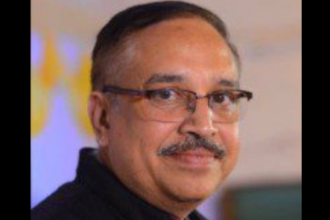
In a separate but noteworthy development, senior IAS officer Rajneesh Chandra has applied for voluntary retirement, citing personal reasons. Currently serving as Special Secretary in the Rural Development Department in Lucknow, he has requested that his retirement take effect from April 30, 2026.
His application has sparked discussions within bureaucratic circles, as it adds to a growing number of senior officers opting for early exit from government service.
Career Background and Administrative Journey
Born in Lakhimpur Kheri, Rajneesh Chandra holds degrees in Arts and Law. He began his administrative career through the Provincial Civil Service (PCS) before being inducted into the IAS in October 2021 as part of the 2014 batch through promotion.
Over the years, he has held several key field-level positions, including Sub-Divisional Magistrate (SDM), City Magistrate, Additional District Magistrate (ADM), and Chief Development Officer (CDO), gaining extensive experience in district administration.
Prior to his current role, he also served in the Social Welfare Department, handling critical policy and administrative functions.
Public Spotlight Following High Court Order
Rajneesh Chandra came under public scrutiny in December 2024 following an order by the Allahabad High Court. The court directed him to remain present during proceedings in a contempt case related to delayed salary payments to a teacher and imposed a monetary penalty. Such directives against senior serving officers are relatively uncommon, which contributed to the case gaining wider attention.
Growing Trend of Voluntary Retirement in Bureaucracy
His decision to seek voluntary retirement reflects a broader trend within the Uttar Pradesh cadre, where several officers—including Rajiv Agarwal, Mohammad Mustafa, Amod Kumar, Renuka Kumar, Juthika Patankar, Vikas Gothalwal, Vidya Bhushan, Rigzin Samphel, Rakesh Verma, Ravindra Pal Singh, Abhishek Singh, and Anamika Singh—have chosen to exit service early in recent years.
Experts attribute this trend to a combination of factors, including increasing administrative pressures, evolving career aspirations, and attractive opportunities outside government service.
Awaiting Final Government Decision
The final decision on Rajneesh Chandra’s voluntary retirement will be taken by the state government after due examination by the appointments department. Until formal approval is granted, he will continue to discharge his official responsibilities.
This dual development—an impending administrative overhaul in Madhya Pradesh and the rising trend of voluntary retirements in Uttar Pradesh—highlights the evolving dynamics within India’s bureaucratic framework, where performance, adaptability, and personal choices are increasingly shaping careers in public service.