Nagaland DGP Rupin Sharma Pushes for More Women Police, Says Female Personnel Make Up Less Than 10% of Force
Calling for a major expansion of women’s representation in the Nagaland Police, Director General of Police (DGP) Rupin Sharma has said that female personnel currently account for less than 10% of the state’s police force, a figure he described as inadequate at a time when more women are coming forward to report crimes and seek justice. Stressing the growing need for gender-sensitive policing, the 1992-batch IPS officer said police stations across Nagaland continue to face a shortage of women officers, particularly for investigating offences involving women and children.
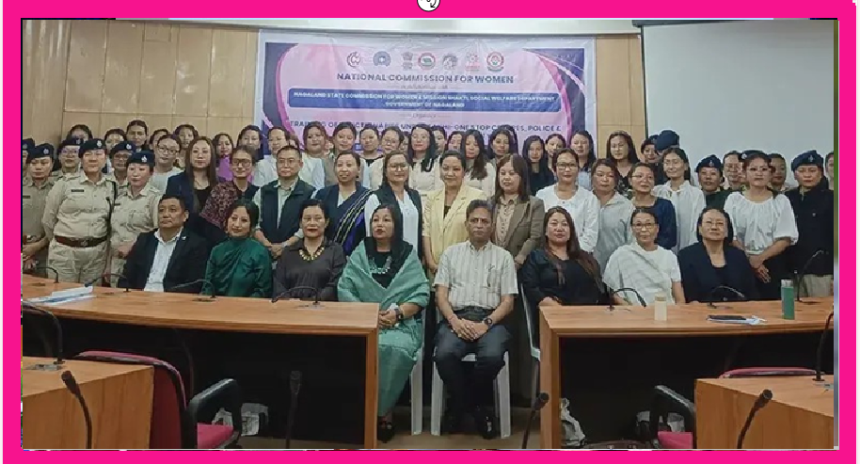
The DGP made these observations while addressing a training programme for officials from Sakhi-One Stop Centres, the Nagaland Police, and the District Legal Services Authority (DLSA) at the Police Headquarters in Kohima on Wednesday. The programme focused on improving institutional coordination and strengthening support systems for survivors of gender-based violence.
Women Continue to Remain a Small Minority in the Force
Sharing details about the present composition of the police force, Sharma pointed out that women make up only about 5% to 7% of the District Executive Force (DEF), which carries out frontline policing duties across the state. Even after including personnel from the Mahila Battalion, women constitute only around 10% of the overall strength of the Nagaland Police.
He said these numbers fall far short of the requirements of modern policing, especially at a time when crimes against women are receiving greater public attention and demand professional investigation by trained female officers.
According to Sharma, police stations from different districts have repeatedly highlighted the need for more women personnel, as victims often feel more comfortable approaching female officers while reporting sensitive cases. The shortage, he noted, places additional pressure on existing staff and limits the force’s ability to respond effectively to crimes involving women.
Proposal Seeks 50% Reservation in SI and ASI Recruitment
To address this persistent gap, the Nagaland Police had proposed a significant policy intervention nearly two years ago. Sharma disclosed that the department recommended reserving 50% of vacancies for women in the recruitment of Sub-Inspectors (SI) and Assistant Sub-Inspectors (ASI) through the Nagaland Public Service Commission (NPSC) and the Nagaland Staff Selection Board (NSSB).
The proposal was designed to substantially increase the number of women officers entering the police service at supervisory levels, thereby strengthening investigation units and ensuring greater gender representation throughout the policing system.
If implemented, the move would mark one of the most significant recruitment initiatives aimed at improving women’s participation in the state’s law enforcement machinery.
Rising Crime Reporting Reflects Greater Awareness
The DGP also addressed concerns over the apparent rise in reported crimes against women. He clarified that higher numbers should not automatically be interpreted as an increase in criminal incidents. Instead, he said the trend largely reflects growing awareness among women and greater confidence in approaching law enforcement agencies.
For many years, Sharma observed, several incidents involving violence against women were dealt with informally within families, village communities, clan structures or customary institutions without entering the formal criminal justice system. As awareness about legal rights has improved, more survivors are now choosing to register complaints with the police.
He welcomed this development, saying it represents an encouraging shift towards accountability and access to justice.
The DGP also appealed to society to openly discuss issues related to gender-based violence instead of treating them as taboo subjects. According to him, breaking long-standing social stigmas is essential for encouraging survivors to seek help without fear of discrimination or social pressure.
Investigation and Forensic Systems Need Major Strengthening
While discussing broader policing reforms, Sharma acknowledged that the Nagaland Police has historically functioned as an “armed police-centric” organisation, where operational deployment has often received greater emphasis than investigation and forensic science.
He said the department is now working to strengthen its investigative capabilities, but admitted that meaningful transformation will require sustained effort and changes in institutional thinking.
According to Sharma, improving forensic infrastructure, modernising investigation techniques and equipping officers with specialised skills are critical for ensuring high-quality criminal investigations. Better scientific investigation, he said, will ultimately strengthen prosecution and improve public confidence in the justice delivery system.
He remarked that although progress is being made, lasting reforms will only become possible when both systems and mindsets evolve together.
Prosecution Described as the Weakest Link
The DGP identified prosecution as one of the weakest components of the criminal justice system and stressed the importance of stronger collaboration between investigators and prosecutors.
He suggested that government advocates and public prosecutors should actively participate in specialised training programmes alongside police personnel. Better coordination between investigation agencies and prosecuting officers, he said, would improve the quality of case preparation, strengthen courtroom presentation and ultimately lead to higher conviction rates.
Such cooperation, Sharma observed, is essential for ensuring that criminal cases are pursued efficiently from investigation through trial.
Victims Encouraged to File FIRs Without Fear
Highlighting the importance of timely reporting, Sharma urged victims and their families not to hesitate in approaching the police and registering First Information Reports (FIRs).
He explained that prompt reporting enables investigators to collect evidence at the earliest stage, conduct effective inquiries and build stronger cases for prosecution. Delays in filing complaints often weaken investigations and reduce the chances of securing justice.
The DGP said public confidence in law enforcement can only grow when victims feel assured that their complaints will be handled professionally, sensitively and without prejudice.
Crimes Against Women Cannot Be Settled Outside the Legal System
Making a strong appeal for strict legal compliance, Sharma emphasised that offences such as rape and other serious crimes against women and children must never be resolved through customary institutions, village councils or informal settlements.
He said many serious crimes display early warning signs that should never be ignored. Immediate reporting to the police, followed by investigation under established legal procedures, is essential for protecting survivors, holding offenders accountable and preventing repeat offences.
According to him, ensuring legal accountability remains the cornerstone of an effective justice system and an important safeguard for vulnerable sections of society.
Survivor-Centred Support Must Remain the Priority
Speaking at the programme, Nagaland State Commission for Women (NSCW) Chairperson W. Nginyeih Konyak underscored the importance of providing compassionate and coordinated assistance to survivors of domestic violence and gender-based crimes.
She urged officials working across different institutions to maintain confidentiality, protect the dignity of survivors and adopt trauma-informed approaches while delivering services. Professional, empathetic and coordinated responses, she said, play a vital role in helping survivors recover and rebuild their lives.
Additional Secretary, Social Welfare Department, and Mission Director of Mission Shakti, Olemjungla Aier, also addressed participants during the programme, highlighting the state’s continuing efforts to strengthen institutional mechanisms for supporting women affected by violence.
The training programme brought together officials from multiple departments with the objective of improving coordination between law enforcement agencies, legal institutions and social welfare organisations, while reinforcing a survivor-centric approach to handling crimes against women across Nagaland.