


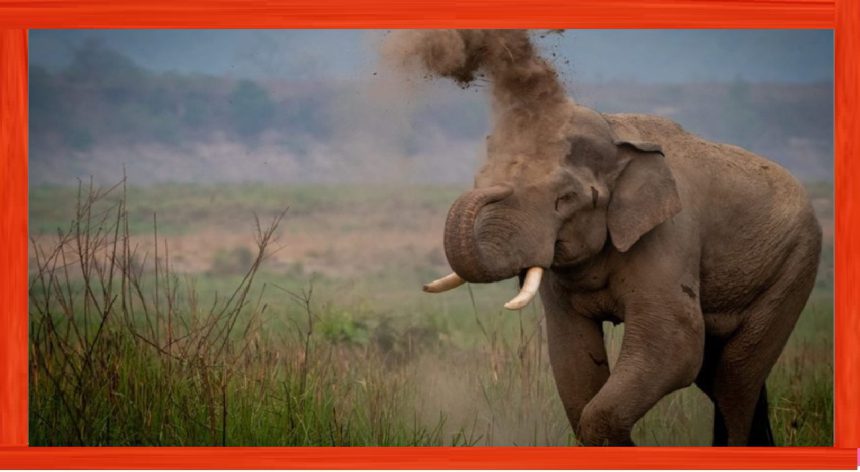
The newly drafted Elephant Action Plan for Northeast India underscores habitat connectivity, grassroots engagement, and anti-poaching interventions as the foundation of its conservation strategy.
Kaziranga Hosts Key Stakeholder Consultation
On September 11, a high-level consultation on the Regional Action Plan for Elephant Conservation in Northeast India was convened at Kaziranga. The session brought together senior forest officials, conservation specialists, researchers, and representatives of local communities for extensive deliberations.
Prominent Participation
The meeting was held under the aegis of a Ministry of Environment, Forest and Climate Change (MoEFCC) committee, chaired by S.B.S. Bonal, former ADG (PT & NTCA). Senior Assam forest officials, including M.K. Yadava (Retd.), Special Chief Secretary (EFCC), and Dr. Vinay Gupta, PCCF (CWLW), contributed their perspectives to the discussions.
Addressing Conflict and Connectivity
The consultations centered on mitigating human-elephant conflict, strengthening habitat connectivity, and ensuring sustained community involvement. Representatives of Eco-Development Committees (EDCs), Village Defence Parties (VDPs), and local communities joined hands with researchers and practitioners to identify actionable solutions.
Northeast India, home to 13 elephant reserves, forms a critical stronghold for the survival of the Asian elephant. Reserves across Arunachal Pradesh, Assam, Nagaland, and Meghalaya are interlinked through seasonal and long-distance migratory corridors that enhance genetic diversity and help reduce conflict.
Core Objectives of the Regional Action Plan
Developed under MoEFCC’s Project Elephant, the Regional Action Plan lays out six principal objectives:
Strengthening elephant and habitat protection through anti-poaching measures, law enforcement, and corridor restoration.
Reducing human-elephant conflict with early-warning systems, rapid response mechanisms, and livelihood support for affected communities.
Combating poaching and illegal trade by dismantling ivory networks and reinforcing intelligence systems.
Expanding research and monitoring through systematic surveys, veterinary health surveillance, and geospatial tools.
Enhancing captive elephant welfare through improved healthcare, rescue operations, and rehabilitation initiatives.
Promoting inter-sectoral collaboration to integrate ecological, social, and economic dimensions into policy frameworks.
Officials emphasized that the plan must be rooted in the lived realities of local communities, with their full participation at every stage. Continuous monitoring and adaptive evaluation were also identified as critical to its long-term success.
Grounded in Local Realities
“Conservation of elephants in the Northeast will succeed only when habitats are safeguarded and communities are treated as equal partners,” participants concluded at the Kaziranga consultation.