Odisha Police Aims for Total Drug Elimination by 2029: Outgoing DGP YB Khurania Details Massive Gains Against Crime, Cyber Threats, and Maoist Violence
Outgoing Police Chief Outlines Vision for Drug-Free Odisha
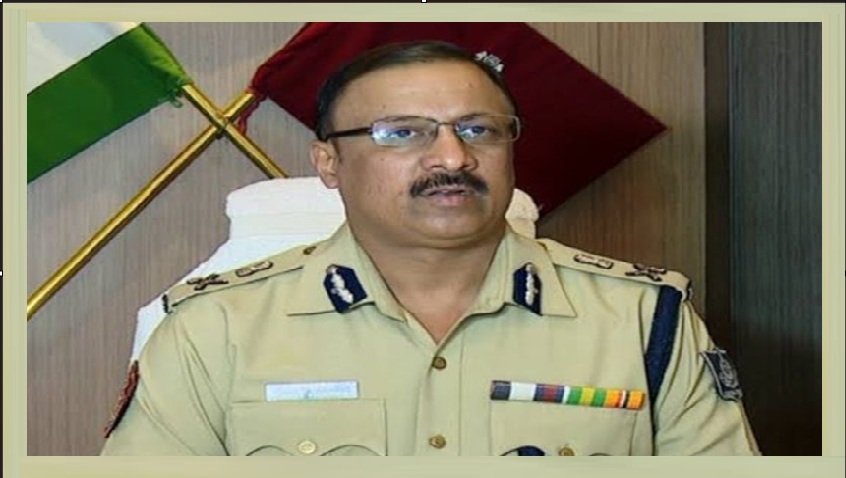
In a comprehensive final address on his last working day before retirement, outgoing Director General of Police (DGP) YB Khurania laid out an ambitious roadmap for the state’s security apparatus. Highlighting key milestones from his two-year term at the helm, Khurania revealed that the Odisha Police has locked in a firm deadline to transform the state into a completely drug-free zone by March 2029.
To achieve this, law enforcement has spearheaded the ‘Nishamukta Odisha Abhiyan’ campaign, focusing heavily on dismantling organized narcotics cartels and completely eradicating illegal cannabis cultivation across at least eight key districts. Khurania emphasized that tackling the illegal narcotics trade will remain one of the top three strategic priorities for state law enforcement moving forward, alongside combating modern cybercrime and strengthening road safety measures.
Achieving these goals requires maintaining the aggressive momentum established over recent years, blending multi-departmental coordination with community-focused field operations to cut off supply lines before drugs reach local neighborhoods.
Unprecedented Crackdown on Narcotics and Cultivation
The scale of law enforcement operations over the past two years highlights a relentless push against illicit drug networks across the state. Between August 2024 and July 2026, joint enforcement drives conducted alongside the Excise, Forest, and Revenue departments led to the seizure or destruction of contraband valued at an astounding ₹4,195 crore. State authorities registered 4,892 distinct cases under the Narcotic Drugs and Psychotropic Substances (NDPS) Act, resulting in the arrest of 5,376 drug dealers and traffickers.
Field personnel carried out massive eradication drives in remote, hilly terrains, destroying roughly 64,022 acres of illegal cannabis crops. These anti-cultivation efforts led to 1,395 registered cases and the apprehension of 48 individuals directly involved in farm operations. In total, police seized over 4.42 lakh kilograms of commercial ganja worth more than ₹2,000 crore across 2,706 registered cases, resulting in 3,867 arrests. Meanwhile, dedicated anti-smuggling units intercepted 28.53 kilograms of brown sugar valued at nearly ₹56.90 crore, leading to 662 cases and 1,032 arrests. During the first half of 2026 alone, NDPS cases jumped by 23.8%, a direct result of intensified enforcement and proactive intelligence gathering.
Historic Elimination of the Naxal Threat
Reflecting on operational triumphs, Khurania described the official declaration of Odisha as a ‘Naxal-free’ state as the single greatest achievement during his tenure as police chief. The historic milestone was made possible by synchronized, high-intensity tactical operations executed jointly by the Odisha Police and Central Armed Police Forces (CAPF) across previously affected Maoist strongholds.
Through persistent intelligence-led strike operations, security forces successfully neutralized 29 hardcore Maoist operatives, secured the peaceful surrender of 83 cadres, and arrested 15 active insurgents. These concerted efforts led to the complete elimination of the Naxal threat on March 31, 2026, successfully meeting the strict national deadline set by the Central Government and bringing long-awaited peace and stability back to vulnerable border districts.
Scaling Infrastructure to Fight Evolving Cyber Crimes
As traditional security threats recede, cybercrime is rapidly emerging as a complex, highly adaptive challenge for state police forces. To counter the rising tide of digital fraud and online exploitation, the Odisha state government formally sanctioned 20 new specialized cyber police stations, all of which officially became operational in March 2026.
These modern police stations have been equipped with specialized technical infrastructure and dedicated personnel trained in advanced digital forensics and cyber investigation tools. The outgoing DGP underscored that continuously strengthening cyber enforcement units will remain a top operational requirement as criminal syndicates increasingly rely on sophisticated digital channels to target everyday citizens.
Dedicated Road Safety Wing and Falling Crime Rates
Addressing another critical public safety concern, state authorities approved the creation of a standalone Road Safety Wing within the Odisha Police structure. The government has already sanctioned the necessary personnel posts, with recruitment and specialized training scheduled to wrap up over the next two to three years. Khurania noted that setting up a dedicated highway patrol and safety wing will dramatically lower traffic fatalities and bring order to high-density transit corridors.
Concurrently, overall crime data shows a noticeable downward trend across several major offense categories. Between January and June 2026, official statistics recorded significant year-on-year drops compared to the same period in 2025:
- Dacoity: decreased by 22.8%
- Robbery: dropped by 14.2%
- Theft: declined by 8.6%
- Rioting: reduced by 4.4%
- Murder: fell by 2.9%
- House-breaking: saw a 0.8% decrease
Record Conviction Rates Under New Legal Frameworks
Under Khurania’s stewardship, Odisha Police achieved a remarkable 87.6% conviction rate for cases prosecuted under the newly implemented Bharatiya Nyaya Sanhita (BNS) between July 2024 and December 2025. Furthermore, the state’s overall conviction rate across all criminal offenses—including pending cases registered under the legacy Indian Penal Code (IPC)—rose to 37.9% in 2025, setting the highest overall conviction record in the state’s history.
This dramatic improvement in courtroom outcomes is largely credited to meticulous crime scene management, increased adoption of scientific and forensic evidence, close supervision by senior officers, and continuous training for investigating teams. Between July 2024 and June 2026, state courts finalized trials in 1,75,329 cases, successfully securing convictions in 57,881 of them.
Crackdown on Illegal Arms and Operation Anwesan-2
Law enforcement agencies also maintained pressure on illegal arms networks and the unlawful extraction of minor minerals across the state. Under the Arms Act, police registered 2,674 cases, arrested 3,388 individuals, and confiscated 910 illegal firearms—including military-grade weapons such as AK-47s, INSAS rifles, and Self-Loading Rifles (SLRs), alongside 1,435 live rounds of ammunition. Additionally, enforcement against illegal mining activities yielded 7,079 registered cases and 2,007 arrests.
Protecting vulnerable citizens remained a high priority through initiatives like Operation Anwesan-2, an intensive 10-day campaign launched in January 2026. The drive resulted in the successful tracing and recovery of 5,451 missing persons, including 786 children and 4,665 women. To boost overall operational readiness and emergency response times, the department distributed 649 new patrol vehicles to local police stations statewide, deploying two dedicated drivers per vehicle to keep units mobile around the clock.
Commendation from Chief Minister Mohan Charan Majhi
Closing out his tenure, Khurania expressed gratitude to Odisha Chief Minister Mohan Charan Majhi for providing necessary administrative backing and budget allocations to modernize the police department. In a public post on X, Chief Minister Majhi commended the outgoing police chief’s dedicated service, praising his decisive leadership in maintaining law and order, fostering social harmony, and driving people-centric police reforms across Odisha. As the leadership transitions, the state police force stands well-positioned to build on these structural gains and push toward the 2029 drug-free deadline.