Rajasthan Cadre Reshuffle Signals Major Administrative Reset: Senior IAS and IPS Officers Set for Strategic Movements Between State and Centre
The Rajasthan bureaucracy is on the cusp of a significant administrative realignment, as senior officers of the Indian Administrative Service (IAS) and Indian Police Service (IPS) are expected to move between the state and the Centre. These anticipated changes, involving officers from the 1995 batch, are being closely tracked within administrative and political circles, as they are likely to reshape governance and policing structures in the state.
Senior IAS officer Rohit Kumar Singh (IAS: 1995) is expected to return to Rajasthan after completing an extended central deputation, while senior IPS officer Dinesh MN (IPS: 1995) is likely to be deputed to Delhi for a key assignment. Together, these developments point toward a broader reshuffle aimed at rebalancing administrative capacity in Rajasthan, which is currently facing a shortage of experienced senior officers.
IAS Rohit Kumar Singh Set to Rejoin Rajasthan After Central Posting
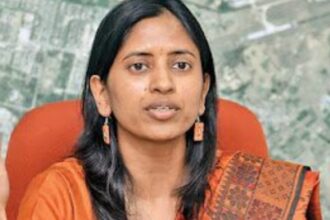
Sources indicate that Rohit Kumar Singh, a seasoned 1995-batch IAS officer of the Rajasthan cadre, is in the final stages of repatriation to the state after spending close to four years on central deputation. The Rajasthan government has reportedly conveyed its concurrence for his return.
His re-entry into the state administration is expected to provide much-needed senior-level experience at a time when Rajasthan is grappling with gaps in top administrative positions. Once Singh formally reports back in the state, the government is likely to decide on his precise role or assess the possibility of assigning him further responsibilities, either within Rajasthan or again at the Centre.
IPS Dinesh MN Likely to Be Deputed to Delhi for Strategic Assignment
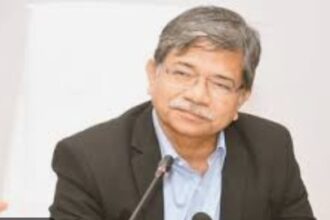
Parallel to Singh’s return, senior IPS officer Dinesh MN is expected to move out of Rajasthan on central deputation. According to reliable sources, the Union government has called him to Delhi, where he may be entrusted with a significant role either within the Delhi Police or a central security organisation.
At present, Dinesh MN is serving as Additional Director General (ADG), Crime Branch and Head of the Anti-Gangster Task Force in Rajasthan. His possible departure would mark a major shift in the state’s policing leadership, particularly in the area of organised crime control. This proposed deputation is part of a larger process involving officers who went on central deputation around November 8, 2021, and are now being repatriated or redeployed.
Dinesh MN: Known for Firm Policing and Professional Resolve
IPS Dinesh MN is widely recognised for his disciplined approach and uncompromising stance against organised crime and mafia networks. Despite enduring a prolonged legal battle and spending nearly seven years in jail in connection with the Sohrabuddin encounter case, he has continued to command professional respect within policing circles.
Over the course of his career, Dinesh MN has consistently focused on:
Strong action against organised crime and criminal syndicates
Intelligence-led and technology-driven policing
Encouraging community participation in law enforcement
Enhancing transparency and accountability within the police force
He is also regarded as a mentor to younger officers and is known for maintaining a firm yet transparent administrative style.
IAS Siddharth Mahajan’s Return Also Under Consideration
Another senior officer whose name has emerged in reshuffle discussions is IAS Siddharth Mahajan, who has also been on central deputation for nearly four years. Sources suggest that his repatriation to Rajasthan is being actively considered as part of a wider administrative recalibration.
Mahajan is seen as a dynamic and outcome-focused officer, with substantial experience across sectors such as education, revenue administration, urban development, and governance reforms.
Siddharth Mahajan: Advocate of Digital and Citizen-Centric Governance
IAS Siddharth Mahajan has earned recognition for his emphasis on modern governance practices, including:
Effective ground-level implementation of government policies
Strong focus on digital governance and institutional transparency
Data-driven administrative decision-making
Expansion and simplification of citizen service delivery
His calm demeanor and collaborative leadership style have often helped strengthen trust between the administration and the public.
Rohit Kumar Singh: Known for Balanced and Responsive Administration
IAS Rohit Kumar Singh is regarded as an officer with extensive experience in both field postings and secretariat roles. His administrative philosophy places emphasis on:
Integrity-driven and accountable governance
Timely execution of development programmes
Direct engagement with citizens
Swift and effective grievance redressal mechanisms
His return is expected to add depth and stability to Rajasthan’s senior administrative leadership.
K.K. Pathak’s Influence Continues to Shape Administrative Thinking
Although not directly involved in the current reshuffle, IAS K.K. Pathak continues to be frequently cited in bureaucratic circles as a benchmark for administrative discipline and reform-oriented leadership. Nationally recognised for his work in education reforms, Pathak is associated with:
Strict enforcement of administrative discipline
Accountability-focused governance models
Readiness to take tough and often unpopular decisions
His approach has influenced governance debates and administrative strategies across multiple states.
A Crucial Transition Phase for Rajasthan’s Bureaucracy
The ongoing exchange of officers between the Centre and Rajasthan is being viewed as a critical phase in the state’s administrative evolution. The expected return of experienced IAS officers and the possible deputation of senior IPS leadership reflect sustained efforts to rebalance governance and law-and-order capabilities amid changing administrative and security challenges.
As these movements materialise, they are likely to have a lasting impact on Rajasthan’s policy execution, policing effectiveness, and overall administrative stability.