Empowering the Cadre: Rajasthan Chief Secretary V. Srinivas Champions Central Deputation as a Catalyst for IPS Professional Excellence
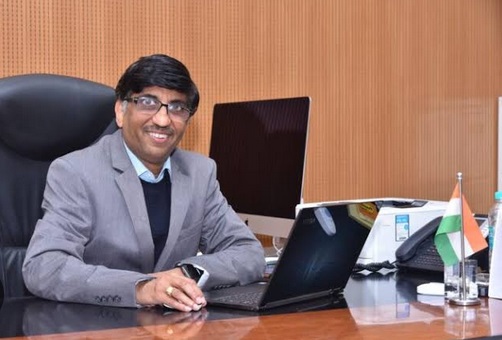
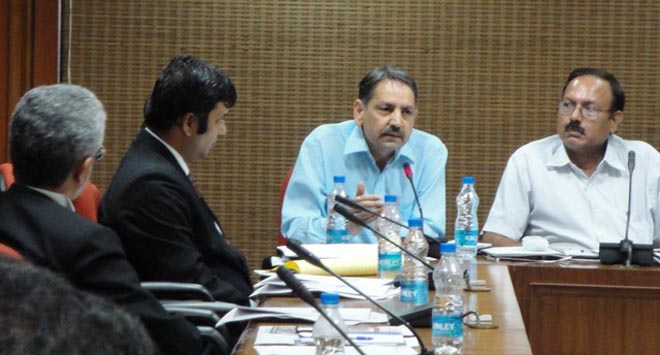
In a strategic move to enhance the administrative depth of the state’s security apparatus, the Chief Secretary of Rajasthan, Mr. V. Srinivas (IAS, 1989 batch), underscored the transformative power of central deputation for Indian Police Service (IPS) officers. Presiding over a high-level interactive session via video conferencing at the State Secretariat, the Chief Secretary articulated that serving with the Union Government is far more than a mere regulatory mandate—it is a cornerstone for holistic professional evolution.
Broadening Governance Horizons: The Value of Central Service
During the deliberations, Chief Secretary Srinivas urged eligible officers to view central stints as a vital investment in their leadership trajectory. He emphasized that the transition from state-centric roles to central roles provides officers with:
Macro-Level Policy Insight: A deeper understanding of national security frameworks and legislative drafting.
Inter-Agency Coordination: Experience in working across diverse ministries and central investigative agencies.
Strategic Governance: A comprehensive perspective on administrative synergy that proves invaluable upon their return to state-level responsibilities.
“The wisdom and operational expertise garnered at the national level serves as a force multiplier, ultimately fortifying the efficiency of our state administration,” the Chief Secretary remarked.
Mandatory Exposure and Leadership Readiness
The Director General of Police (DGP), Rajeev Kumar Sharma, further elaborated on the structural requirements governing modern police careers. He clarified that for officers belonging to the 2011 batch and onwards, central deputation is an essential milestone.
Minimum Tenure: Officers are required to serve a minimum of two years on central deputation at the Superintendent of Police (SP) or Deputy Inspector General (DIG) levels.
Prerequisite for Seniority: This national-level exposure is now viewed as a critical vetting process before officers are entrusted with top-tier leadership roles within the Rajasthan Police.
Navigating the Deputation Process: Department of Personnel Insights
To ensure a seamless transition for interested officers, senior representatives from the Department of Personnel (DoP) provided a granular briefing on the logistics of the deputation cycle. The briefing addressed three pillars of the process:
Eligibility Norms: Specific criteria based on years of service and performance benchmarks.
Tenure Dynamics: Understanding the duration of various central postings and cooling-off periods.
Application Protocols: The procedural roadmap for empanelment and securing “No Objection Certificates” (NOCs) from the state.
Synergy Between State and Center
The session concluded with a collective consensus that the “deputation ecosystem” creates a win-win scenario. By sending its most capable officers to the Centre, Rajasthan ensures its police leadership remains at the cutting edge of modern policing techniques, forensic advancements, and national security protocols. This cross-pollination of ideas is expected to lead to a more robust, technologically savvy, and policy-oriented police force in the years to come.